The End of the Siege of Sevastopol: September 9, 1855
1855 · Sevastopol, Russian Empire
Crimean War: The Siege of Sevastopol (1854–1855) ended as Russian forces abandoned the city after 11 months of siege by the Franco-British alliance.
November 5, 1854
The Battle of Inkerman took place during the Crimean War, resulting in a victory for the British and French forces against Russia.
Inkerman, Crimea | British and French forces
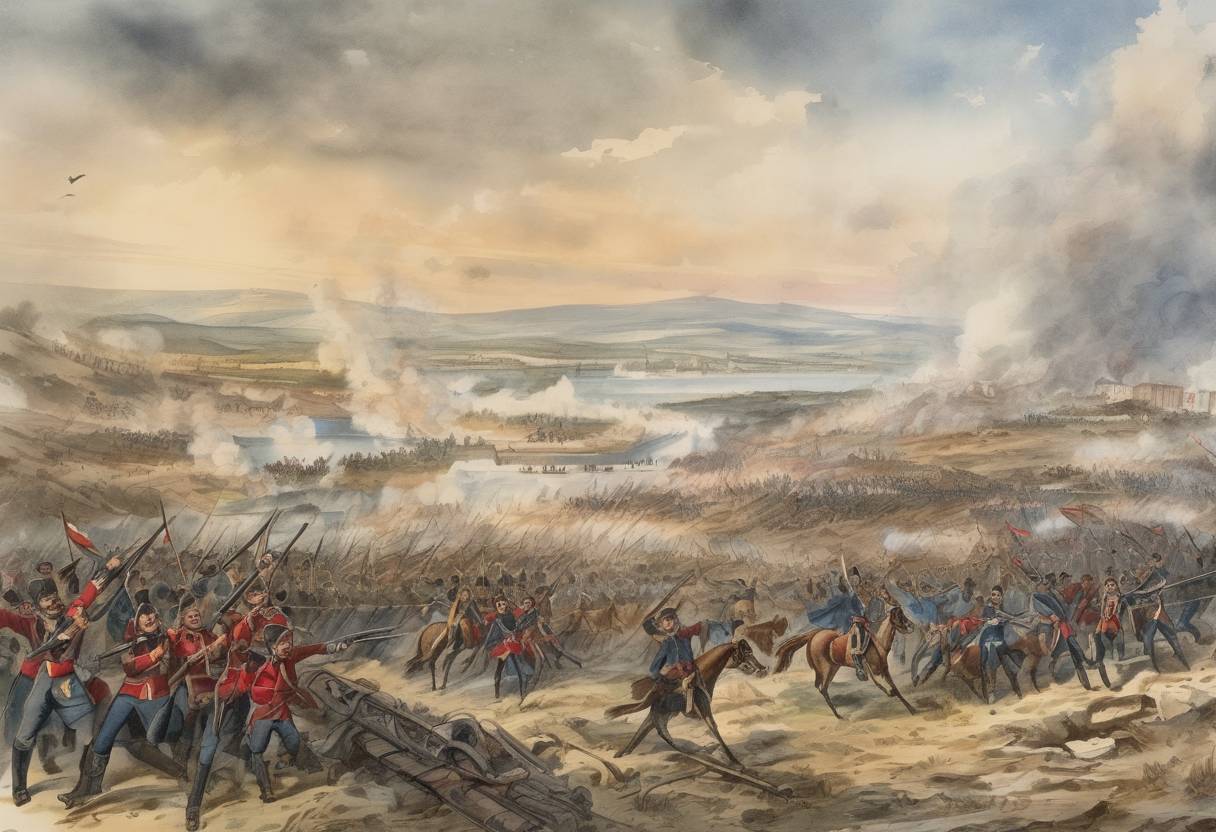
The Battle of Inkerman, fought on November 5, 1854, was a significant engagement during the Crimean War, which saw British and French forces achieve a crucial victory against the Russian Empire. This battle is often referred to as the “Soldiers’ Battle” due to the chaotic and close-quarters nature of the fighting, which relied heavily on the initiative and bravery of individual soldiers and small units.
The Crimean War (1853-1856) was primarily a conflict between the Russian Empire and an alliance of the Ottoman Empire, France, Britain, and Sardinia. The war was rooted in disputes over the rights of Christian minorities in the Holy Land, which was then part of the Ottoman Empire, and broader concerns over Russian expansionism.
The Battle of Inkerman occurred during the Siege of Sevastopol, a major Russian naval base on the Crimean Peninsula. The Allies aimed to capture Sevastopol to weaken Russian naval power in the Black Sea. By November 1854, the siege had been ongoing for several weeks, with both sides entrenched in a grueling stalemate.
Russian Assault: The battle began in the early morning under the cover of fog. Russian forces, numbering around 42,000, launched a surprise attack on the British positions on the Inkerman Heights. The Russians aimed to break the siege of Sevastopol by overwhelming the smaller Allied forces.
British Defense: The British, with approximately 8,500 troops, were initially caught off guard but quickly organized a defense. The rugged terrain and poor visibility led to disjointed and fierce hand-to-hand combat.
French Reinforcements: As the battle progressed, French troops arrived to support the beleaguered British forces. Their timely intervention was crucial in stabilizing the Allied lines and countering the Russian offensive.
Outcome: After several hours of intense fighting, the Russian forces were repelled. The Allies held their ground, inflicting heavy casualties on the Russians, who suffered around 11,000 casualties compared to the Allies’ 5,700.
The Battle of Inkerman was a pivotal moment in the Crimean War. It demonstrated the effectiveness of the Allied cooperation and the resilience of their forces under pressure. The victory at Inkerman bolstered the morale of the Allied troops and maintained the momentum of the siege of Sevastopol, which would eventually fall to the Allies in September 1855.
The battle also highlighted the challenges of 19th-century warfare, including communication difficulties and the impact of terrain and weather on military operations. The bravery and tenacity displayed by the soldiers at Inkerman became emblematic of the broader struggle in the Crimean War.
In the broader historical context, the Crimean War marked a turning point in military history, with the introduction of new technologies and tactics, and it exposed the need for military and logistical reforms in the participating nations. The war also set the stage for future geopolitical developments in Europe and the decline of the Ottoman Empire.
Source: en.wikipedia.org