Adolf Hitler's Suicide on April 30, 1945
1945 · Berlin, Germany
Adolf Hitler, the leader of Nazi Germany, committed suicide in his underground bunker in Berlin as Soviet forces closed in on the city.
November 8, 1939
An assassination attempt on Adolf Hitler failed when a bomb exploded at the Bürgerbräukeller in Munich, shortly after Hitler had left the building.
Munich, Germany | German resistance
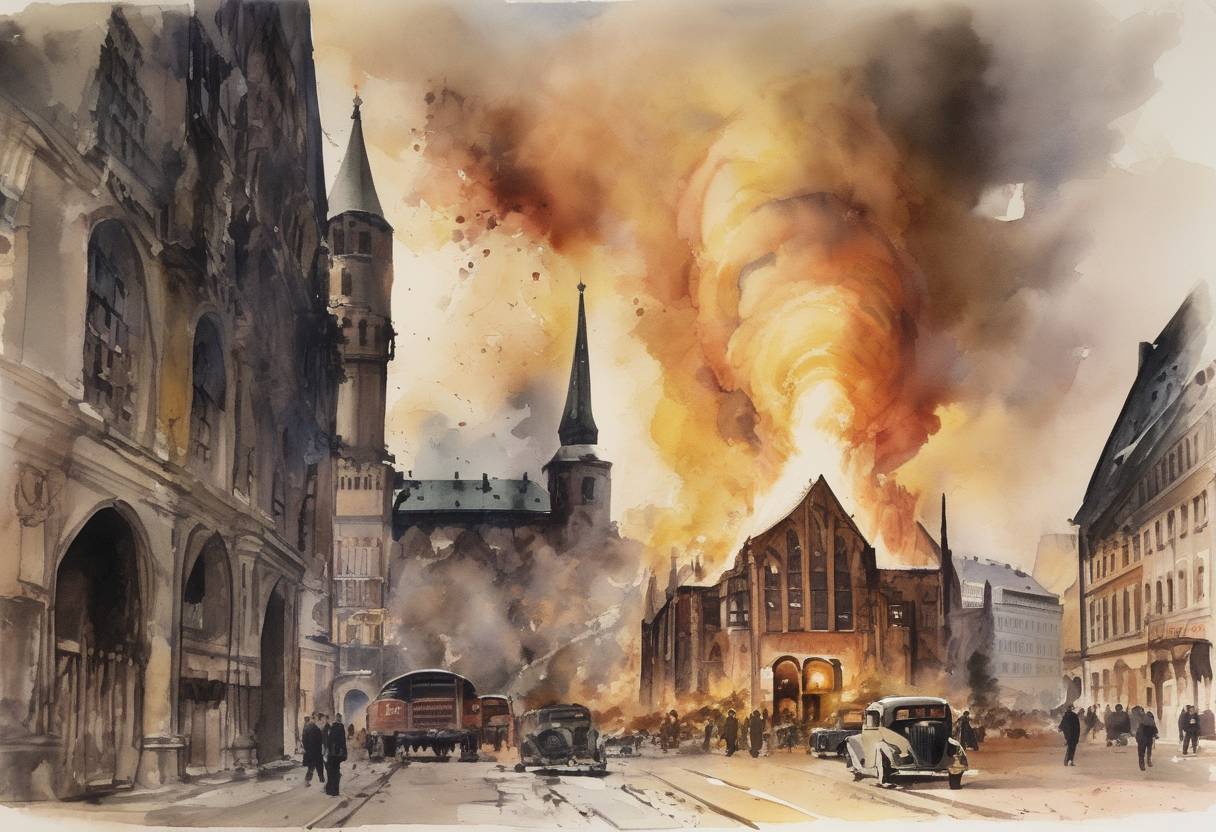
On November 8, 1939, a significant assassination attempt on Adolf Hitler took place at the Bürgerbräukeller, a beer hall in Munich, Germany. This event is notable for its potential to alter the course of World War II had it succeeded.
The Bürgerbräukeller was a site of historical importance for the Nazi Party. It was here that Hitler had launched the failed Beer Hall Putsch in 1923, an early attempt to seize power. Annually, Hitler returned to this location to commemorate the event and deliver a speech to party veterans.
The assassination attempt was orchestrated by Johann Georg Elser, a German carpenter who opposed the Nazi regime. Elser meticulously planned the attack over several months, demonstrating remarkable ingenuity and determination. He constructed a time bomb and secretly installed it in a pillar near the speaker’s podium at the Bürgerbräukeller.
On the evening of November 8, 1939, Hitler delivered his speech as planned. However, due to the ongoing war and the need to return to Berlin promptly, he concluded his address earlier than usual. Hitler left the hall approximately 13 minutes before the bomb detonated at 9:20 PM.
The explosion killed eight people and injured over sixty others. Despite the devastation, Hitler emerged unscathed, having already departed the venue.
Johann Georg Elser’s Arrest: Elser was apprehended while attempting to cross into Switzerland. Upon his arrest, he was found with incriminating evidence, including bomb-making materials. He was interrogated and eventually confessed to the plot.
Impact on Nazi Germany: The failed assassination attempt led to increased security measures around Hitler and heightened paranoia within the Nazi leadership. It also served as propaganda, portraying Hitler as being under divine protection.
Elser’s Fate: Elser was held in various concentration camps for the duration of the war. Tragically, he was executed at Dachau concentration camp on April 9, 1945, just weeks before the war in Europe ended.
The attempt on Hitler’s life at the Bürgerbräukeller is a poignant reminder of the resistance against the Nazi regime from within Germany. Elser’s actions demonstrated individual courage and the existence of domestic opposition to Hitler’s rule. Had the attempt succeeded, it might have significantly altered the trajectory of World War II and the history of the 20th century.
This event remains a testament to the complexities of resistance movements and the profound impact of individual actions in the broader tapestry of history.
Source: www.history.com