Opening of the Royal Albert Hall on March 29, 1871
1871 · London, United Kingdom
The Royal Albert Hall is officially opened by Queen Victoria and Prince Albert’s eldest son, the future King Edward VII.
January 25, 1858
The Wedding March by Felix Mendelssohn is played at the marriage of Queen Victoria's daughter, Victoria, and Friedrich of Prussia, popularizing the piece as a wedding recessional.
London, England | British Monarchy
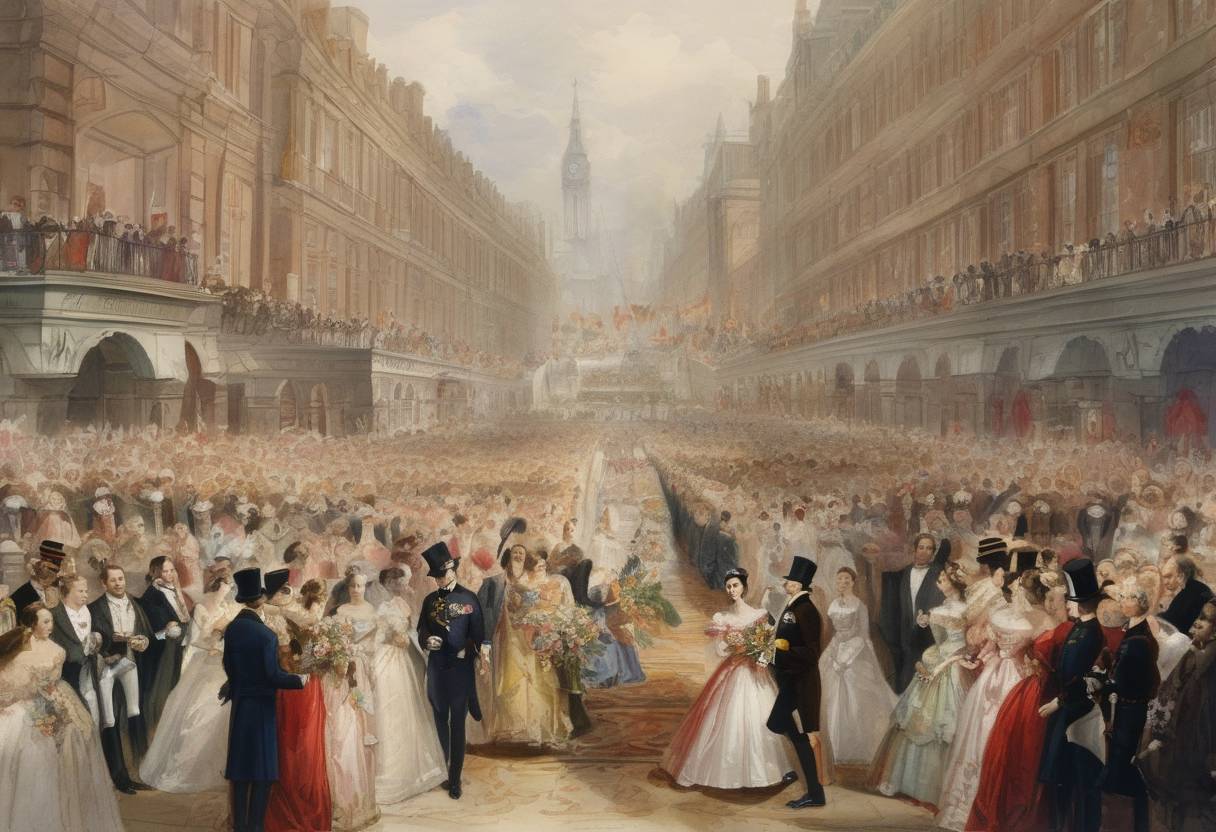
On January 25, 1858, a significant cultural moment occurred during the marriage of Princess Victoria, the eldest daughter of Queen Victoria and Prince Albert, to Prince Friedrich of Prussia. This event is notably remembered for popularizing Felix Mendelssohn’s “Wedding March” as a traditional wedding recessional.
Felix Mendelssohn, a German composer, originally composed the “Wedding March” in 1842 as part of his suite of incidental music for William Shakespeare’s play A Midsummer Night’s Dream. The piece, characterized by its triumphant and jubilant tones, was not initially associated with weddings.
The marriage of Princess Victoria and Prince Friedrich took place at the Chapel Royal in St. James’s Palace, London. The union was not only a significant personal event but also a political alliance, strengthening ties between Britain and Prussia.
The choice to play Mendelssohn’s “Wedding March” during the ceremony was made by the bride’s mother, Queen Victoria, who was an admirer of Mendelssohn’s work. The piece was used as the recessional music, marking the conclusion of the wedding ceremony as the newlyweds exited the chapel.
The royal endorsement of Mendelssohn’s “Wedding March” at such a high-profile event led to its widespread adoption in wedding ceremonies across Europe and eventually the world. It became a staple in the repertoire of wedding music, often played as couples leave the ceremony, symbolizing joy and celebration.
The popularization of the “Wedding March” is an example of how royal events can influence cultural practices. The piece’s association with weddings has endured for over a century and a half, illustrating the lasting impact of the British royal family on cultural traditions.
In summary, the playing of Mendelssohn’s “Wedding March” at the wedding of Princess Victoria and Prince Friedrich on January 25, 1858, marked the beginning of its legacy as a quintessential piece of wedding music, a tradition that continues to this day.
Source: en.wikipedia.org