Coronation of Władysław II Jagiełło as King of Poland
1386 · Kraków, Poland
Władysław II Jagiełło was crowned King of Poland.
January 20, 1320
Duke Wladyslaw I of Poland is crowned king, marking the beginning of the reunification of Poland after a period of fragmentation.
Kraków, Poland | Polish Monarchy
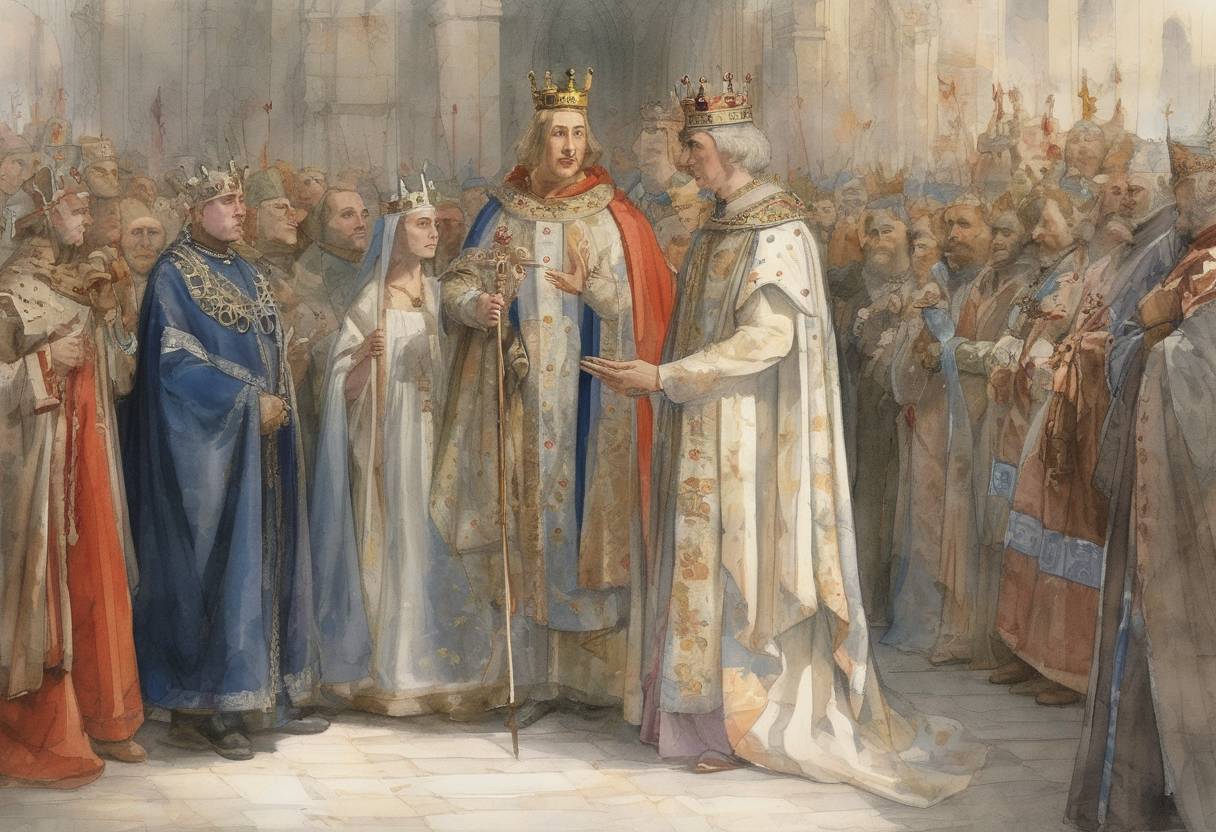
On January 20, 1320, a significant event in Polish history took place: Duke Władysław I, also known as Władysław the Elbow-high (Władysław Łokietek), was crowned King of Poland. This coronation marked the beginning of the reunification of Poland after a prolonged period of fragmentation known as the “Fragmentation of Poland.”
The fragmentation period, which began in the late 12th century, saw Poland divided into several smaller duchies. This division weakened the central authority and made the region vulnerable to external threats and internal conflicts. The lack of a strong, centralized monarchy led to political instability and economic challenges.
Efforts for Unification: Władysław I was a persistent figure in the efforts to reunify Poland. He spent years consolidating power, overcoming rival claimants, and dealing with opposition from both internal factions and external powers like the Teutonic Knights and the Kingdom of Bohemia.
Support from the Papacy: Władysław’s efforts were bolstered by the support of the papacy. Pope John XXII played a crucial role in legitimizing his claim to the throne, which was essential for gaining broader acceptance among the Polish nobility and clergy.
Strategic Alliances: Władysław formed strategic alliances, including a significant marriage alliance with the Hungarian royal family, which helped strengthen his position.
The coronation took place in the Wawel Cathedral in Kraków, a city that would become the political and cultural heart of Poland. This event was not just a ceremonial crowning but a symbolic act of unification, representing the re-establishment of a centralized Polish monarchy.
Reunification Efforts: Władysław’s reign marked the beginning of the reunification of Polish territories. Although the process was gradual and faced numerous challenges, his coronation laid the groundwork for future consolidation.
Legacy: Władysław I’s efforts paved the way for his son, Casimir III the Great, who would continue the work of strengthening and expanding the Polish state. Casimir’s reign is often credited with bringing about a “Golden Age” for medieval Poland.
National Identity: The coronation was a crucial step in the development of a cohesive Polish national identity, as it signified the end of the fragmentation period and the emergence of Poland as a unified kingdom.
In summary, the coronation of Władysław I as King of Poland on January 20, 1320, was a pivotal moment in Polish history, marking the beginning of the reunification of the Polish territories and the re-establishment of a strong, centralized monarchy. This event set the stage for Poland’s future growth and development as a significant European power.
Source: en.wikipedia.org