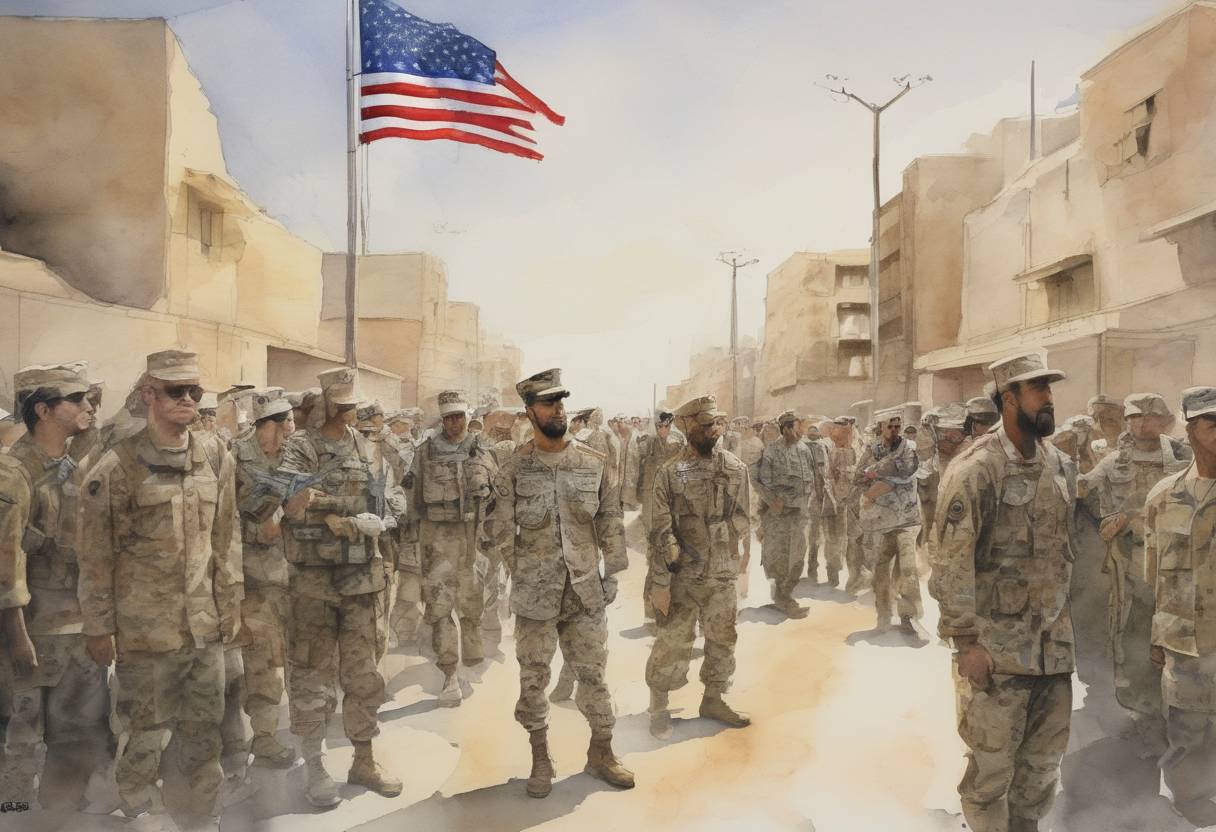
End of U.S. Military Mission in Iraq - December 17, 2011
On December 17, 2011, the United States formally concluded its military mission in Iraq with a ceremony in Baghdad, marking the withdrawal of the last U.S. troops from the country. This event was a significant milestone in the U.S. involvement in Iraq, which began with the invasion in March 2003.
Context and Background
Invasion of Iraq (2003): The U.S.-led invasion of Iraq commenced on March 20, 2003, with the primary aim of dismantling Saddam Hussein’s regime and eliminating alleged weapons of mass destruction (WMDs). The invasion was part of the broader “War on Terror” initiated after the September 11, 2001, attacks.
Occupation and Insurgency: Following the toppling of Saddam Hussein, Iraq experienced years of insurgency, sectarian violence, and political instability. The U.S. military faced significant challenges in stabilizing the country amidst these conflicts.
The Surge (2007): In response to escalating violence, the U.S. implemented a troop surge in 2007, which temporarily increased American military presence to help stabilize the situation and reduce violence.
Status of Forces Agreement (2008): In 2008, the U.S. and Iraq signed a Status of Forces Agreement (SOFA), which outlined the withdrawal of U.S. troops by the end of 2011.
The Withdrawal
Ceremony in Baghdad: The formal ceremony in Baghdad on December 17, 2011, marked the official end of the U.S. military mission in Iraq. It was attended by U.S. and Iraqi officials, symbolizing the transition of security responsibilities to Iraqi forces.
Final Troop Withdrawal: By December 18, 2011, the last convoy of U.S. troops crossed the border into Kuwait, effectively ending the nearly nine-year military engagement in Iraq.
Aftermath and Consequences
Iraqi Security Forces: The withdrawal placed the responsibility for maintaining security and stability squarely on the Iraqi security forces, which faced ongoing challenges from insurgent groups and sectarian tensions.
Political Landscape: The U.S. withdrawal left a complex political landscape in Iraq, with ongoing power struggles among various ethnic and sectarian groups.
Legacy and Impact: The U.S. involvement in Iraq had profound implications, including significant human and financial costs. The conflict reshaped regional dynamics and influenced U.S. foreign policy in the Middle East.
Broader Historical Significance
The end of the U.S. military mission in Iraq marked a pivotal moment in American military history, reflecting a shift in U.S. foreign policy and military strategy. It underscored the challenges of nation-building and counterinsurgency operations and highlighted the complexities of withdrawing from protracted military engagements. The legacy of the Iraq War continues to influence geopolitical and military discussions in the United States and beyond.