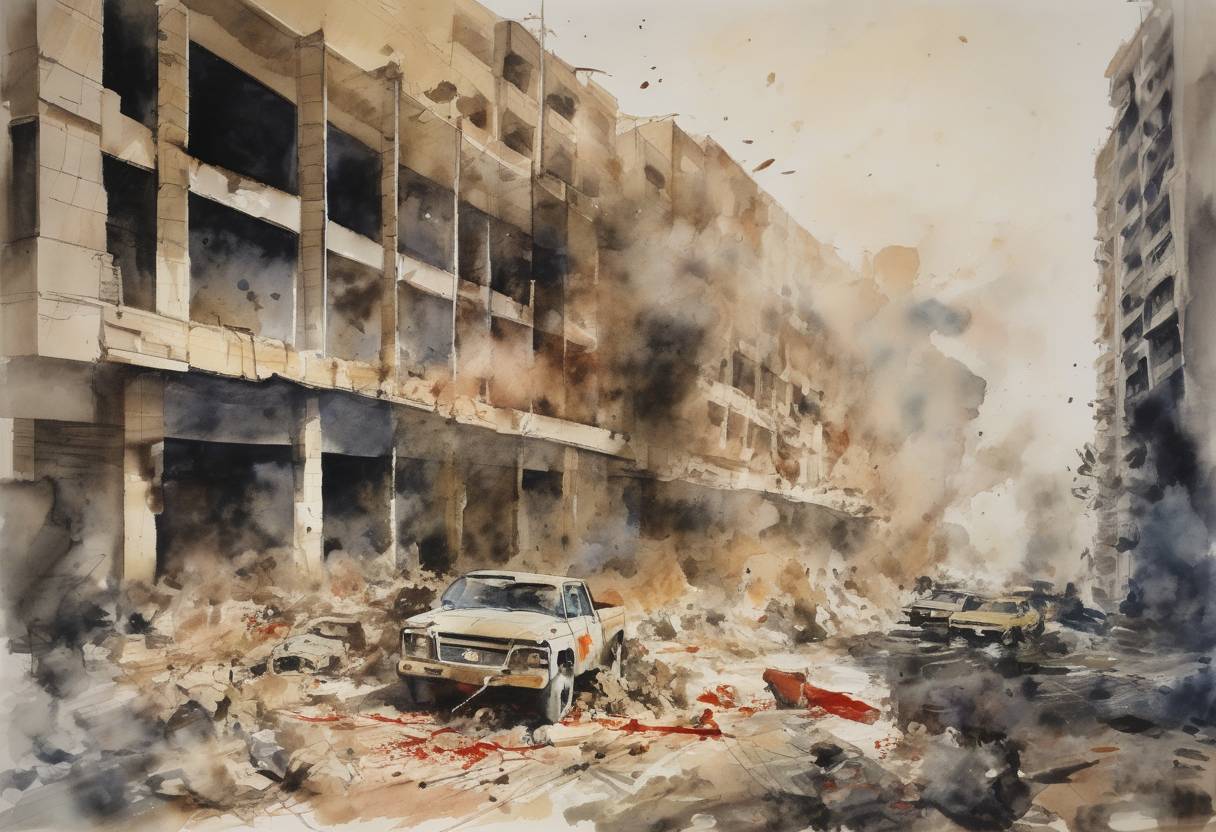
The Beirut Barracks Bombings - October 23, 1983
On October 23, 1983, a devastating attack occurred during the Lebanese Civil War, targeting the multinational peacekeeping force stationed in Beirut, Lebanon. This tragic event resulted in the deaths of 241 U.S. military personnel and 58 French paratroopers, marking one of the deadliest attacks against U.S. forces since World War II.
Background
The Lebanese Civil War, which began in 1975, was a complex conflict involving various factions, including Christian militias, Muslim groups, and foreign powers. In 1982, following the Israeli invasion of Lebanon, a multinational force comprising U.S., French, Italian, and British troops was deployed to Beirut to stabilize the region and facilitate the withdrawal of foreign forces.
The Attack
U.S. Marine Barracks
- Time and Location: At approximately 6:22 AM, a truck laden with explosives drove into the U.S. Marine barracks at Beirut International Airport.
- Explosion: The truck, carrying an estimated 12,000 pounds of TNT, detonated, causing a massive explosion that demolished the four-story building.
- Casualties: The blast killed 220 Marines, 18 sailors, and 3 soldiers, and injured over 100 others.
French Paratrooper Barracks
- Time and Location: Minutes after the attack on the U.S. barracks, a second truck bomb targeted the French paratrooper barracks in the Ramlet al-Baida area of West Beirut.
- Explosion: This explosion resulted in the collapse of the building, killing 58 French soldiers and injuring many more.
Aftermath
- Immediate Response: Rescue operations were launched immediately, with survivors and bodies being pulled from the rubble. The scale of the destruction and loss of life shocked the international community.
- Political and Military Repercussions: The attacks prompted a reevaluation of U.S. and French military presence in Lebanon. By early 1984, both countries had withdrawn their troops from the region.
- Impact on U.S. Policy: The bombings led to increased scrutiny of U.S. foreign policy and military strategy in the Middle East, influencing future decisions regarding military engagements and peacekeeping missions.
Broader Historical Significance
The Beirut barracks bombings underscored the volatility of the Middle East and the complexities involved in peacekeeping efforts in conflict zones. It highlighted the risks faced by multinational forces and the challenges of maintaining security in a region fraught with sectarian and geopolitical tensions. The event also marked a turning point in U.S. military engagement, leading to more cautious approaches in subsequent international interventions.
The bombings remain a somber reminder of the sacrifices made by military personnel in the pursuit of peace and stability, and they continue to influence military strategies and policies to this day.