The Battle of Thimeon: May 1, 880
880 · Thimeon, Frankish Empire
The Battle of Thimeon takes place, where the Frankish army under Charles the Fat defeats the Viking forces.
March 20, 0845
The Siege of Paris by Viking forces begins, marking a significant event in the Viking invasions of the Frankish Empire.
Paris, Frankish Empire | Viking Raiders
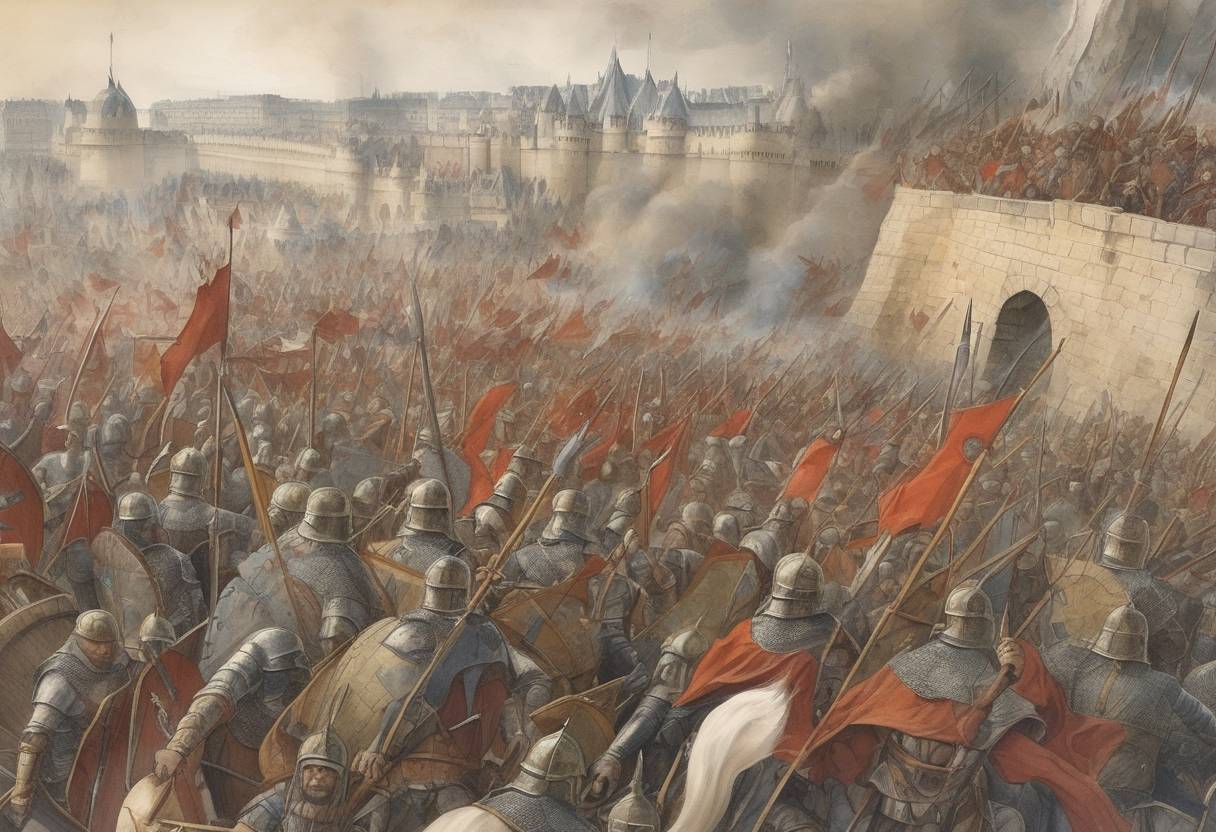
On March 20, 845, a significant event unfolded in the history of the Frankish Empire: the Siege of Paris by Viking forces. This event marked a pivotal moment in the series of Viking invasions that plagued the region during the 9th century.
The Viking Age, spanning from the late 8th century to the early 11th century, was characterized by Norse seafarers from Scandinavia conducting raids and establishing settlements across Europe. The Frankish Empire, under the rule of the Carolingian dynasty, was a frequent target due to its wealth and political fragmentation.
In the early 840s, the Frankish Empire was under the rule of Charles the Bald, a grandson of Charlemagne. The empire was weakened by internal strife and division, making it vulnerable to external threats. The Vikings, led by the chieftain Ragnar Lothbrok, saw an opportunity to exploit these weaknesses.
On March 20, 845, Ragnar Lothbrok led a fleet of approximately 120 Viking ships up the Seine River, reaching Paris. The city, though fortified, was not prepared for the scale and ferocity of the Viking assault. The Vikings quickly overran the defenses, capturing and plundering the city.
The siege was marked by the Vikings’ strategic use of the river for navigation and their ability to launch swift and devastating attacks. The Frankish defenders were unable to mount an effective resistance, leading to significant losses and the capture of hostages.
The siege had several immediate and long-term consequences:
Ransom and Tribute: Charles the Bald was forced to pay a substantial ransom of 7,000 pounds of silver to the Vikings to secure their withdrawal. This payment set a precedent for future Viking raids, as it demonstrated the effectiveness of their strategy of extortion.
Increased Viking Raids: The success of the siege encouraged further Viking incursions into Frankish territories. The vulnerability of Paris and other cities highlighted the need for improved defenses and military strategies.
Fortification Efforts: In response to the Viking threat, the Frankish Empire began to invest in the fortification of key cities and the development of a more organized military response. This included the construction of fortified bridges and the establishment of local militias.
Cultural Impact: The siege and subsequent Viking activities left a lasting impact on the cultural and historical landscape of France. The tales of Viking raids became embedded in the folklore and history of the region.
The Siege of Paris in 845 is a notable example of the Viking impact on medieval Europe. It underscores the challenges faced by the Carolingian Empire in maintaining its territories against external threats and highlights the adaptability and resilience of the Viking raiders. The event also serves as a reminder of the complex interplay between warfare, politics, and diplomacy during this tumultuous period in European history.
Source: en.wikipedia.org