The Battle of Neville's Cross: October 17, 1346
1346 · Durham, England
The Battle of Neville's Cross took place, where English forces defeated the Scots, capturing King David II of Scotland.
October 14, 1322
Robert the Bruce of Scotland defeated King Edward II of England at the Battle of Old Byland, securing Scottish independence.
Old Byland, England | Scottish Army
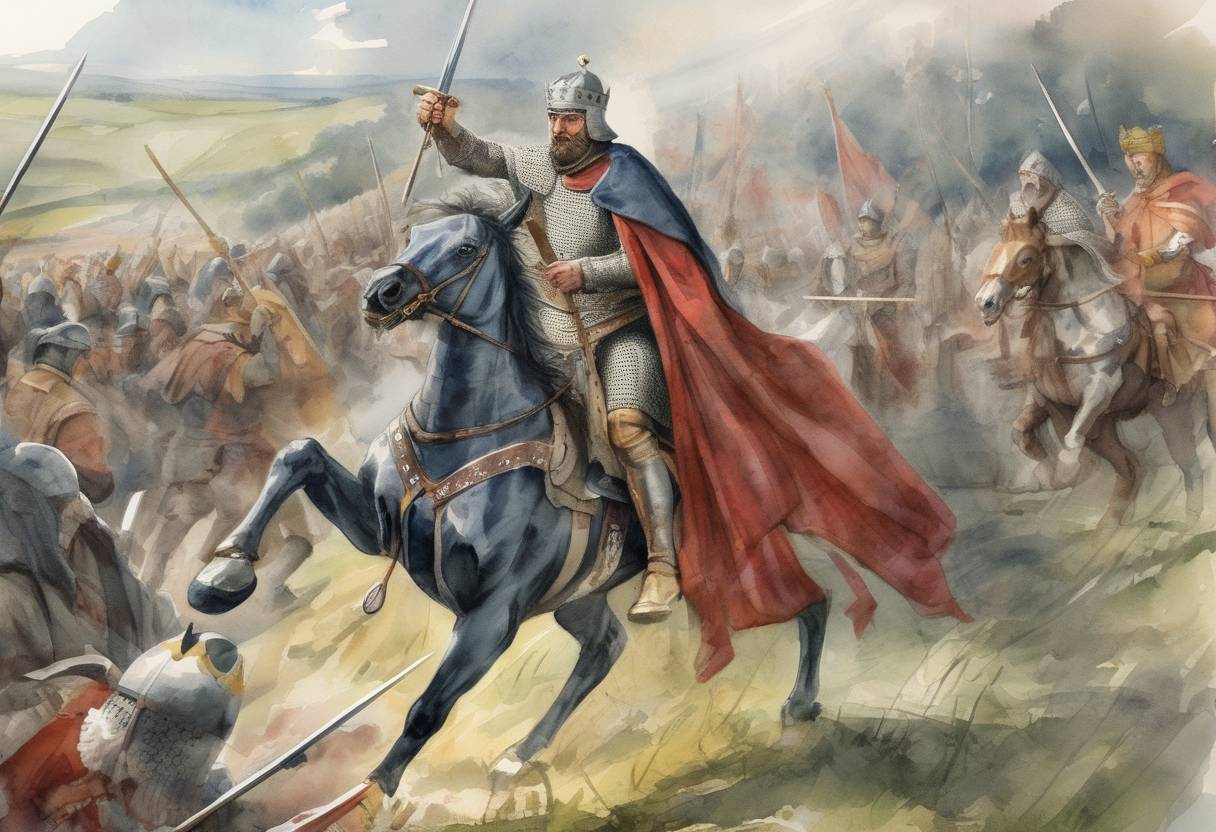
On October 14, 1322, Robert the Bruce, King of Scots, achieved a significant victory over King Edward II of England at the Battle of Old Byland. This battle was a pivotal moment in the First War of Scottish Independence, reinforcing Scottish sovereignty and further weakening English claims over Scotland.
The early 14th century was marked by ongoing conflict between Scotland and England, primarily due to English attempts to assert dominance over Scotland. Robert the Bruce had been crowned King of Scots in 1306, and his reign was characterized by efforts to consolidate Scottish independence following the death of William Wallace and the capture of John Balliol, the previous king.
The Battle of Bannockburn in 1314 had been a major Scottish victory, but hostilities continued as Edward II sought to reassert control. By 1322, tensions had escalated once more, with Edward II launching a campaign into Scotland. However, the English forces were plagued by logistical issues and low morale.
The Battle of Old Byland took place in North Yorkshire, England, near the village of Byland Abbey. Robert the Bruce, demonstrating his strategic acumen, took advantage of the terrain and the element of surprise. His forces, primarily composed of experienced Scottish infantry and cavalry, executed a well-coordinated attack on the English army.
The Scots utilized the rugged landscape to their advantage, launching a surprise assault from the high ground. The English forces, caught off guard and unable to effectively organize a defense, were quickly overwhelmed. The battle resulted in a decisive Scottish victory, with many English soldiers killed or captured.
The victory at Old Byland had several important consequences:
Strengthening Scottish Independence: The battle further solidified Robert the Bruce’s position as the legitimate ruler of an independent Scotland. It demonstrated the effectiveness of Scottish military tactics and the resilience of the Scottish cause.
Weakening English Authority: The defeat was a significant blow to Edward II’s authority and military prestige. It exposed the vulnerabilities of the English monarchy and contributed to internal dissent within England.
Diplomatic Ramifications: The victory at Old Byland paved the way for the eventual Treaty of Edinburgh-Northampton in 1328, which formally recognized Scottish independence and Robert the Bruce as king.
Legacy: The battle is remembered as a testament to Robert the Bruce’s leadership and strategic prowess. It reinforced the narrative of Scottish resistance against English domination and has been celebrated in Scottish history as a key moment in the struggle for independence.
In summary, the Battle of Old Byland was a crucial event in the First War of Scottish Independence, marking a turning point that would lead to the eventual recognition of Scotland as a sovereign nation.
Source: en.wikipedia.org