The End of the Battle of the Bulge: January 25, 1945
1945 · Ardennes, Belgium
The Battle of the Bulge ended with an Allied victory which repelled the last major German offensive of World War II.
May 28, 1940
Belgian King Leopold III surrenders to German forces during World War II, leading to the occupation of Belgium.
Brussels, Belgium | Belgian Army
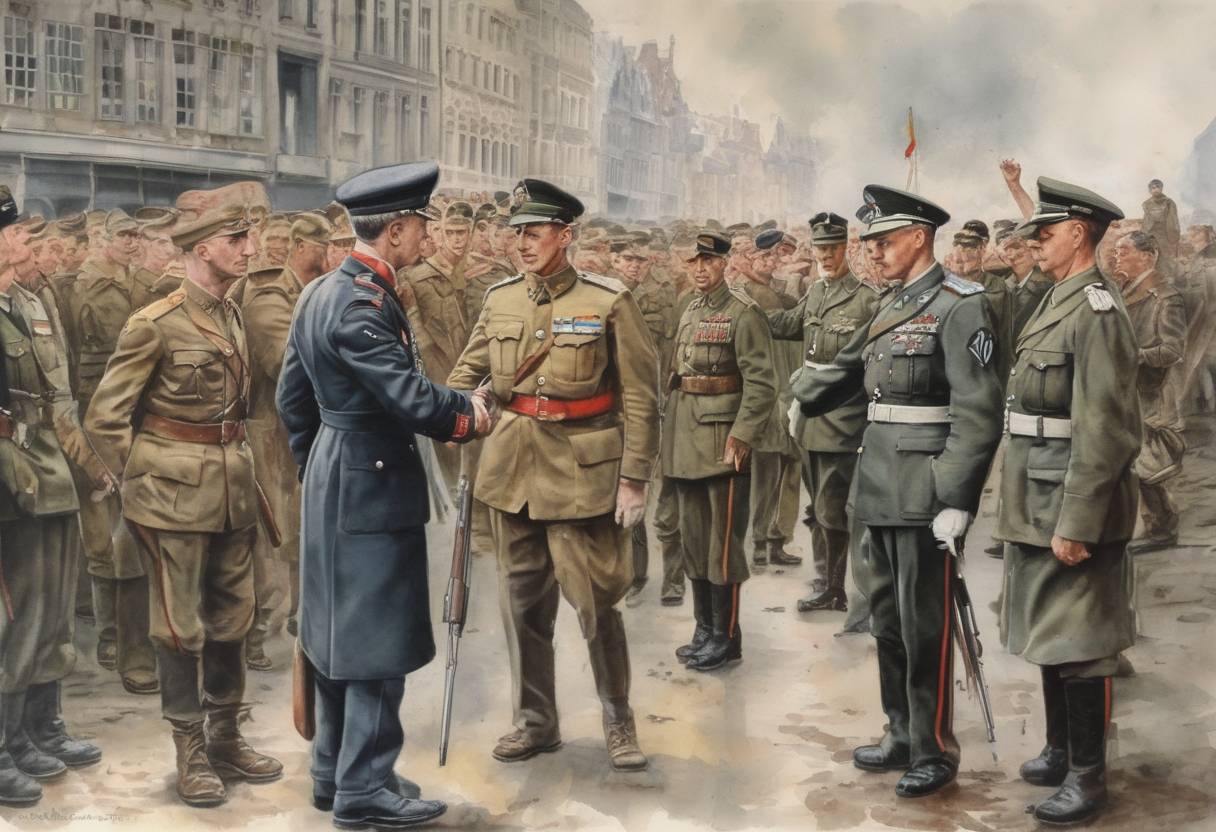
On May 28, 1940, during the early stages of World War II, King Leopold III of Belgium made the controversial decision to surrender to German forces, leading to the occupation of Belgium. This event marked a significant moment in the war, influencing both military strategies and political dynamics in Europe.
Invasion of Belgium: On May 10, 1940, Germany launched its invasion of Belgium as part of a larger campaign against the Low Countries and France. The German military strategy, known as the Blitzkrieg, involved rapid and overwhelming force, which quickly overwhelmed Belgian defenses.
Allied Support: Belgium had hoped for support from its allies, primarily France and the United Kingdom. However, the speed and efficiency of the German advance hindered effective coordination and response from the Allied forces.
Military Situation: By late May, the situation for Belgium had become dire. German forces had encircled the Belgian Army, cutting off supplies and reinforcements. The Allies were also retreating towards Dunkirk, further isolating Belgian forces.
Decision to Surrender: Faced with the collapse of his army and the humanitarian crisis unfolding in Belgium, King Leopold III decided to surrender unconditionally to the Germans. He believed that further resistance would lead to unnecessary destruction and loss of life.
Controversy: The decision was met with mixed reactions. While some understood the dire circumstances, others viewed it as a betrayal. The Belgian government, which had fled to France, denounced the surrender and declared that Leopold had acted unconstitutionally.
Occupation of Belgium: Following the surrender, Belgium fell under German occupation. The occupation lasted until the liberation of Belgium by Allied forces in 1944.
Political Repercussions: King Leopold III’s decision had lasting political repercussions. After the war, his actions during the occupation were scrutinized, leading to a national debate known as the “Royal Question.” This ultimately resulted in Leopold’s abdication in 1951 in favor of his son, Baudouin.
Impact on the War: The surrender of Belgium allowed German forces to focus their efforts on France, contributing to the rapid fall of France in June 1940. It also highlighted the challenges faced by smaller nations caught between larger powers during the war.
The surrender of King Leopold III is a poignant example of the difficult decisions faced by leaders during wartime. It underscores the complexities of leadership under occupation and the far-reaching consequences of such decisions on national and international levels. The event remains a significant chapter in the history of World War II and Belgium’s national narrative.
Source: www.britannica.com