Tadeusz Mazowiecki Nominated as Prime Minister
1989 · Warsaw, Poland
Polish president Wojciech Jaruzelski nominates Solidarity activist Tadeusz Mazowiecki to be the first non-communist prime minister in Eastern Europe in over 40 years.
December 9, 1990
Lech Wałęsa is elected President of Poland, becoming the first democratically elected president of the country after the fall of communism.
Warsaw, Poland | Solidarity
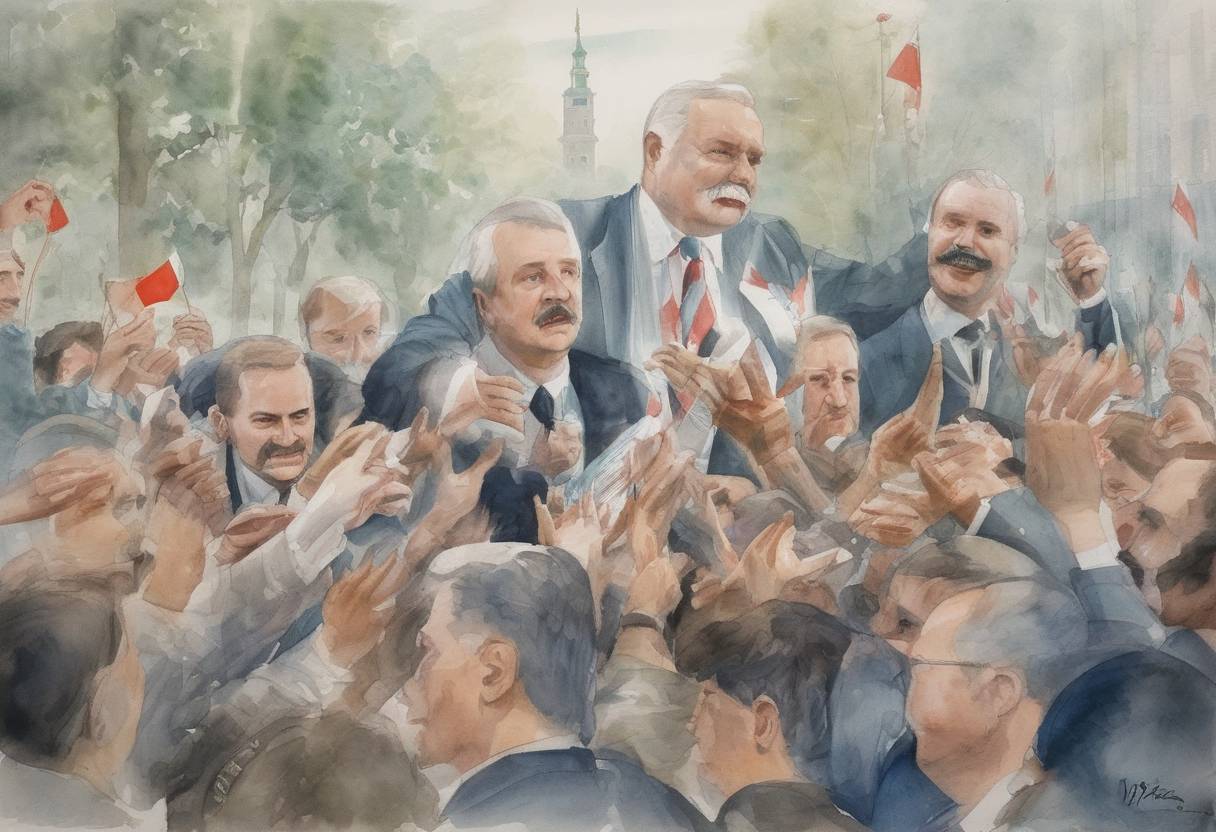
On December 9, 1990, Lech Wałęsa was elected as the President of Poland, marking a significant milestone in the country’s transition from communist rule to democracy. This event was a pivotal moment in Polish history and symbolized the broader wave of democratic change sweeping across Eastern Europe at the end of the Cold War.
Communist Rule in Poland: After World War II, Poland fell under Soviet influence and became a communist state. The Polish United Workers’ Party (PZPR) held power for decades, maintaining control through a combination of political repression and economic centralization.
Solidarity Movement: In the 1980s, the Solidarity movement, led by Lech Wałęsa, emerged as a powerful force for change. Originating in the Gdańsk Shipyard strikes of 1980, Solidarity was the first independent labor union in a Soviet-bloc country. It quickly grew into a broader social movement advocating for workers’ rights and political reform.
Fall of Communism: By the late 1980s, economic stagnation and political unrest weakened the communist regime. In 1989, the Round Table Talks between the government and opposition leaders, including Wałęsa, led to semi-free elections. These elections resulted in a landslide victory for Solidarity, paving the way for democratic reforms.
Significance: The 1990 presidential election was the first fully free and democratic presidential election in Poland since before World War II. It was a crucial step in consolidating the democratic gains achieved in the previous year.
Candidates: Lech Wałęsa, as the leader of Solidarity and a Nobel Peace Prize laureate, was a prominent candidate. His main opponent was Stanisław Tymiński, a businessman with no prior political experience, who surprisingly gained significant support.
Election Results: Wałęsa won the election with approximately 74% of the vote in the second round, defeating Tymiński. His victory was seen as a triumph for the Solidarity movement and a confirmation of Poland’s commitment to democratic governance.
Presidency: Wałęsa’s presidency (1990-1995) was marked by efforts to stabilize the Polish economy, integrate Poland into European structures, and further the democratic transition. His tenure faced challenges, including political infighting and economic difficulties, but it laid the groundwork for Poland’s future development.
Legacy: Wałęsa’s election symbolized the end of communist dominance in Poland and inspired similar movements across Eastern Europe. It underscored the power of grassroots activism and the potential for peaceful political change.
Broader Impact: The election was part of a larger pattern of democratization in the region, contributing to the eventual dissolution of the Soviet Union and the reconfiguration of the European political landscape.
Lech Wałęsa’s election as President of Poland remains a landmark event in the history of the country and a testament to the resilience and determination of the Polish people in their pursuit of freedom and democracy.
Source: www.britannica.com