The Landing of the Mayflower Pilgrims at Plymouth Rock
1620 · Plymouth, United States
The Mayflower Pilgrims landed at Plymouth Rock in present-day Massachusetts, marking a significant event in the early colonization of North America.
November 11, 1620
The Mayflower Compact was signed by Pilgrims aboard the Mayflower in Provincetown Harbor, laying the foundation for self-governance in the Plymouth Colony.
Provincetown, Plymouth Colony | Pilgrims
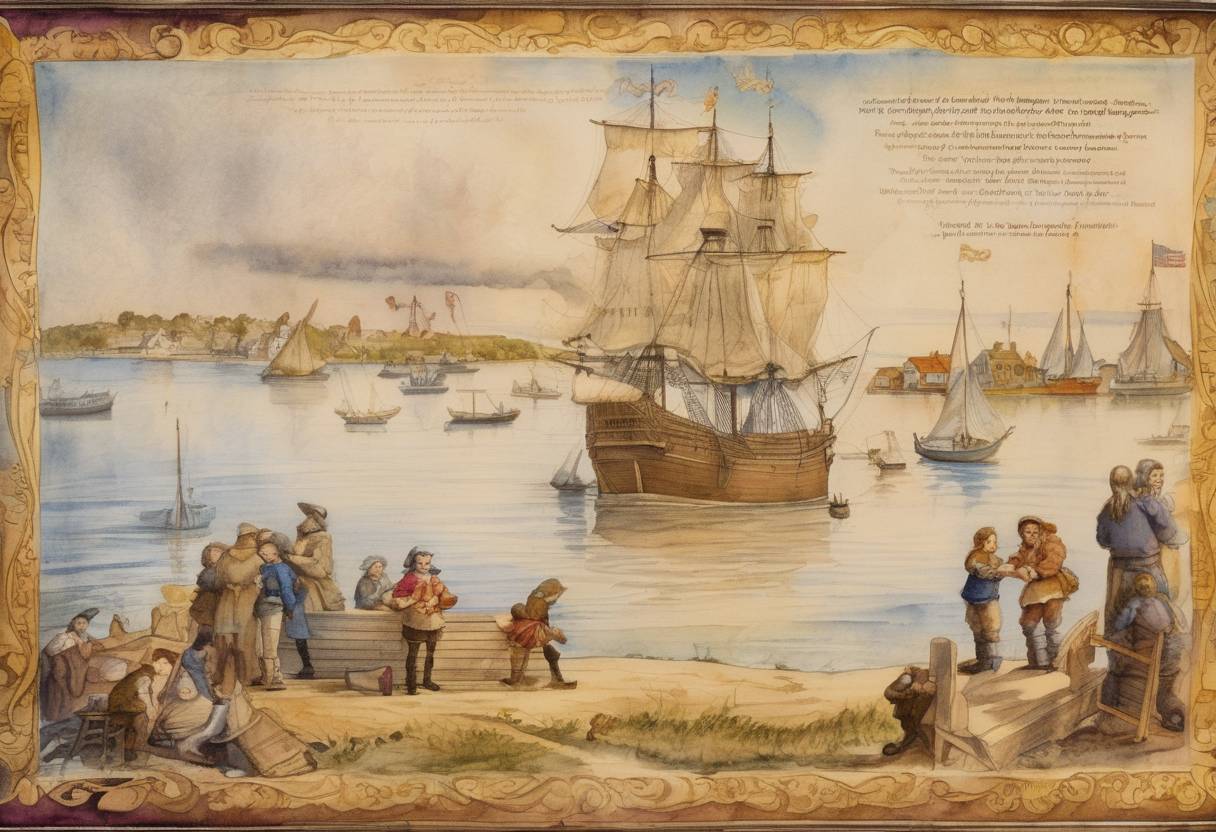
On November 11, 1620, a significant event in early American history took place when the Mayflower Compact was signed by the Pilgrims aboard the Mayflower in Provincetown Harbor. This document laid the foundation for self-governance in what would become the Plymouth Colony.
The Voyage of the Mayflower: The Mayflower, carrying 102 passengers known as the Pilgrims, set sail from England on September 16, 1620. The Pilgrims were a group of Separatists seeking religious freedom, along with other settlers looking for new opportunities in the New World.
Arrival in the New World: The Mayflower was originally bound for the Virginia Colony. However, due to navigational errors and treacherous seas, the ship landed far north of its intended destination, at Cape Cod, in present-day Massachusetts.
Reason for the Compact: Upon realizing they were outside the jurisdiction of the Virginia Company’s charter, some passengers questioned the authority of the leaders and the legitimacy of their settlement. To maintain order and establish a legal basis for governance, the Pilgrims drafted the Mayflower Compact.
Content of the Compact: The document was a simple agreement to form a “civil body politic” for the purpose of self-governance. It emphasized the creation of laws, ordinances, and offices for the general good of the colony, with the consent of the governed.
Signatories: The Compact was signed by 41 of the male passengers aboard the Mayflower. These signatories included both Pilgrims and non-Pilgrims, often referred to as “Strangers.”
Foundation for Self-Governance: The Mayflower Compact is often cited as one of the first steps toward democratic governance in America. It established a precedent for the principle of self-governance and majority rule.
Influence on Future Documents: While the Compact itself was a brief and straightforward agreement, its significance lies in its role as a foundational document. It influenced later, more comprehensive documents, such as the Fundamental Orders of Connecticut and the Massachusetts Bay Colony’s Body of Liberties.
Legacy: The Mayflower Compact remains a symbol of the Pilgrims’ commitment to unity and self-determination. It is celebrated as an early, influential step in the development of American democratic principles.
The signing of the Mayflower Compact marked a pivotal moment in the history of the Plymouth Colony and laid the groundwork for future governance structures in the New World.
Source: en.wikipedia.org