Thurgood Marshall Sworn in as Supreme Court Justice
1967 · Washington, D.C., United States
Thurgood Marshall was sworn in as the first African American Justice of the United States Supreme Court.
June 1, 1916
Louis Brandeis was confirmed as a Justice of the United States Supreme Court, becoming the first Jewish person to hold this position.
Washington, D.C., United States | United States Supreme Court
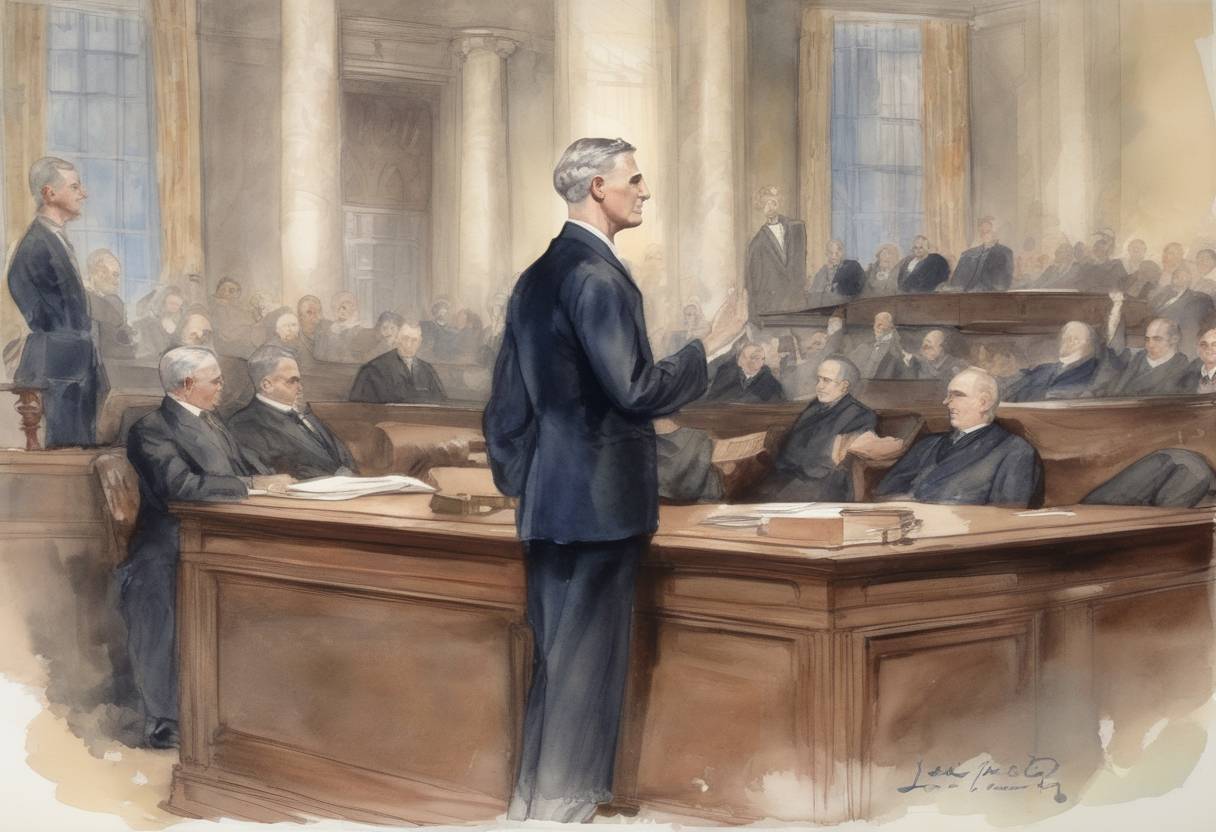
On June 1, 1916, Louis D. Brandeis was confirmed as an Associate Justice of the United States Supreme Court, marking a historic moment as he became the first Jewish person to hold this prestigious position. His confirmation was a significant event in American history, reflecting broader social and political changes in the early 20th century.
Louis Brandeis was born on November 13, 1856, in Louisville, Kentucky, to Jewish immigrant parents from Bohemia. He excelled academically, graduating from Harvard Law School with the highest grade point average in the school’s history at that time. Brandeis became a prominent lawyer and was known for his advocacy for social justice, privacy rights, and his opposition to monopolies.
President Woodrow Wilson nominated Brandeis to the Supreme Court on January 28, 1916. The nomination was controversial due to Brandeis’s progressive views and his Jewish heritage, which faced opposition from some quarters. His confirmation process was one of the most contentious in U.S. history up to that point, involving extensive hearings and debates.
Despite the opposition, Brandeis was confirmed by the Senate with a vote of 47 to 22. His confirmation was a victory for progressive reformers and marked a significant step towards greater diversity in the U.S. judiciary.
As a Supreme Court Justice, Brandeis served from 1916 to 1939. He was known for his strong defense of free speech, the right to privacy, and his support for economic regulation. Brandeis’s opinions often emphasized the importance of individual rights and the need to protect citizens from the excesses of big business and government.
His tenure on the court helped shape American constitutional law, and his legal philosophy continues to influence the judiciary. Brandeis’s confirmation and service on the Supreme Court paved the way for greater representation of minority groups in the U.S. legal system.
Louis Brandeis’s confirmation as the first Jewish Supreme Court Justice was a landmark event in American history. It not only reflected the changing social dynamics of the time but also set a precedent for future appointments to the nation’s highest court. His legacy as a champion of justice and equality endures in the annals of American legal history.
Source: en.wikipedia.org