Capture of Trinidad by British Forces on February 17, 1797
1797 · Port of Spain, Trinidad and Tobago
Sir Ralph Abercromby led British forces in the capture of the island of Trinidad from Spain during the French Revolutionary Wars.
February 3, 1781
American Revolutionary War: British forces seize the Dutch-owned Caribbean island of Sint Eustatius.
Sint Eustatius, Netherlands | British Army
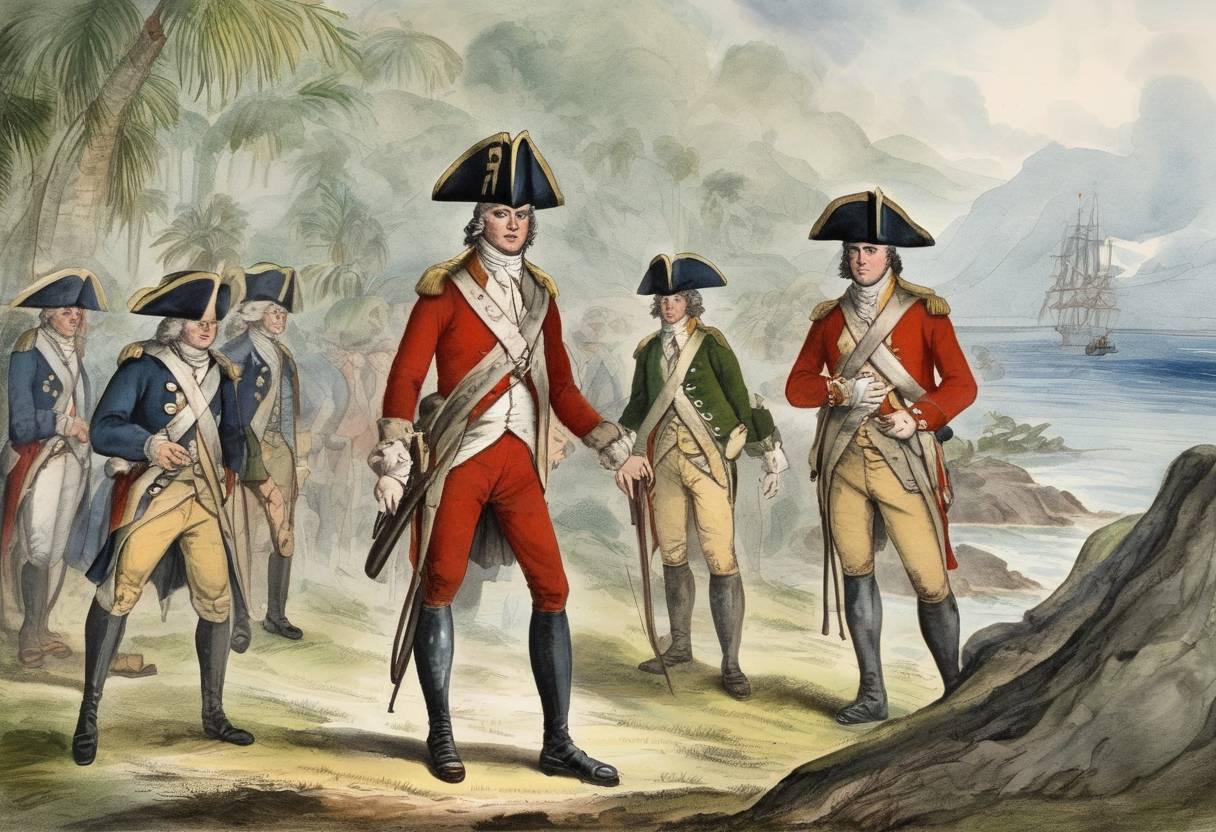
During the American Revolutionary War, the Caribbean island of Sint Eustatius played a crucial role due to its strategic location and status as a free port. Owned by the Dutch, the island became a hub for trade, including the exchange of arms and supplies crucial to the American colonies’ war effort against Britain. The island’s neutrality and open trade policies allowed it to become a vital supply line for the American revolutionaries.
Dutch Neutrality: The Dutch Republic maintained a neutral stance during the early years of the American Revolutionary War. However, their trade with the American colonies, particularly through Sint Eustatius, was viewed unfavorably by the British.
The First Salute: In November 1776, Sint Eustatius became the first foreign entity to officially recognize the American flag, when its governor, Johannes de Graaff, ordered a salute to the American brig Andrew Doria. This act further strained Dutch-British relations.
Escalating Tensions: By 1780, tensions between Britain and the Dutch Republic had escalated, partly due to the latter’s involvement in the League of Armed Neutrality, which aimed to protect neutral shipping from British interference.
British Expedition: On February 3, 1781, a British fleet under Admiral Sir George Rodney and General John Vaughan arrived at Sint Eustatius. The British forces quickly overwhelmed the island’s defenses, as the Dutch garrison was unprepared for a large-scale assault.
Occupation: The British seized control of the island, capturing a vast amount of goods, including arms and ammunition intended for the American revolutionaries. The seizure was a significant blow to the American war effort, as it disrupted a critical supply line.
Economic Impact: The capture of Sint Eustatius had a substantial economic impact, as the British confiscated goods valued at millions of pounds. This seizure affected not only the American colonies but also European merchants who had goods stored on the island.
Diplomatic Repercussions: The British seizure of a neutral Dutch territory contributed to the broader conflict, leading to the Fourth Anglo-Dutch War (1780-1784). This war further strained British resources, as they were now engaged on multiple fronts.
Strategic Significance: Although the British occupation of Sint Eustatius was a tactical victory, it did not significantly alter the course of the American Revolutionary War. The island was recaptured by the French in 1784, following the end of hostilities.
The seizure of Sint Eustatius highlights the complex international dimensions of the American Revolutionary War. It underscores the global nature of the conflict, involving multiple European powers and their colonial interests. The event also illustrates the importance of economic warfare and the impact of trade on military strategies during the 18th century.
Source: en.wikipedia.org