Captain James Cook's Visit to Maui on November 26, 1778
1778 · Maui, Hawaii
In the Hawaiian Islands, Captain James Cook becomes the first European to visit Maui.
February 14, 1779
British explorer Captain James Cook was killed by Native Hawaiians during his third exploratory voyage in the Pacific, at Kealakekua Bay on the Big Island of Hawaii.
Kealakekua Bay, Hawaii
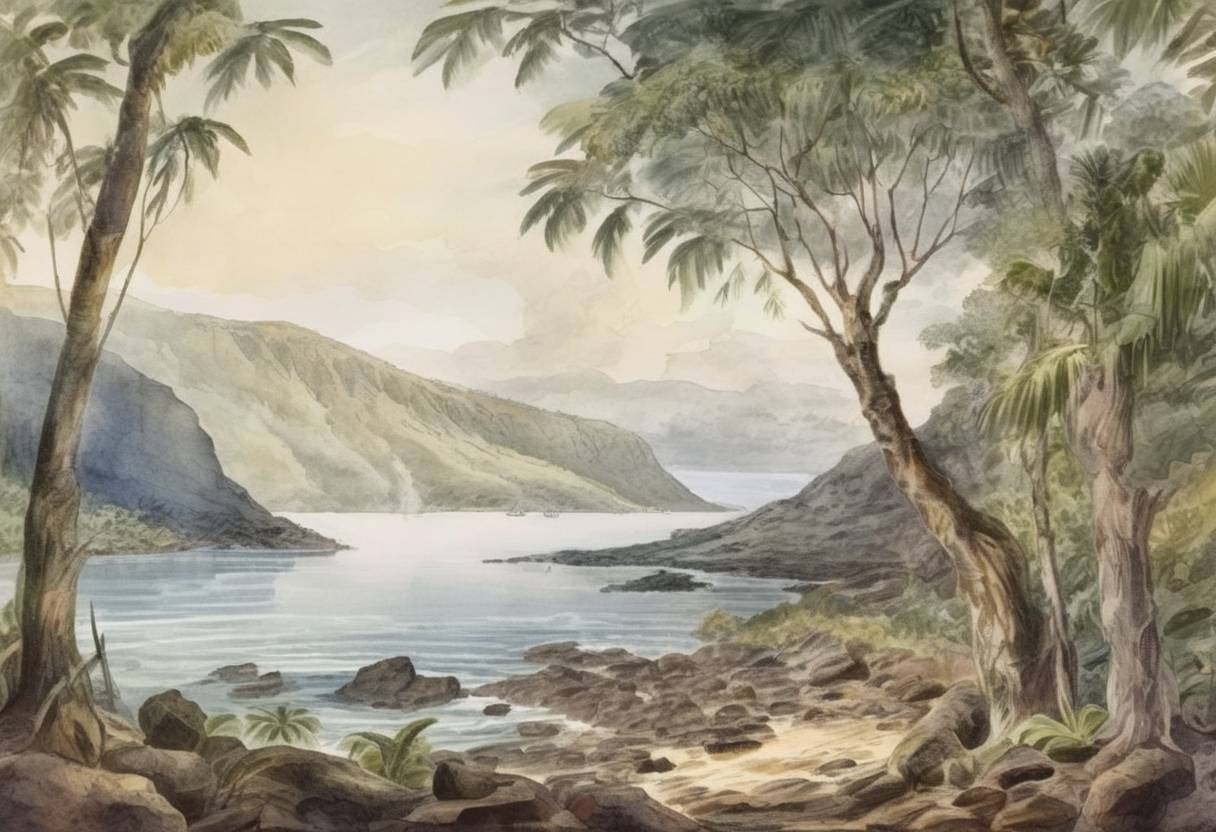
On February 14, 1779, the renowned British explorer Captain James Cook met his untimely death at Kealakekua Bay on the Big Island of Hawaii. This event marked a significant moment in the history of European exploration in the Pacific and had lasting implications for both European and Hawaiian societies.
Captain James Cook was a seasoned British navigator and explorer, known for his extensive voyages that contributed significantly to the European understanding of the Pacific region. His third and final voyage, which began in 1776, aimed to discover the Northwest Passage—a hypothetical sea route connecting the Atlantic and Pacific Oceans through the Arctic Ocean. During this expedition, Cook’s ships, HMS Resolution and HMS Discovery, made their way to the Hawaiian Islands, which Cook had first visited in 1778.
Cook’s arrival at Kealakekua Bay coincided with the Makahiki festival, a Hawaiian harvest celebration dedicated to the god Lono. The timing of his arrival, along with the appearance of his ships, led some Hawaiians to associate Cook with Lono, and he was initially received with great reverence and hospitality.
Despite the initial warm reception, tensions began to rise between Cook’s crew and the Hawaiians. The prolonged stay of the British ships strained local resources, and cultural misunderstandings further exacerbated the situation. After leaving the bay, Cook was forced to return due to a damaged mast on the Resolution.
On February 14, 1779, a series of events led to a violent confrontation. The British attempted to take the Hawaiian chief, Kalaniʻōpuʻu, hostage to leverage the return of a stolen boat. This tactic, previously used successfully in other encounters, backfired. A skirmish broke out on the beach, during which Cook was struck on the head and stabbed to death by Hawaiian warriors.
Cook’s death marked the end of an era of exploration led by one of history’s most notable navigators. His voyages had expanded European knowledge of the Pacific, mapping numerous islands and coastlines. However, his death also highlighted the growing tensions and cultural clashes between European explorers and indigenous populations.
The incident at Kealakekua Bay served as a cautionary tale about the complexities of cross-cultural encounters during the age of exploration. It underscored the need for mutual respect and understanding, lessons that would resonate in subsequent interactions between Europeans and indigenous peoples across the globe.
Source: en.wikipedia.org