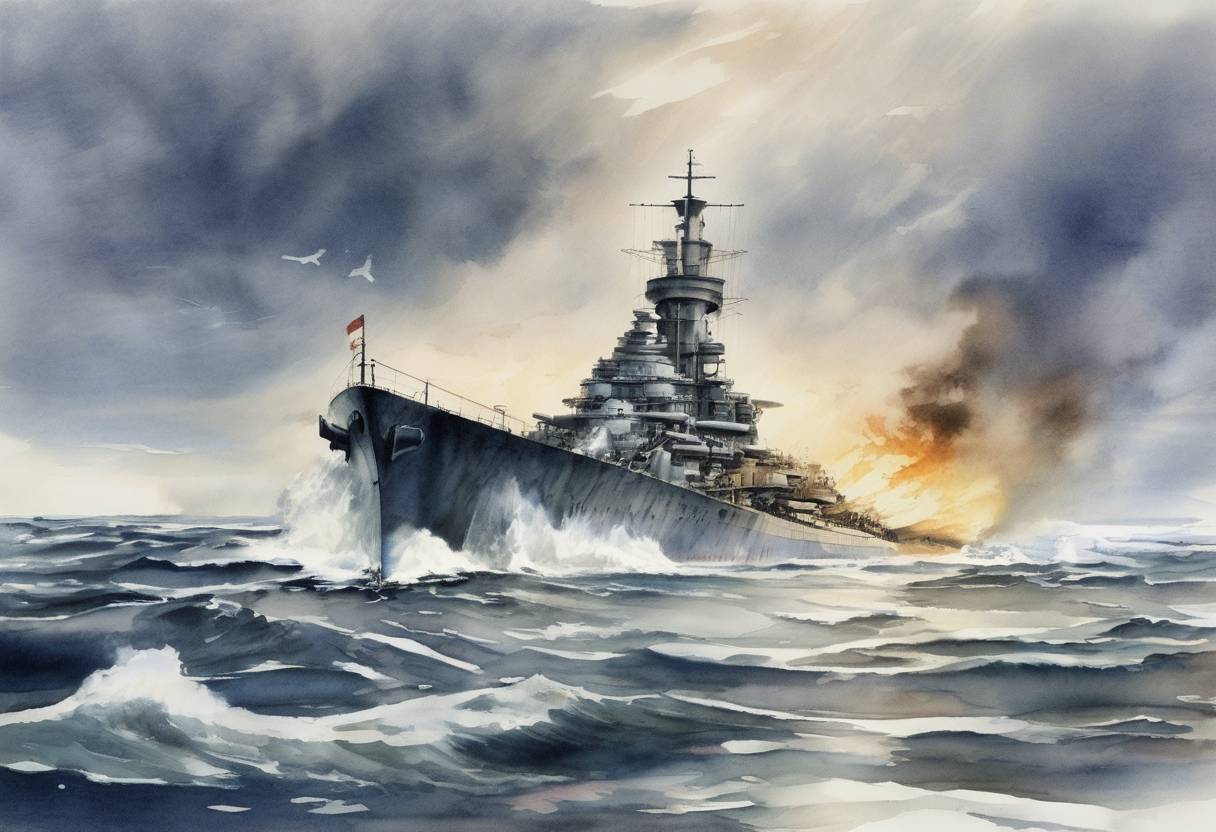
Sinking of the German Battleship Scharnhorst
Overview
On December 26, 1943, during World War II, the German battleship Scharnhorst was sunk by the Royal Navy in the Battle of the North Cape. This engagement marked a significant naval confrontation in the Arctic waters off Norway, highlighting the strategic importance of controlling sea routes in the region.
Background
The Scharnhorst was a German capital ship, part of the Kriegsmarine’s efforts to disrupt Allied convoys supplying the Soviet Union via the Arctic route. The ship, along with its sister ship Gneisenau, was known for its speed and firepower, posing a considerable threat to Allied naval operations.
Strategic Context
- Arctic Convoys: The Allies were running convoys to the Soviet Union, crucial for maintaining the Eastern Front against Nazi Germany. These convoys were a lifeline, carrying essential supplies and military equipment.
- German Naval Strategy: The Kriegsmarine aimed to intercept and destroy these convoys to weaken the Soviet war effort and divert Allied resources.
The Battle of the North Cape
Prelude
- Operation Ostfront: The German plan to attack the Arctic convoys. On December 25, 1943, Scharnhorst set sail from Altafjord, Norway, to intercept Convoy JW 55B.
- British Intelligence: The Royal Navy, aware of German intentions through intercepted communications, prepared a counter-operation led by Admiral Sir Bruce Fraser.
The Engagement
- Initial Contact: On December 26, the British cruisers HMS Belfast, HMS Norfolk, and HMS Sheffield engaged Scharnhorst, initially at long range.
- Main Battle: Admiral Fraser’s force, including the battleship HMS Duke of York, closed in. The engagement intensified as the British ships used radar to track and target the German battleship effectively.
- Final Moments: After sustaining heavy damage from British gunfire and torpedoes, Scharnhorst was eventually sunk. Out of a crew of over 1,900, only 36 survived.
Aftermath and Significance
- Strategic Victory: The sinking of Scharnhorst was a major victory for the Allies, significantly reducing the threat to Arctic convoys.
- Impact on Kriegsmarine: The loss of Scharnhorst marked a decline in the operational capability of the German surface fleet, shifting the naval balance in the Arctic.
- Moral Boost: The victory bolstered Allied morale and demonstrated the effectiveness of coordinated naval operations and intelligence.
Conclusion
The Battle of the North Cape and the sinking of Scharnhorst underscored the strategic importance of naval power in World War II and the critical role of intelligence and technology in modern warfare. This event contributed to securing the Arctic supply routes, aiding the Soviet Union’s efforts on the Eastern Front, and ultimately influencing the broader outcome of the war.