The Dekemvriana Conflict: December 3, 1944
1944 · Athens, Greece
British troops and their allies clashed with leftist forces (EAM-ELAS) in Athens, marking the start of the Dekemvriana conflict in Greece.
September 26, 1687
The Parthenon in Athens is severely damaged when a Venetian mortar round ignites an Ottoman ammunition dump inside the building during the siege of the Acropolis.
Athens, Greece | Venetian Republic
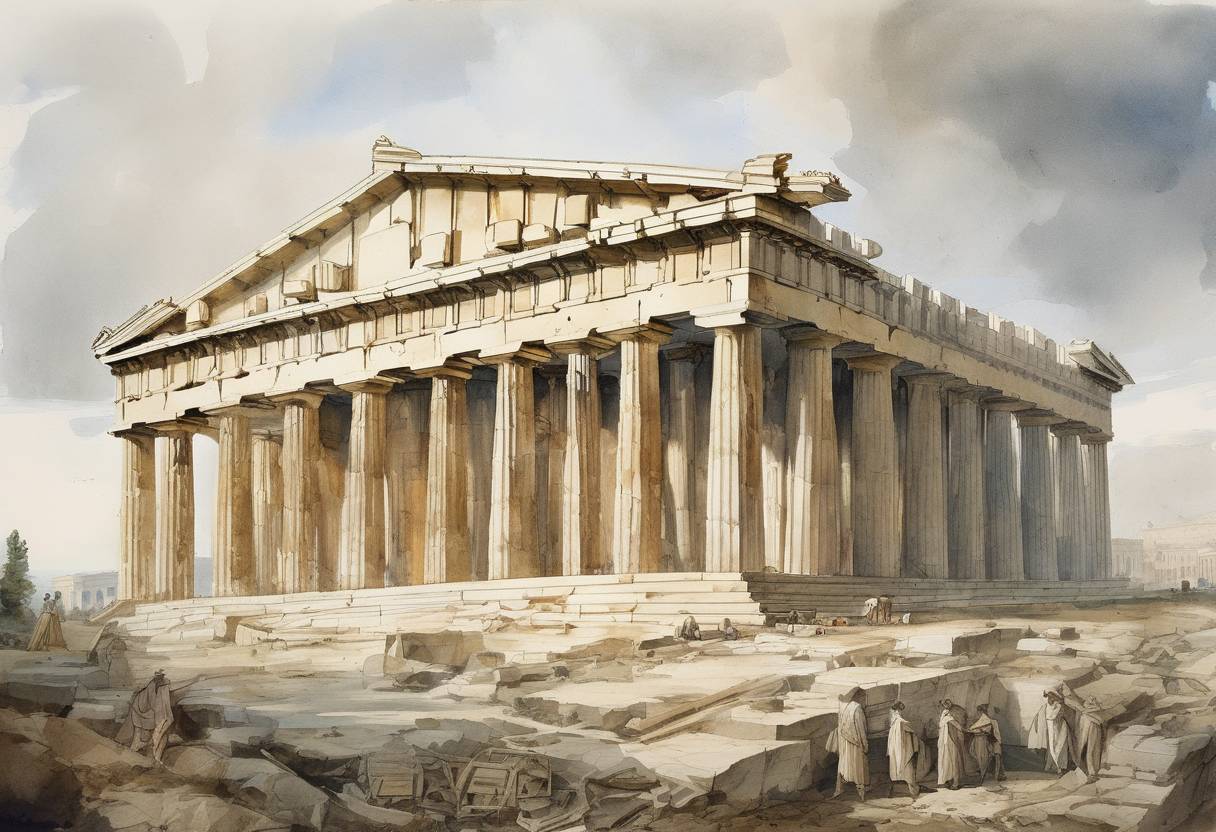
On September 26, 1687, a significant and tragic event occurred during the siege of the Acropolis in Athens, leading to the severe damage of one of the most iconic structures of ancient Greece, the Parthenon.
The late 17th century was a period of intense conflict in Europe, marked by the ongoing struggle between the Ottoman Empire and various European powers. The Venetian Republic, under the command of Francesco Morosini, sought to expand its influence and reclaim territories lost to the Ottomans. This ambition led to the Morean War (1684–1699), part of the larger conflict known as the Great Turkish War.
In 1687, the Venetians, led by Morosini, laid siege to Athens, which was then under Ottoman control. The Acropolis, a fortified citadel and the site of the Parthenon, served as a strategic military position for the Ottomans. They used the Parthenon as a storage site for gunpowder and ammunition, a decision that would have dire consequences.
On September 26, 1687, during the siege, the Venetian forces fired a mortar round that struck the Parthenon. The impact ignited the gunpowder stored inside, causing a massive explosion. The blast resulted in extensive damage to the structure, destroying large portions of the building and its sculptures. The explosion marked a significant loss of cultural heritage, as the Parthenon was not only a symbol of ancient Greek civilization but also an architectural masterpiece.
The destruction of the Parthenon was a cultural tragedy, as it led to the loss of invaluable historical and artistic treasures. The event highlighted the vulnerability of cultural heritage sites during wartime and sparked discussions about the preservation of such monuments.
In the years following the explosion, the Parthenon remained in a state of ruin. Efforts to restore and preserve the site began in the 19th century and continue to this day, reflecting its enduring significance as a symbol of ancient Greek art and architecture.
The damage to the Parthenon during the siege of the Acropolis is a poignant reminder of the impact of warfare on cultural heritage. It underscores the importance of protecting historical sites and the need for international cooperation in preserving the legacies of past civilizations.
The event also serves as a testament to the enduring legacy of the Parthenon, which, despite its partial destruction, continues to inspire and captivate people worldwide as a symbol of ancient Greece’s artistic and architectural achievements.
Source: www.britannica.com