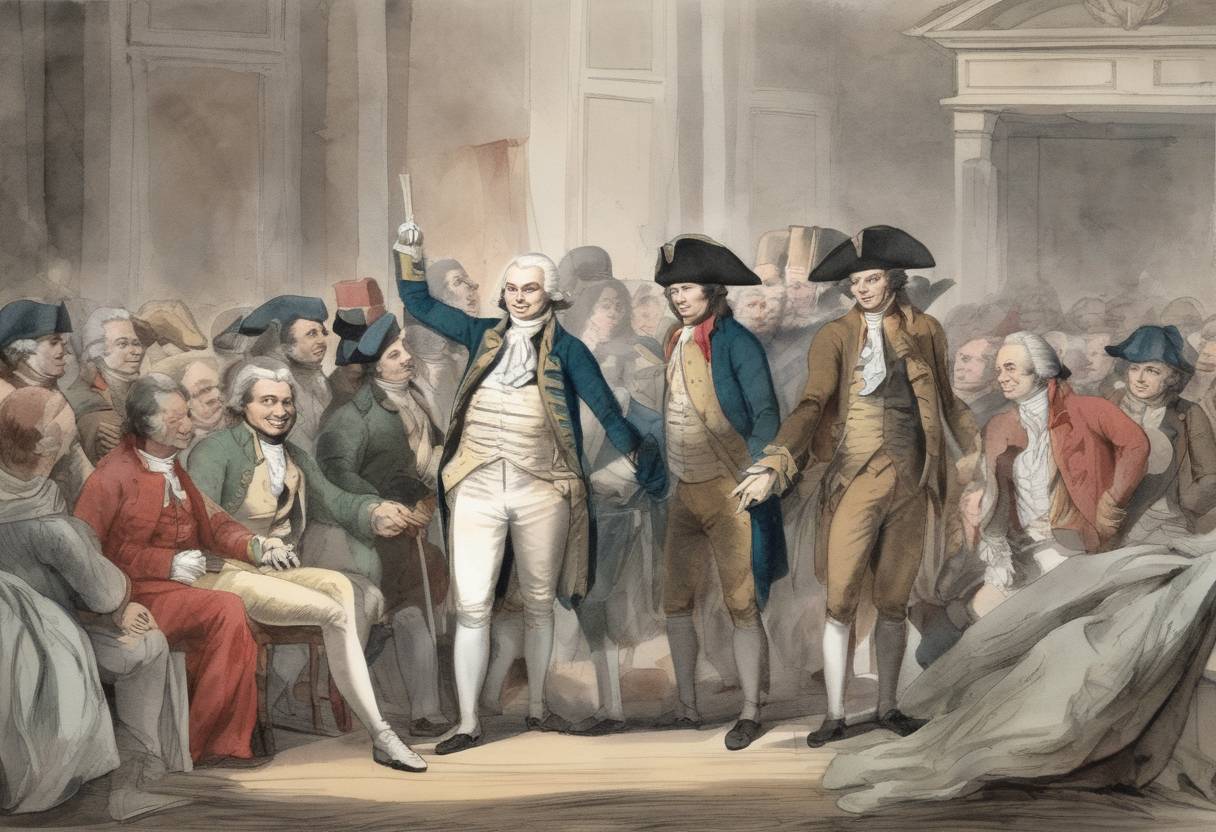
Arrest of Maximilien Robespierre - July 27, 1794
On July 27, 1794, a pivotal event in the French Revolution unfolded with the arrest of Maximilien Robespierre, a leading figure of the Revolution and a key architect of the Reign of Terror. This day marked a significant turning point, effectively ending the Reign of Terror and altering the course of the Revolution.
Background
Maximilien Robespierre was a prominent member of the Jacobin Club and a leading voice in the Committee of Public Safety, the body that effectively governed France during the most radical phase of the Revolution. Under his influence, the Committee instituted the Reign of Terror, a period characterized by political purges and mass executions aimed at rooting out counter-revolutionaries and consolidating the revolutionary government.
The Reign of Terror, which began in September 1793, saw thousands executed by guillotine, including King Louis XVI and Queen Marie Antoinette. Robespierre justified these actions as necessary to protect the Revolution from its enemies, both internal and external.
Events Leading to the Arrest
By mid-1794, the Reign of Terror had begun to lose support. The pervasive atmosphere of fear and the arbitrary nature of the executions led to growing discontent among the populace and within the National Convention itself. Robespierre’s increasing dominance and his puritanical vision for the Republic alienated many former allies.
On July 26, 1794, Robespierre delivered a speech to the National Convention, in which he hinted at the existence of a conspiracy against the Republic but refused to name the conspirators. This speech alarmed many deputies, who feared they might be the next targets of his purges.
The Arrest
On July 27, 1794, known as 9 Thermidor Year II in the French Revolutionary Calendar, members of the National Convention, led by figures such as Jean-Lambert Tallien and Joseph Fouché, moved against Robespierre. They accused him of tyranny and demanded his arrest. The Convention voted to arrest Robespierre, along with his close associates, including Louis Antoine de Saint-Just and Georges Couthon.
Robespierre and his allies were taken to the Hôtel de Ville in Paris, where they attempted to rally support. However, the National Guard, which had once been loyal to Robespierre, sided with the Convention. By the evening, forces loyal to the Convention stormed the Hôtel de Ville, arresting Robespierre and his supporters.
Aftermath and Historical Significance
The following day, July 28, 1794, Robespierre and 21 of his associates were executed by guillotine without trial. This event marked the end of the Reign of Terror and the beginning of the Thermidorian Reaction, a period of political realignment and the dismantling of the radical revolutionary policies.
Robespierre’s fall from power signaled a shift away from the extreme measures of the Terror and paved the way for the rise of the more moderate Directory, which governed France until the rise of Napoleon Bonaparte. The arrest and execution of Robespierre remain a significant moment in the history of the French Revolution, illustrating the volatile nature of revolutionary politics and the dangers of unchecked power.