The Foundation of Cologne Cathedral: August 15, 1248
1248 · Cologne, Holy Roman Empire
The foundation stone of Cologne Cathedral was laid, marking the beginning of its construction.
August 25, 1248
The foundation stone of Cologne Cathedral was laid, marking the beginning of its construction, which would continue intermittently for over 600 years.
Cologne, Holy Roman Empire | Catholic Church
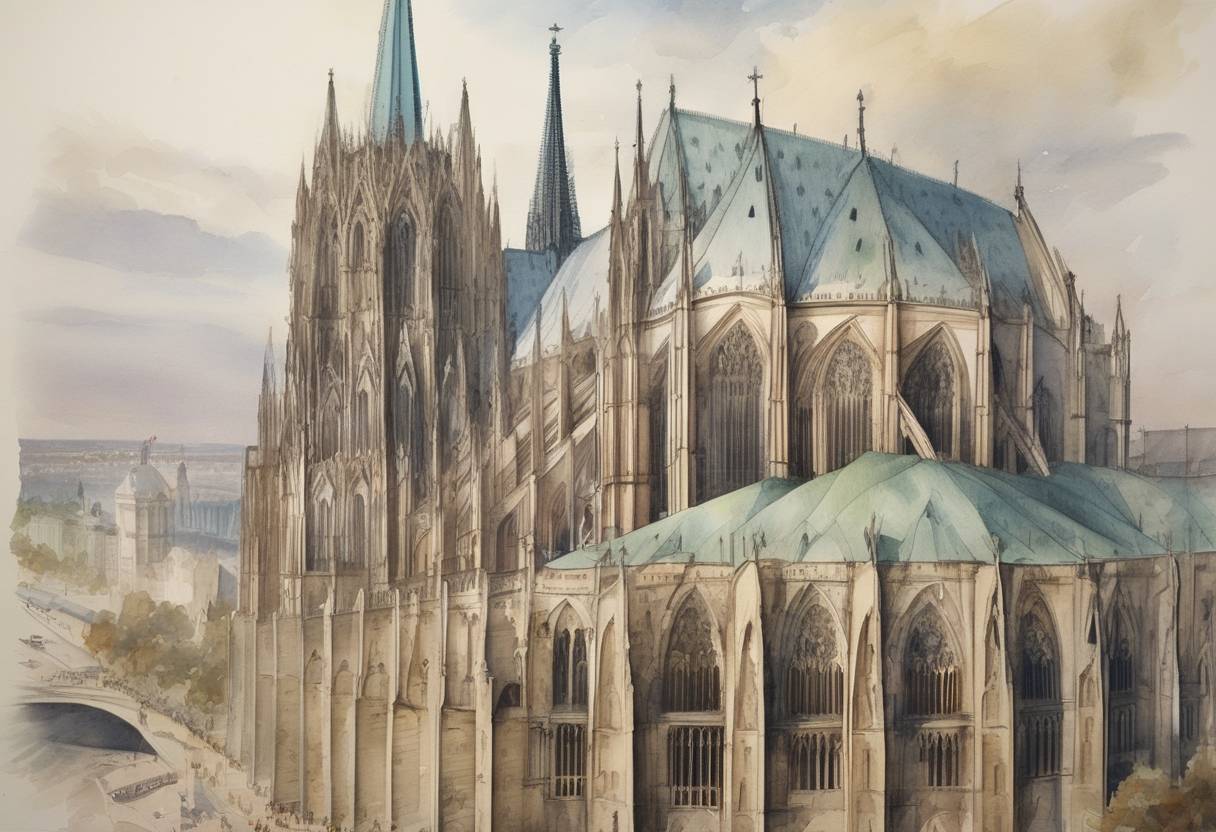
On August 25, 1248, the foundation stone of Cologne Cathedral was laid, marking the commencement of a monumental architectural endeavor that would span over six centuries. This event was a significant milestone in the history of Gothic architecture and the cultural heritage of Germany.
Cologne, a major city in the Holy Roman Empire, was an important religious and trade center during the Middle Ages. The decision to build a grand cathedral was driven by the desire to replace the old Carolingian cathedral and to house the relics of the Three Wise Men, which had been acquired by the Archbishop of Cologne, Rainald of Dassel, in 1164. These relics made Cologne a major pilgrimage site, necessitating a larger and more magnificent structure.
The design of Cologne Cathedral was heavily influenced by the Gothic style, characterized by its pointed arches, ribbed vaults, and flying buttresses. The cathedral’s plan was inspired by the great cathedrals of France, particularly Amiens Cathedral. The original architect, Master Gerhard, envisioned a structure that would reflect the glory of God and the power of the Church.
The construction of Cologne Cathedral was a lengthy and intermittent process, marked by several distinct phases:
Initial Construction (1248-1473): The first phase saw the completion of the choir, which was consecrated in 1322. However, progress slowed significantly due to financial constraints and changing political circumstances.
Hiatus and Resumption (1473-1842): Construction halted in the late 15th century, leaving the cathedral incomplete for several centuries. It wasn’t until the 19th century, during a period of renewed interest in Gothic architecture and German nationalism, that efforts to complete the cathedral were revived.
Completion (1842-1880): Under the direction of architects such as Ernst Friedrich Zwirner, construction resumed in 1842. The cathedral was finally completed in 1880, with the finishing of its iconic twin spires, which made it the tallest building in the world at that time.
Cologne Cathedral is not only a masterpiece of Gothic architecture but also a symbol of resilience and faith. It survived the tumultuous periods of the Reformation, the Napoleonic Wars, and World War II, during which it sustained damage but remained standing amidst the ruins of Cologne.
Today, Cologne Cathedral is a UNESCO World Heritage Site and continues to be a major pilgrimage site and tourist attraction, drawing millions of visitors each year. Its construction history reflects the complex interplay of religious devotion, artistic ambition, and historical circumstance.
The laying of the foundation stone of Cologne Cathedral on August 25, 1248, marked the beginning of a remarkable journey in architectural history. The cathedral stands as a testament to the enduring human spirit and the pursuit of beauty and faith through the ages.
Source: en.wikipedia.org