The Overturning of President Roh Moo-hyun's Impeachment: May 14, 2004
2004 · Seoul, South Korea
The Constitutional Court of South Korea overturned the impeachment of President Roh Moo-hyun, allowing him to resume his duties.
March 10, 2017
South Korea's Constitutional Court upheld the impeachment of President Park Geun-hye, removing her from office over a corruption scandal.
Seoul, South Korea | Constitutional Court of South Korea
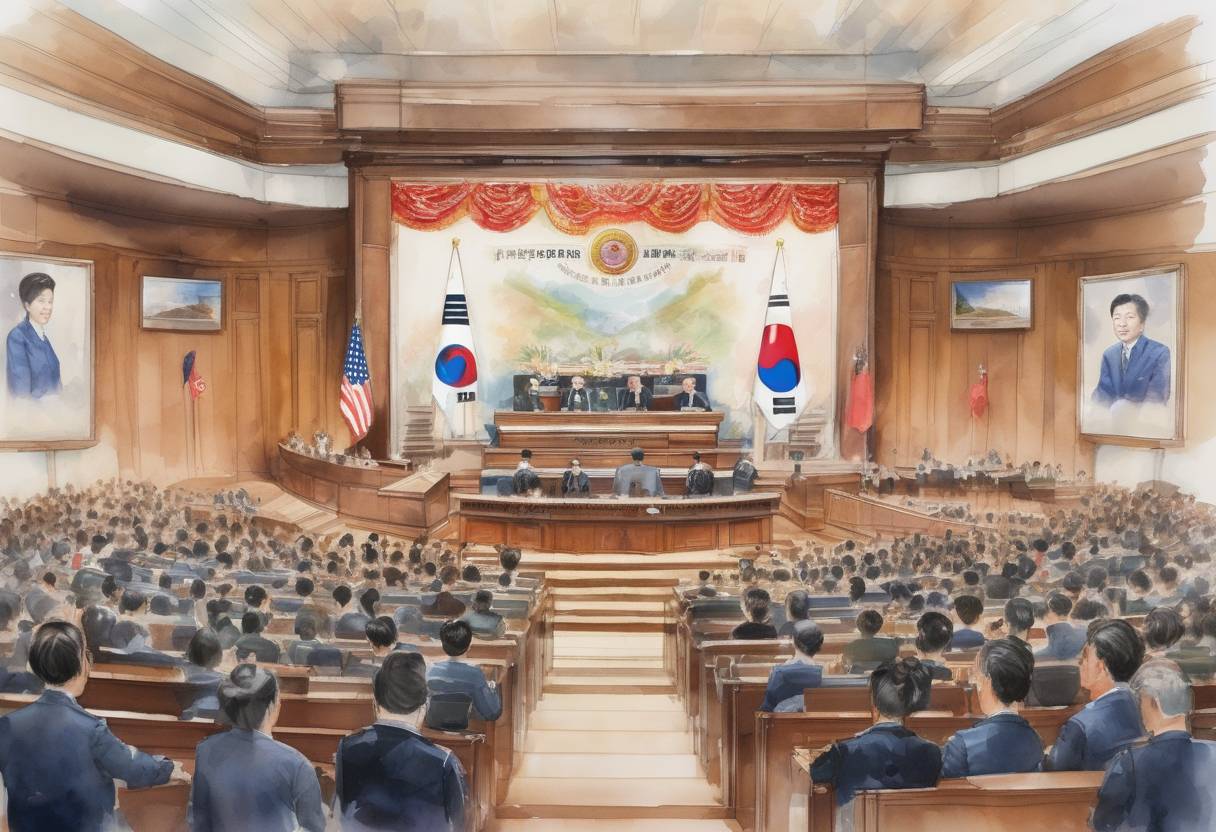
On March 10, 2017, South Korea’s Constitutional Court upheld the impeachment of President Park Geun-hye, marking a significant moment in the country’s political history. This decision effectively removed her from office, making her the first South Korean president to be impeached and dismissed.
Park Geun-hye, the daughter of former South Korean dictator Park Chung-hee, was elected as the country’s first female president in 2012. Her presidency was initially marked by promises of economic reform and a strong stance against North Korea. However, her administration soon became embroiled in a major corruption scandal that would lead to her downfall.
The scandal centered around Park’s close confidante, Choi Soon-sil, who was accused of using her relationship with the president to extort millions of dollars from South Korean conglomerates, including Samsung. Choi had no official government position, yet she was found to have had undue influence over state affairs, including editing presidential speeches and accessing classified documents.
The revelations sparked massive public outrage, leading to weeks of protests across the country, with millions of South Koreans demanding Park’s resignation. The scandal highlighted issues of corruption and cronyism within the South Korean political system.
In December 2016, the South Korean National Assembly voted overwhelmingly to impeach Park Geun-hye. The impeachment motion accused her of violating the constitution and the law by allowing Choi to meddle in state affairs and by failing to protect the people’s rights.
Following the National Assembly’s decision, Park’s presidential powers were suspended, and Prime Minister Hwang Kyo-ahn assumed the role of acting president. The case was then referred to the Constitutional Court, which was tasked with determining whether to uphold the impeachment.
On March 10, 2017, the Constitutional Court delivered a unanimous 8-0 verdict in favor of upholding the impeachment. The court found that Park had “continuously violated the law” and had “seriously impaired the spirit of… democracy and the rule of law.”
The court’s decision was based on evidence that Park had conspired with Choi to solicit bribes from businesses and had allowed her to interfere in government affairs. The ruling was seen as a victory for the rule of law and a testament to the strength of South Korea’s democratic institutions.
Following her removal from office, Park Geun-hye was arrested and faced a criminal trial. In 2018, she was convicted of corruption, abuse of power, and coercion, and was sentenced to 24 years in prison, which was later extended to 25 years after additional charges.
The impeachment and subsequent conviction of Park Geun-hye had significant political ramifications in South Korea. It led to the election of Moon Jae-in, a liberal candidate who promised to tackle corruption and reform the chaebol (large family-owned business conglomerates) system.
The event also served as a powerful reminder of the importance of accountability and transparency in governance, reinforcing the public’s role in holding leaders to account.
In summary, the impeachment of Park Geun-hye was a pivotal moment in South Korean history, reflecting the country’s commitment to democratic principles and the rule of law.
Source: www.bbc.com