Adolf Hitler's Decision to Remain in Berlin: April 22, 1945
1945 · Berlin, Germany
Adolf Hitler admits defeat in his underground bunker and decides to remain in Berlin until the end of the war.
March 16, 1935
Adolf Hitler orders Germany to rearm in violation of the Treaty of Versailles, marking a significant step towards World War II.
, Germany | Nazi Germany
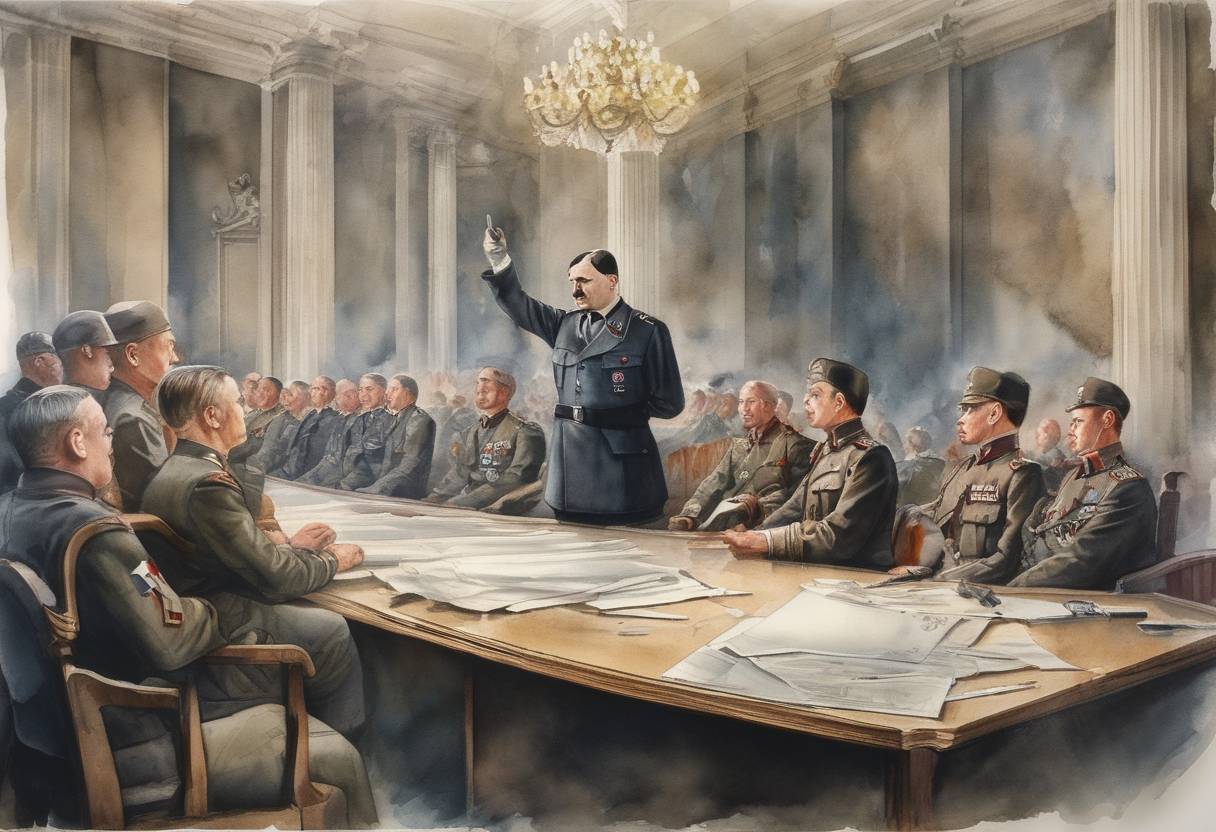
On March 16, 1935, Adolf Hitler made a pivotal move that would significantly alter the course of European history and contribute to the onset of World War II. On this day, Hitler announced the rearmament of Germany, a direct violation of the Treaty of Versailles, which had been signed at the end of World War I.
Treaty of Versailles (1919): The treaty imposed strict limitations on Germany’s military capabilities. It restricted the German Army to 100,000 men, prohibited conscription, and banned tanks, heavy artillery, and an air force. The treaty aimed to prevent Germany from becoming a military threat again.
Rise of the Nazi Party: Adolf Hitler and the National Socialist German Workers’ Party (Nazi Party) rose to power in 1933. Hitler’s agenda included overturning the Treaty of Versailles, which he and many Germans viewed as a humiliating and unjust imposition by the Allied powers.
Announcement of Rearmament: Hitler publicly declared the reintroduction of conscription and the expansion of the German Army to 550,000 men. This announcement was part of a broader strategy to rebuild Germany’s military strength.
Creation of the Luftwaffe: Alongside the expansion of the army, Hitler announced the establishment of the Luftwaffe, Germany’s air force, which had been secretly developing since 1933.
International Response: The announcement was met with condemnation from France, the United Kingdom, and other signatories of the Treaty of Versailles. However, the initial response was largely diplomatic, with no immediate military or economic sanctions imposed on Germany.
Domestic Support: Within Germany, the rearmament was popular among many citizens who viewed it as a restoration of national pride and sovereignty.
Prelude to World War II: Hitler’s decision to rearm Germany was a critical step in his aggressive foreign policy, which ultimately led to the outbreak of World War II in 1939. It emboldened further violations of the Treaty of Versailles, including the remilitarization of the Rhineland in 1936 and the annexation of Austria in 1938.
Failure of Appeasement: The lack of a strong response from the Allied powers is often cited as an example of the policy of appeasement, which failed to check Hitler’s ambitions and contributed to the escalation of tensions in Europe.
In summary, the rearmament of Germany on March 16, 1935, marked a significant turning point in the interwar period. It set the stage for the aggressive expansionist policies of Nazi Germany and highlighted the weaknesses of the post-World War I peace settlement.
Source: www.history.com