The Battle of Jersey: January 6, 1781
1781 · Saint Helier, Jersey
The Battle of Jersey takes place, an attempt by French forces to invade the island of Jersey, which ends in a British victory.
April 17, 1797
Sir Ralph Abercromby led British forces in the capture of the island of Trinidad from Spain during the French Revolutionary Wars.
Port of Spain, Trinidad and Tobago | British Army
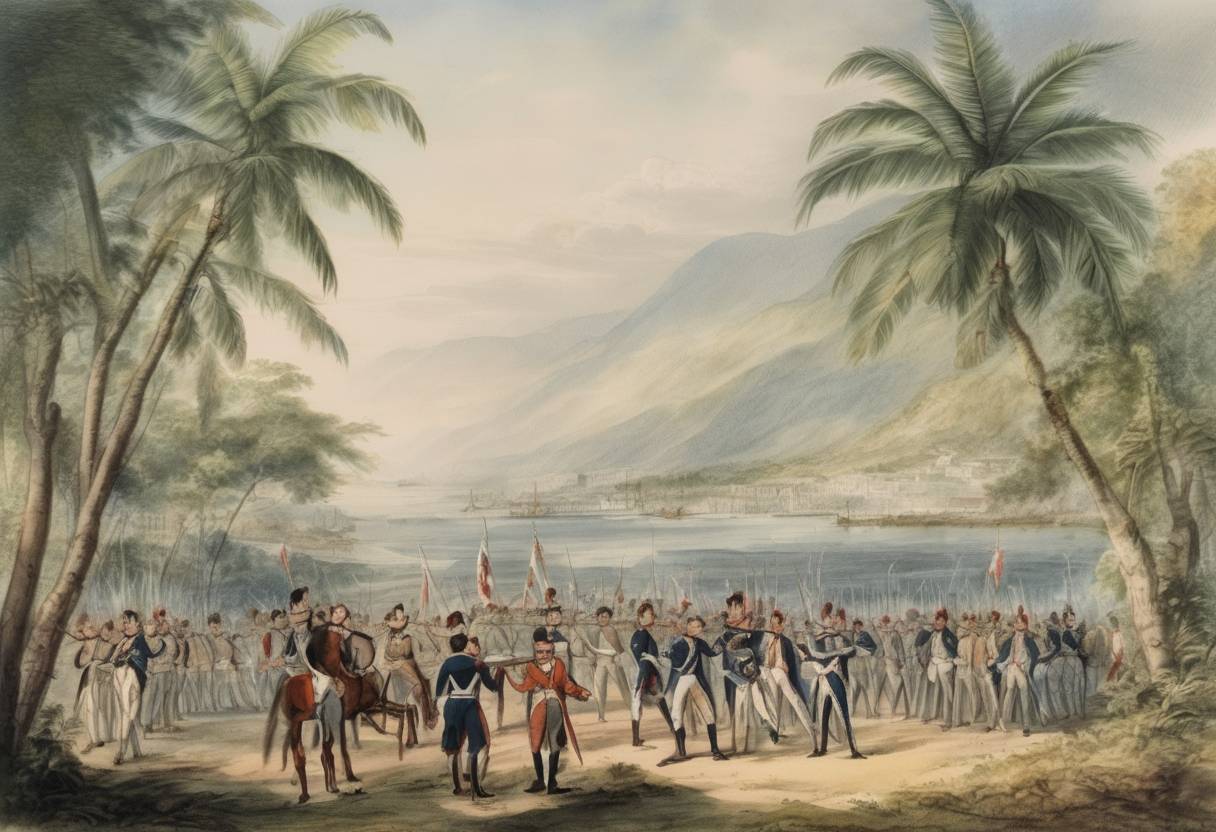
On February 17, 1797, British forces under the command of Sir Ralph Abercromby successfully captured the island of Trinidad from Spain during the French Revolutionary Wars. This strategic victory was part of a broader British campaign to weaken Spanish influence in the Caribbean and secure valuable territories.
The late 18th century was a period of intense conflict in Europe, with the French Revolutionary Wars (1792–1802) pitting revolutionary France against various European coalitions, including Great Britain. Spain, initially an ally of France, became a target for British military operations in the Caribbean due to its valuable colonies and strategic naval positions.
Trinidad, a Spanish colony since the late 15th century, was of particular interest to the British due to its proximity to other British-held territories and its potential as a naval base. The island’s economy was primarily based on agriculture, with sugar and cocoa as key exports.
In early 1797, Sir Ralph Abercromby, a seasoned British military leader, was tasked with leading an expedition to capture Trinidad. Abercromby had a distinguished military career, having served in various campaigns across Europe and the Caribbean.
The British fleet, commanded by Admiral Sir Henry Harvey, set sail for Trinidad with a force of approximately 7,000 troops. The expedition was well-planned, with the British leveraging their naval superiority to approach the island undetected.
On February 16, 1797, the British fleet arrived off the coast of Trinidad. The Spanish governor, José María Chacón, was caught unprepared for the scale and speed of the British assault. The following day, on February 17, Abercromby’s forces launched a coordinated attack on the island’s defenses.
The British troops quickly overwhelmed the Spanish forces, who were poorly equipped and outnumbered. Recognizing the futility of resistance, Governor Chacón surrendered the island to the British without significant bloodshed. The capture was remarkably swift, with minimal casualties on both sides.
The successful capture of Trinidad was a significant strategic victory for the British. It not only deprived Spain of a valuable colony but also strengthened British control in the Caribbean. The island’s acquisition allowed the British to establish a crucial naval base, enhancing their ability to project power in the region.
Trinidad remained under British control following the Treaty of Amiens in 1802, which temporarily ended hostilities between Britain and France. The island’s economy flourished under British rule, with the expansion of sugar plantations and the introduction of new agricultural practices.
The capture of Trinidad exemplified the broader geopolitical shifts occurring during the French Revolutionary Wars, as European powers vied for dominance in the Caribbean and beyond. Sir Ralph Abercromby’s leadership and the strategic execution of the campaign underscored the effectiveness of British military operations during this turbulent period.
Overall, the capture of Trinidad marked a pivotal moment in the history of the Caribbean, shaping the region’s colonial landscape and influencing subsequent developments in the 19th century.
Source: en.wikipedia.org