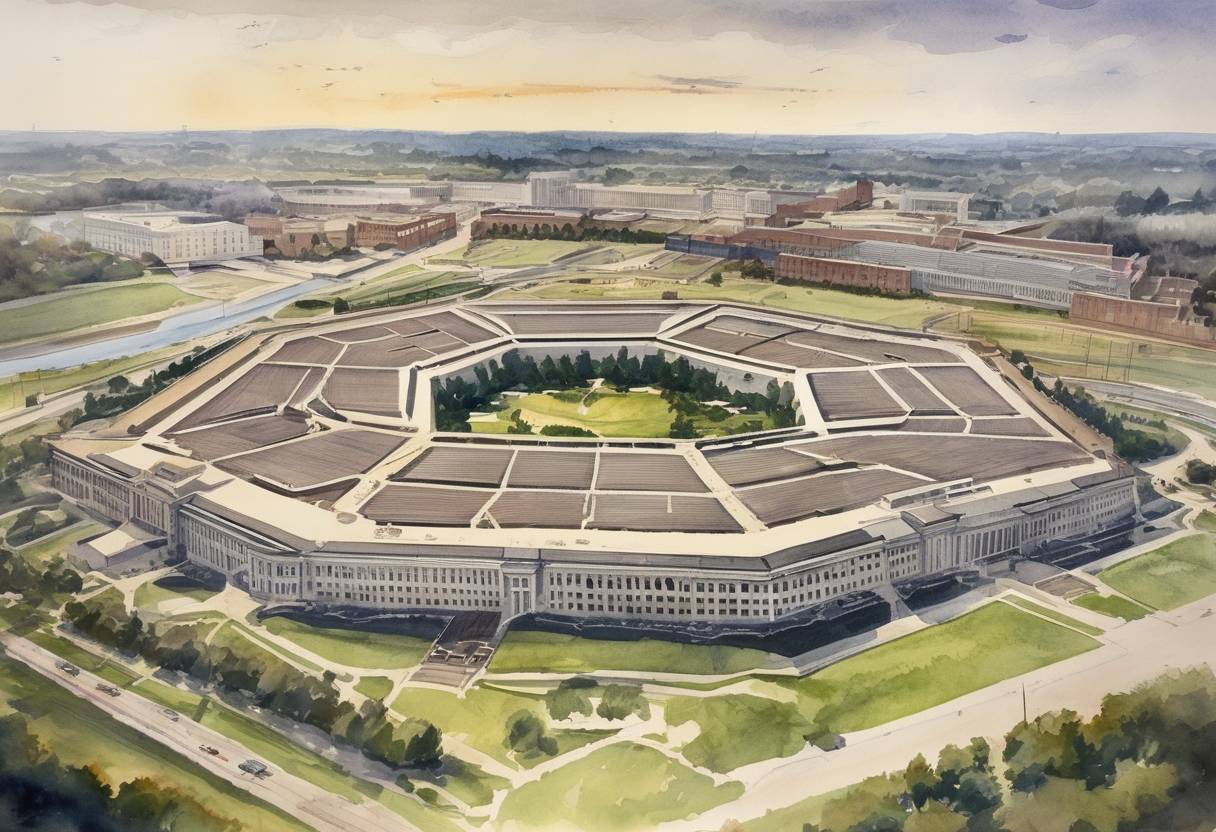
Construction of the Pentagon Begins - September 11, 1941
On September 11, 1941, construction commenced on the Pentagon, which would become the headquarters of the United States Department of Defense. Located in Arlington, Virginia, this iconic building is one of the world’s largest office buildings and a symbol of American military power.
Context and Background
- Pre-War Expansion: As the United States was preparing for potential involvement in World War II, there was a pressing need to consolidate the War Department’s operations, which were scattered across multiple buildings in Washington, D.C.
- Design and Planning: The Pentagon was designed by American architect George Bergstrom and engineered by John McShain. The design was chosen for its efficiency and the ability to accommodate a large number of employees.
Key Features
- Size and Structure: The Pentagon covers approximately 29 acres and includes five concentric rings of offices connected by corridors. It has a total floor area of about 6.5 million square feet, making it one of the largest office buildings in the world.
- Construction Timeline: Despite the massive scale of the project, construction was completed in just 16 months, with the building officially dedicated on January 15, 1943.
Historical Significance
- Military Coordination: The Pentagon has served as the central hub for U.S. military operations and strategic planning since its completion, playing a crucial role during World War II and the Cold War.
- Symbol of Defense: Over the decades, the Pentagon has become synonymous with the U.S. Department of Defense and is a symbol of American military strength and organizational capability.
Aftermath and Legacy
- 9⁄11 Attacks: The Pentagon was one of the targets during the September 11, 2001, terrorist attacks, resulting in significant damage and loss of life. The event underscored the building’s symbolic importance and led to extensive renovations and security enhancements.
- Cultural Impact: The Pentagon remains a significant cultural and historical landmark, representing both the military might and the bureaucratic complexity of the United States.
The construction of the Pentagon marked a pivotal moment in U.S. history, reflecting the nation’s growing military and administrative needs on the eve of its entry into World War II. Its enduring presence continues to influence both national defense strategies and architectural design.