Henry VI of England Crowned King of France
1431 · Paris, France
Henry VI of England is crowned King of France at Notre Dame in Paris.
November 6, 1429
Henry VI of England was crowned King of England at Westminster Abbey.
London, England | English Monarchy
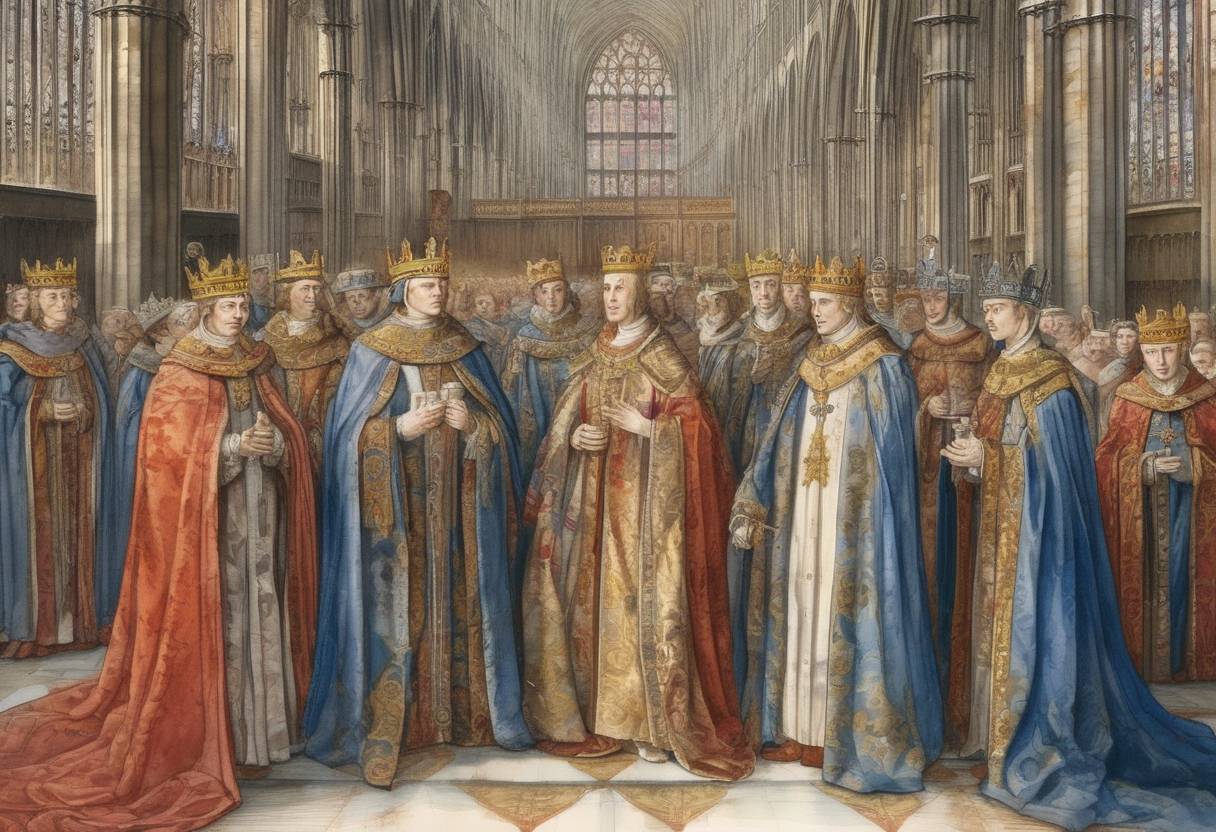
On November 6, 1429, Henry VI of England was crowned King of England at Westminster Abbey. This significant event marked the formal ascension of Henry VI to the English throne, although he had been king in name since the death of his father, Henry V, in 1422. At the time of his coronation, Henry VI was only eight years old, making him one of the youngest monarchs to ascend to the English throne.
Henry V’s Legacy: Henry VI inherited the throne following the death of his father, Henry V, who was a celebrated military leader known for his victories during the Hundred Years’ War, particularly the Battle of Agincourt in 1415. Henry V’s untimely death left the kingdom in the hands of a child, creating a period of regency.
Regency Government: During Henry VI’s minority, the kingdom was governed by a regency council. His uncles, John, Duke of Bedford, and Humphrey, Duke of Gloucester, played significant roles in managing the affairs of the state and continuing the war efforts in France.
Location and Significance: The coronation took place at Westminster Abbey, a traditional site for English coronations, symbolizing the continuity and legitimacy of the monarchy.
Ceremonial Aspects: The coronation was a grand affair, involving elaborate rituals and ceremonies that underscored the divine right of kings. It included the anointing of Henry VI with holy oil, the crowning with the St. Edward’s Crown, and the taking of oaths to uphold the laws and customs of the realm.
Dual Monarchy: Following his English coronation, Henry VI was also crowned King of France in 1431 in Paris, as per the Treaty of Troyes (1420), which recognized him as heir to the French throne. This dual monarchy was a significant aspect of the ongoing conflict between England and France.
Challenges of Kingship: Henry VI’s reign was marked by challenges, including the continuation of the Hundred Years’ War, internal strife, and the eventual outbreak of the Wars of the Roses. His inability to effectively manage these issues led to periods of instability and conflict.
Historical Significance: Henry VI’s coronation and subsequent reign are pivotal in English history, illustrating the complexities of medieval monarchy, the impact of prolonged warfare, and the dynastic struggles that shaped the future of England.
Henry VI’s reign, beginning with his coronation at Westminster Abbey, set the stage for a tumultuous period in English history, characterized by both territorial ambitions in France and domestic challenges that would eventually lead to significant political upheaval.
Source: en.wikipedia.org