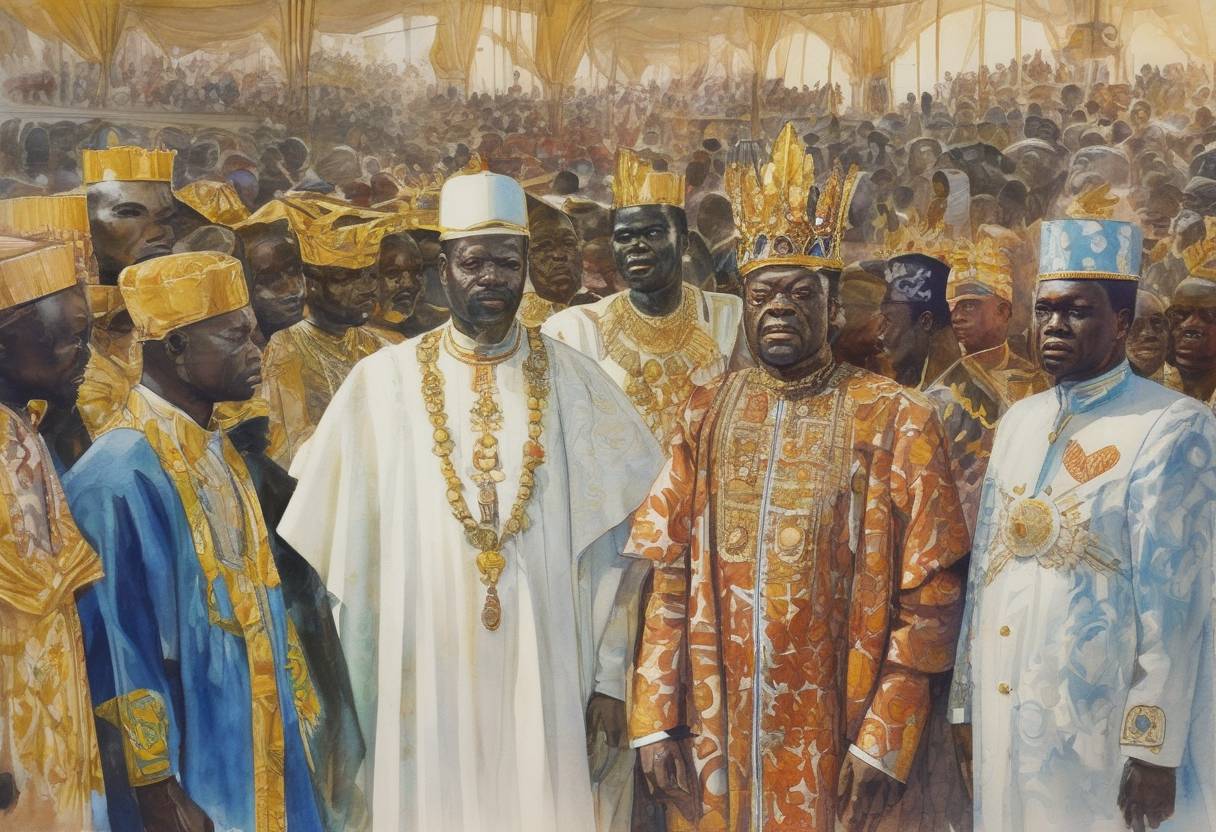
Coronation of Emperor Bokassa I
On December 4, 1977, Jean-Bédel Bokassa, the ruler of the Central African Republic, crowned himself Emperor Bokassa I of the newly proclaimed Central African Empire. This event marked one of the most extravagant and controversial ceremonies in African history, reflecting Bokassa’s ambition and the political climate of the time.
Background
Jean-Bédel Bokassa seized power in a coup d’état on January 1, 1966, overthrowing President David Dacko. Initially, Bokassa ruled as president, but his regime soon became notorious for its authoritarianism and human rights abuses. By the mid-1970s, Bokassa sought to elevate his status and the international profile of his nation by transforming the Central African Republic into a monarchy.
The Coronation Ceremony
The coronation took place in the capital city of Bangui and was modeled after the coronation of Napoleon Bonaparte. Bokassa’s ceremony was characterized by its opulence and extravagance:
- Cost: The event reportedly cost around $20 million, a staggering sum for a country with significant economic challenges. This expenditure drew international criticism, as it was funded largely by French aid.
- Attire: Bokassa wore a lavish robe decorated with gold and a crown encrusted with diamonds, estimated to be worth several million dollars.
- Guests: The ceremony was attended by numerous dignitaries, although many foreign leaders declined to attend due to the controversial nature of the event.
- Symbolism: The ceremony was filled with symbolism, including a golden throne and a carriage drawn by horses imported from France, underscoring Bokassa’s desire to emulate European monarchies.
Aftermath and Historical Significance
Bokassa’s reign as emperor was short-lived. His extravagant lifestyle and oppressive rule led to widespread discontent. In September 1979, he was overthrown in a coup supported by France, and the Central African Empire was abolished, restoring the republic.
The coronation of Bokassa I remains a significant event in African history, symbolizing the excesses of dictatorial regimes and the complex post-colonial relationships between African nations and former colonial powers. It serves as a reminder of the challenges faced by newly independent states in establishing stable governance and the impact of leadership on national development.