1256 · Alamut, Iran
The city of Alamut, a stronghold of the Nizari Ismaili state, falls to the Mongols under Hulagu Khan.
January 29, 1258
The Mongol Empire, led by Hulagu Khan, begins the siege of Baghdad, which would lead to the fall of the city and the end of the Islamic Golden Age.
Baghdad, Iraq | Mongol Empire
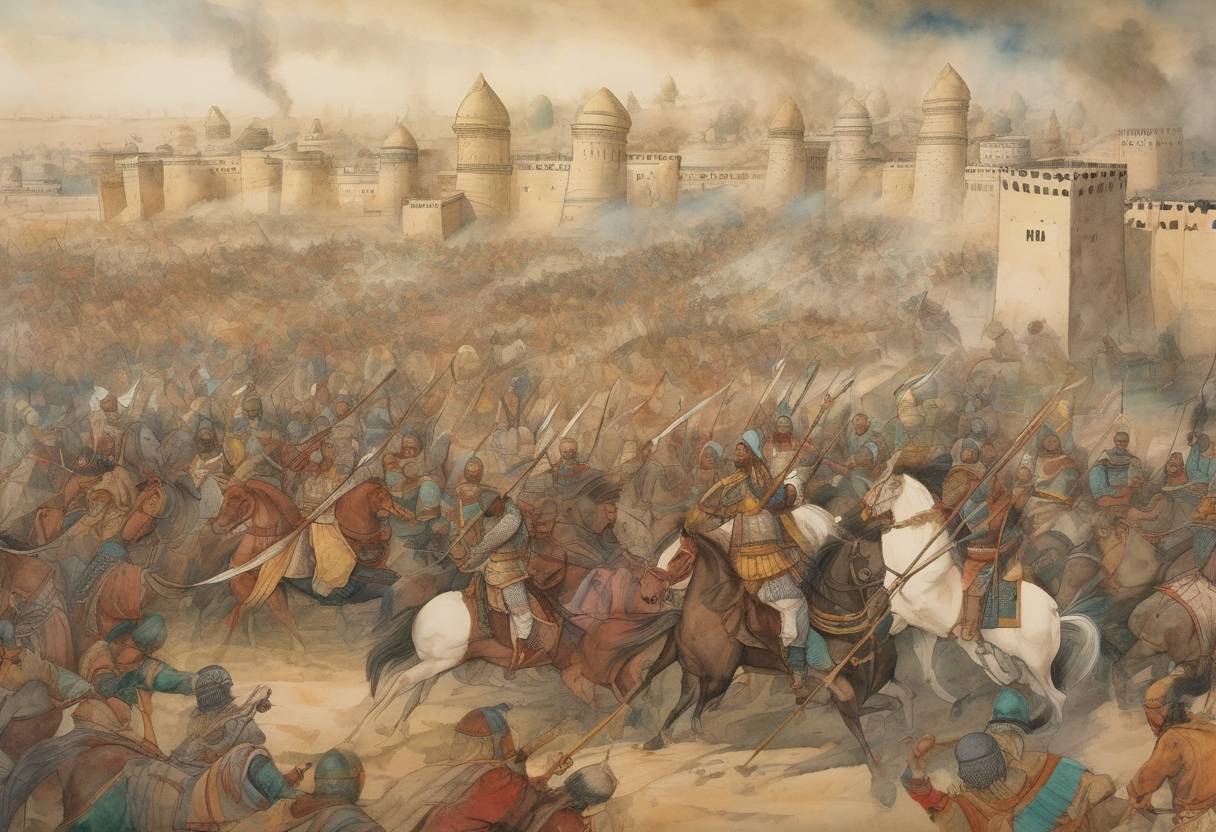
On January 29, 1258, the Mongol Empire, under the command of Hulagu Khan, initiated the siege of Baghdad, a pivotal event that culminated in the fall of the city and marked the end of the Islamic Golden Age. This siege was not only a significant military conquest but also a turning point in the history of the Islamic world.
The Mongol Empire, founded by Genghis Khan in the early 13th century, rapidly expanded across Asia and into Europe, becoming the largest contiguous empire in history. By the mid-13th century, the empire was divided among Genghis Khan’s grandsons, with Hulagu Khan leading the southwestern expansion.
Baghdad was the capital of the Abbasid Caliphate, a major center of Islamic culture, science, and learning. The city had flourished since its founding in the 8th century, becoming a hub of intellectual and cultural activity during the Islamic Golden Age. However, by the 13th century, the caliphate’s power had waned, and it faced internal strife and external threats.
Hulagu Khan was tasked by his brother, the Great Khan Möngke, to expand Mongol influence into the Middle East. His campaign aimed to subdue the Islamic world, including the destruction of the Abbasid Caliphate. Hulagu’s forces were formidable, consisting of Mongol cavalry, siege engineers, and auxiliary troops from subjugated regions.
The siege began on January 29, 1258. Hulagu’s army surrounded Baghdad, employing advanced siege tactics and weaponry, including catapults and trebuchets. The Mongols systematically breached the city’s defenses, overwhelming the Abbasid forces.
By February 10, 1258, the city surrendered. The Mongols entered Baghdad, and what followed was a week of devastation. The city was sacked, its libraries and cultural treasures destroyed, and a significant portion of its population killed. The caliph, Al-Musta’sim, was captured and executed, effectively ending the Abbasid Caliphate.
The fall of Baghdad marked a significant turning point. The destruction of the city and its institutions dealt a severe blow to Islamic scholarship and culture. The Islamic Golden Age, characterized by advancements in science, medicine, and philosophy, came to an abrupt end.
The siege of Baghdad had far-reaching consequences. It demonstrated the Mongols’ military prowess and their ability to conquer even the most fortified cities. The event also reshaped the political landscape of the Middle East, paving the way for the rise of new powers, such as the Mamluks and later the Ottoman Empire.
In conclusion, the siege of Baghdad on January 29, 1258, was a decisive moment in history, marking the end of an era and the beginning of a new chapter in the Islamic world. The Mongol conquest left an indelible mark on the region, influencing its cultural and political development for centuries to come.
Source: en.wikipedia.org