1214 · Alarcos, Spain
Alfonso VIII of Castile and the forces of the Almohad Caliphate clash in the Battle of Alarcos. This battle establishes Almohad dominance in southern Iberia for a period.
September 12, 1213
The Battle of Muret took place, where the forces of Simon de Montfort defeated the Crown of Aragon and the County of Toulouse, marking a significant event in the Albigensian Crusade.
Muret, France | Catholic Church
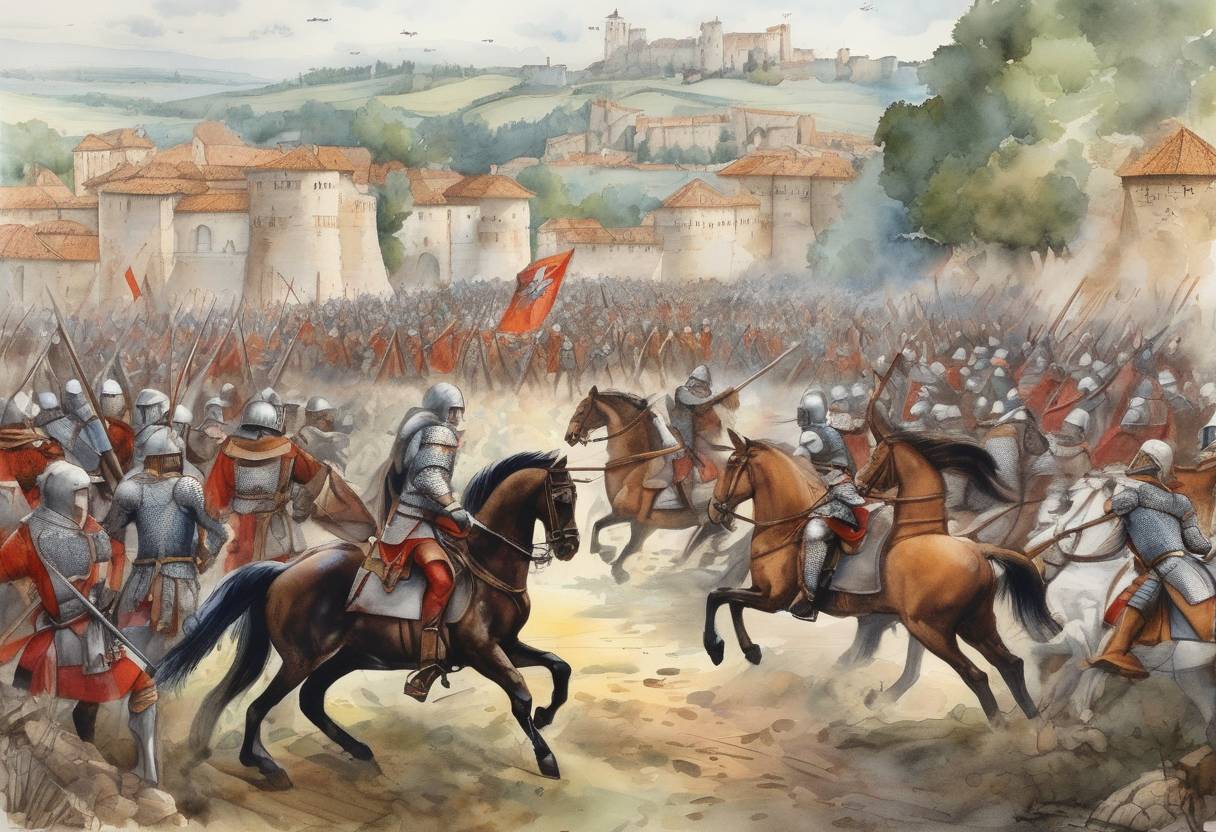
The Battle of Muret, fought on September 12, 1213, was a pivotal conflict during the Albigensian Crusade, a military campaign initiated by the Catholic Church to eliminate Catharism in southern France. This battle marked a significant turning point in the crusade, with profound implications for the political landscape of the region.
The Albigensian Crusade: Launched in 1209 by Pope Innocent III, the crusade aimed to eradicate the Cathar heresy, which had gained a strong foothold in the Languedoc region. The Cathars, also known as Albigensians, were considered heretical by the Catholic Church due to their dualistic beliefs and rejection of orthodox Catholic doctrines.
Key Figures:
Location: The battle took place near the town of Muret, located just south of Toulouse in modern-day France.
Forces Involved:
Course of the Battle:
Impact on the Albigensian Crusade: The victory at Muret solidified Simon de Montfort’s control over the Languedoc region and weakened the resistance against the crusaders. It marked a turning point in the crusade, leading to further consolidation of Catholic power in southern France.
Political Consequences: The death of Peter II of Aragon had significant repercussions for the Crown of Aragon, affecting its influence in the region. The defeat also weakened the position of Raymond VI of Toulouse, who continued to struggle against the crusaders.
Legacy: The Battle of Muret is remembered as a critical moment in the Albigensian Crusade, illustrating the complex interplay of religious, political, and military forces in medieval Europe. It underscored the determination of the Catholic Church to assert its authority and suppress heretical movements.
In conclusion, the Battle of Muret was not only a military engagement but also a decisive event that shaped the course of the Albigensian Crusade and the history of southern France.
Source: en.wikipedia.org