Declaration of Liberation in Libya - October 21, 2011
2011 · Tripoli, Libya
The Libyan National Transitional Council declares the liberation of Libya, marking the end of the Libyan Civil War following the death of Muammar Gaddafi.
September 1, 1969
A coup in Libya led by Muammar Gaddafi overthrows King Idris I, establishing a new Libyan Arab Republic.
Tripoli, Libya | Libyan military
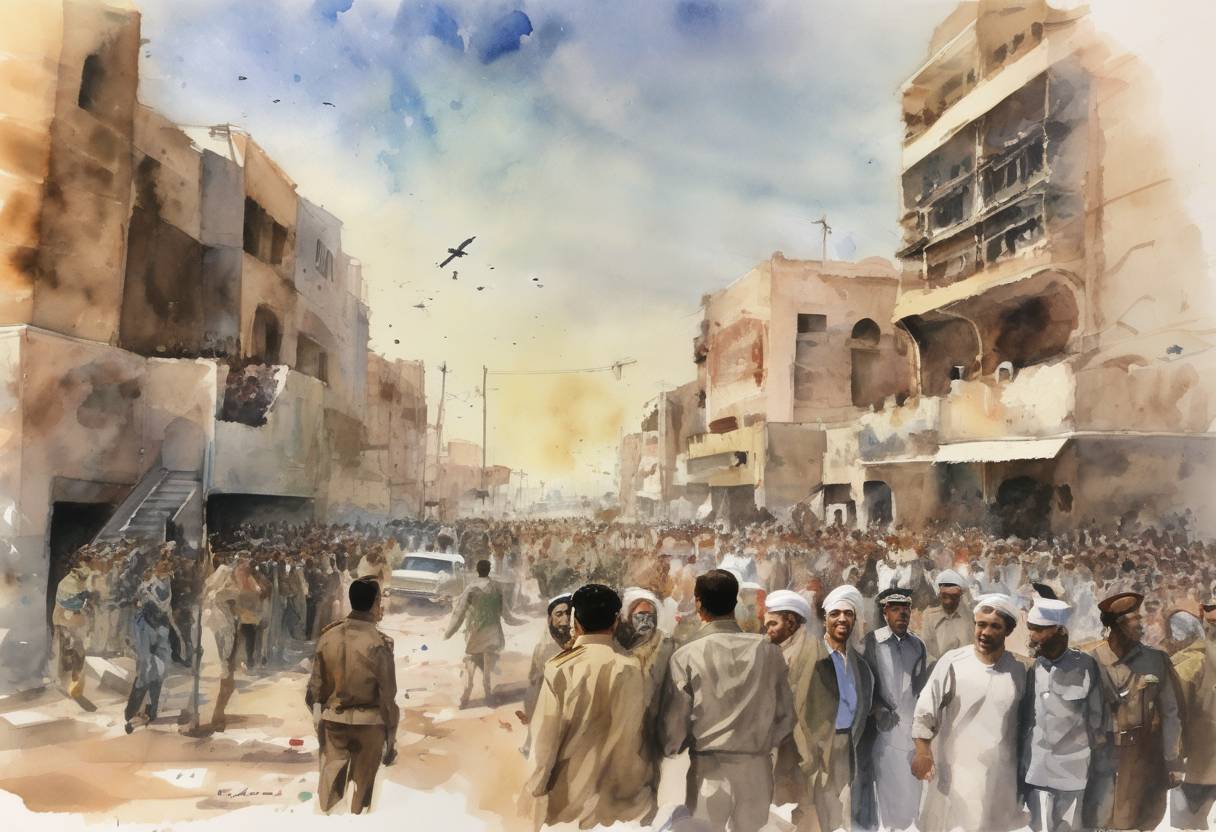
On September 1, 1969, a significant political upheaval occurred in Libya when a coup d’état led by Muammar Gaddafi successfully overthrew King Idris I. This event marked the end of the monarchy and the establishment of the Libyan Arab Republic, fundamentally altering the nation’s political landscape.
Monarchical Rule: Libya, under King Idris I, had been a monarchy since gaining independence from Italy in 1951. The king’s rule was characterized by a pro-Western stance, which included close ties with the United States and the United Kingdom.
Economic and Social Discontent: Despite Libya’s oil wealth, there was widespread dissatisfaction among the population due to economic disparities and perceived corruption within the monarchy. The benefits of oil revenues were not equitably distributed, leading to social unrest.
Pan-Arabism and Regional Influence: The 1960s were a period of rising Pan-Arab sentiment, influenced by leaders like Egypt’s Gamal Abdel Nasser. This ideology, which emphasized Arab unity and socialism, resonated with many Libyans, including young military officers.
The Free Officers Movement: The coup was orchestrated by a group of young military officers known as the Free Officers Movement. This group was inspired by the Egyptian Free Officers who had overthrown the monarchy in Egypt in 1952.
Muammar Gaddafi’s Role: At the age of 27, Muammar Gaddafi emerged as the leader of the coup. He was a charismatic figure who quickly became the face of the new regime.
Execution of the Coup: The coup was executed with remarkable efficiency and minimal bloodshed. It began in the early hours of September 1, 1969, while King Idris was in Turkey for medical treatment. The military swiftly took control of key installations in Tripoli and Benghazi.
Establishment of the Libyan Arab Republic: The monarchy was abolished, and the Libyan Arab Republic was proclaimed. The new government adopted a socialist orientation, nationalizing industries and redistributing wealth.
Gaddafi’s Rule: Gaddafi would go on to rule Libya for over four decades, implementing policies based on his own political philosophy outlined in the “Green Book.” His regime was marked by both ambitious social programs and widespread human rights abuses.
Regional and Global Impact: The coup had significant implications for Libya’s foreign relations. Gaddafi’s government pursued a policy of non-alignment, often clashing with Western powers while supporting various liberation movements across Africa and the Middle East.
The 1969 coup was a pivotal moment in Libyan history, setting the stage for decades of Gaddafi’s rule and influencing the nation’s trajectory well into the 21st century.
Source: en.wikipedia.org