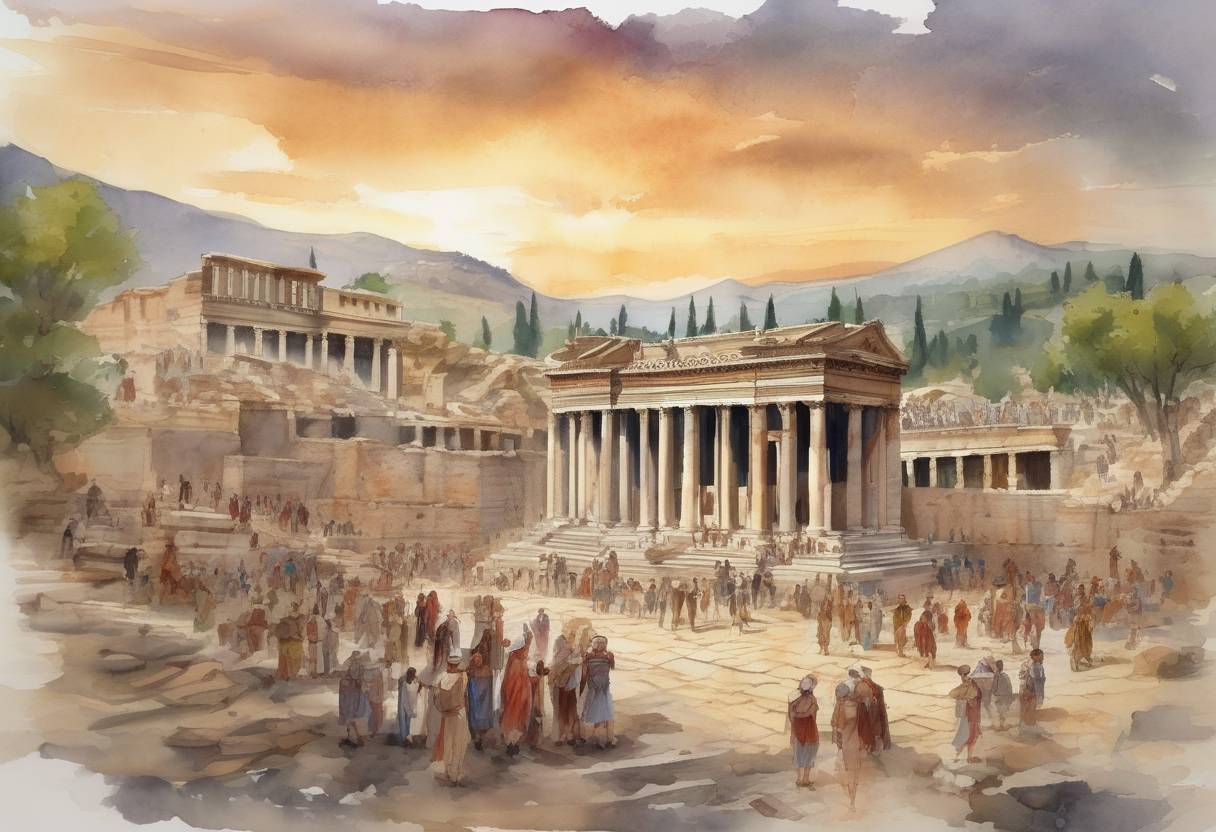
The Destruction of the Temple of Artemis
Overview
The Temple of Artemis, located in Ephesus (modern-day Turkey), was one of the Seven Wonders of the Ancient World. This grand temple was dedicated to Artemis, the Greek goddess of the hunt, wilderness, and childbirth. It was renowned for its magnificent architecture and artistic splendor.
The Event: Arson by Herostratus
On July 21, 356 BCE, the Temple of Artemis was deliberately set on fire by an arsonist named Herostratus. His motive was to achieve notoriety, a desire to be remembered throughout history, regardless of the infamy attached to his name. This act of arson led to the complete destruction of the temple.
Historical Context
- Construction: The original temple was built around 550 BCE, designed by the Cretan architect Chersiphron and his son Metagenes. It was funded by the wealthy Lydian king Croesus and took about 120 years to complete.
- Significance: The temple was not only a religious center but also a marketplace and a cultural hub, attracting visitors from across the ancient world.
Aftermath and Consequences
- Herostratic Fame: The term “herostratic fame” originates from Herostratus’s actions, referring to someone who commits a criminal act to gain notoriety.
- Legal Measures: In response to the arson, the Ephesians forbade the mention of Herostratus’s name, attempting to erase his memory from history. However, this was ultimately unsuccessful, as historians like Theopompus recorded the event.
- Reconstruction: The temple was eventually rebuilt, larger and more magnificent than before, with contributions from figures such as Alexander the Great. The reconstruction was completed around 323 BCE.
Broader Historical Significance
The destruction and subsequent rebuilding of the Temple of Artemis highlight the cultural and religious importance of such structures in the ancient world. It also underscores the lengths to which individuals might go to achieve fame, as well as the challenges societies face in dealing with acts of infamy.
The temple’s legacy endures as a testament to ancient architectural and artistic achievements, and its story continues to captivate historians and archaeologists today.