August 23, 1914

The Battle of Mons was fought, marking the first major action of the British Expeditionary Force in World War I.


Mons, Belgium | British Army
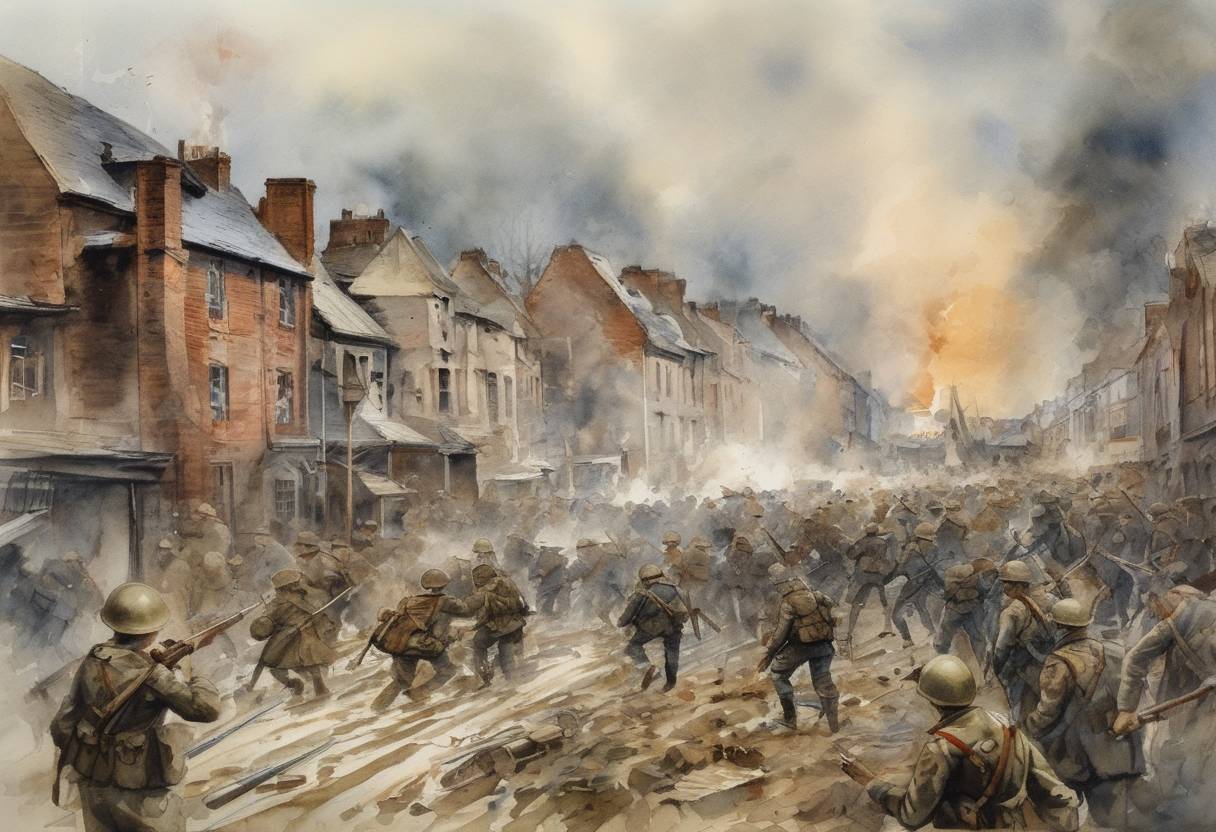
Watercolor painting based depiction of The Battle of Mons was fought, marking the first major action of the British Expeditionary Force in World War I. (1914)

The Battle of Mons: August 23, 1914

The Battle of Mons, fought on August 23, 1914, marked the first major engagement of the British Expeditionary Force (BEF) in World War I. This battle was a part of the larger Battle of the Frontiers, which involved a series of clashes between the Allies and the German Empire along the Western Front.

Context and Prelude

  • Outbreak of World War I: The war began in July 1914, following the assassination of Archduke Franz Ferdinand of Austria. The conflict quickly escalated as alliances were activated, drawing multiple European powers into war.
  • British Expeditionary Force (BEF): The BEF was a small, professional army sent to support France and Belgium against the German advance. It was composed of highly trained soldiers, known for their marksmanship and discipline.
  • German Schlieffen Plan: Germany’s strategy involved a rapid advance through Belgium to outflank French forces and capture Paris, aiming for a quick victory on the Western Front.

The Battle

  • Location: The battle took place near the town of Mons in Belgium, along the Mons-Condé Canal.
  • British Forces: Commanded by General Sir John French, the BEF consisted of approximately 70,000 men.
  • German Forces: The German First Army, led by General Alexander von Kluck, numbered around 160,000 troops.

Key Events

  1. Initial Engagement: On the morning of August 23, the BEF encountered the advancing German forces. Despite being heavily outnumbered, the British troops utilized their superior rifle skills to inflict significant casualties on the Germans.

  2. Defensive Stance: The British soldiers held a defensive line along the canal, using the terrain to their advantage. Their effective use of rapid rifle fire created the illusion of machine guns, surprising the German attackers.

  3. German Pressure: Despite the initial success, the overwhelming numbers of the German forces began to press the British lines. The BEF faced intense artillery bombardment and infantry assaults.

  4. Order to Retreat: By the afternoon, realizing the untenable position and the risk of encirclement, General French ordered a strategic withdrawal. The BEF executed a disciplined retreat, maintaining cohesion and preventing a rout.

Aftermath and Significance

  • Casualties: British casualties were around 1,600, while German losses were significantly higher, estimated at 5,000.
  • Tactical Withdrawal: The retreat from Mons was part of a larger Allied withdrawal to the Marne, where they would later halt the German advance.
  • Legacy: The Battle of Mons is remembered for the resilience and professionalism of the BEF. It demonstrated the effectiveness of British infantry tactics and set the stage for the prolonged trench warfare that would characterize much of World War I.

Broader Historical Impact

  • Morale and Propaganda: The battle was used in British propaganda to boost morale, emphasizing the “Miracle of Mons,” where some soldiers claimed to have seen angelic figures aiding their retreat.
  • Strategic Implications: The battle highlighted the challenges of modern warfare, including the impact of industrialized weaponry and the importance of mobility and communication.

The Battle of Mons remains a significant event in World War I history, illustrating the early challenges faced by the Allies and the beginning of a long and grueling conflict on the Western Front.