Matilda of Flanders Crowned Queen of England
1068 · Westminster, Kingdom of England
Matilda of Flanders, wife of William the Conqueror, is crowned Queen of England at Westminster Abbey.
December 25, 1066
William the Conqueror was crowned King of England at Westminster Abbey, marking the beginning of Norman rule in England.
London, England | Westminster Abbey
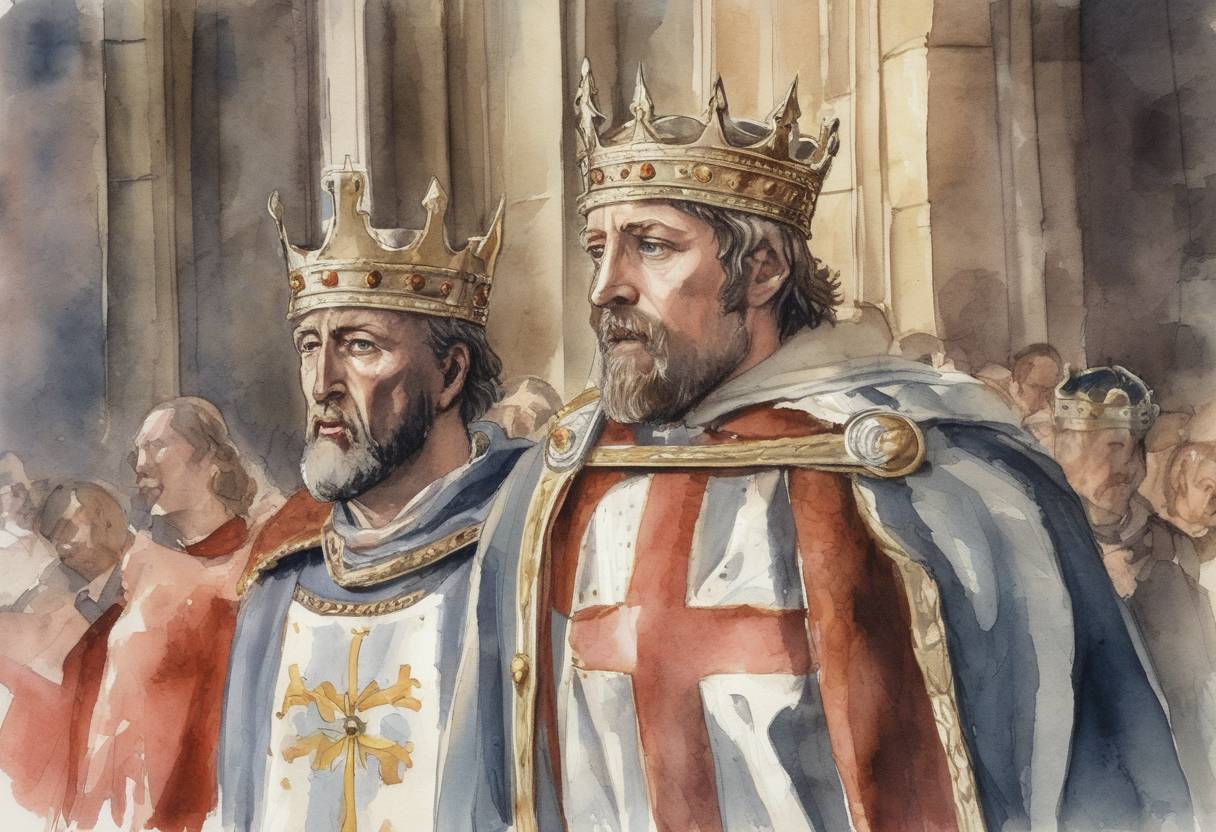
On December 25, 1066, William the Conqueror was crowned King of England at Westminster Abbey, a pivotal event that marked the beginning of Norman rule in England. This coronation was the culmination of a series of events that dramatically reshaped the English landscape, both politically and culturally.
The path to William’s coronation began with the death of the English king, Edward the Confessor, in January 1066. Edward’s death led to a succession crisis, as he left no direct heir. Harold Godwinson, a powerful English noble, was quickly crowned king. However, his claim was contested by William, Duke of Normandy, who asserted that Edward had promised him the throne.
William’s claim led to the Norman invasion of England. On October 14, 1066, William’s forces met Harold’s army at the Battle of Hastings. The battle was a decisive victory for William, as Harold was killed, and his forces were defeated. This victory paved the way for William’s march towards London, where he sought to consolidate his claim to the English throne.
William’s coronation on Christmas Day in 1066 was a carefully orchestrated event. It took place at Westminster Abbey, a site of great religious and political significance. The ceremony was conducted by Ealdred, the Archbishop of York, and was attended by both Norman and English nobility. The choice of Christmas Day for the coronation was symbolic, emphasizing the divine approval of William’s rule and aligning his reign with the birth of Christ.
The coronation of William the Conqueror marked the beginning of Norman rule in England, which had profound and lasting impacts on the country:
William’s reign laid the foundations for a centralized English monarchy and altered the course of English history. The Norman Conquest also had broader implications for medieval Europe, as it strengthened ties between England and continental Europe.
In summary, the coronation of William the Conqueror on December 25, 1066, was a transformative event that initiated a new era in English history, characterized by significant political, social, and cultural changes.
Source: en.wikipedia.org