Napoleon Bonaparte's Escape from Elba - February 26, 1815
1815 · Elba, Italy
Napoleon Bonaparte escaped from exile on the island of Elba, beginning his return to power known as the Hundred Days.
April 4, 1814
Napoleon Bonaparte abdicates as Emperor of the French and is exiled to the island of Elba.
Fontainebleau, France | French Empire
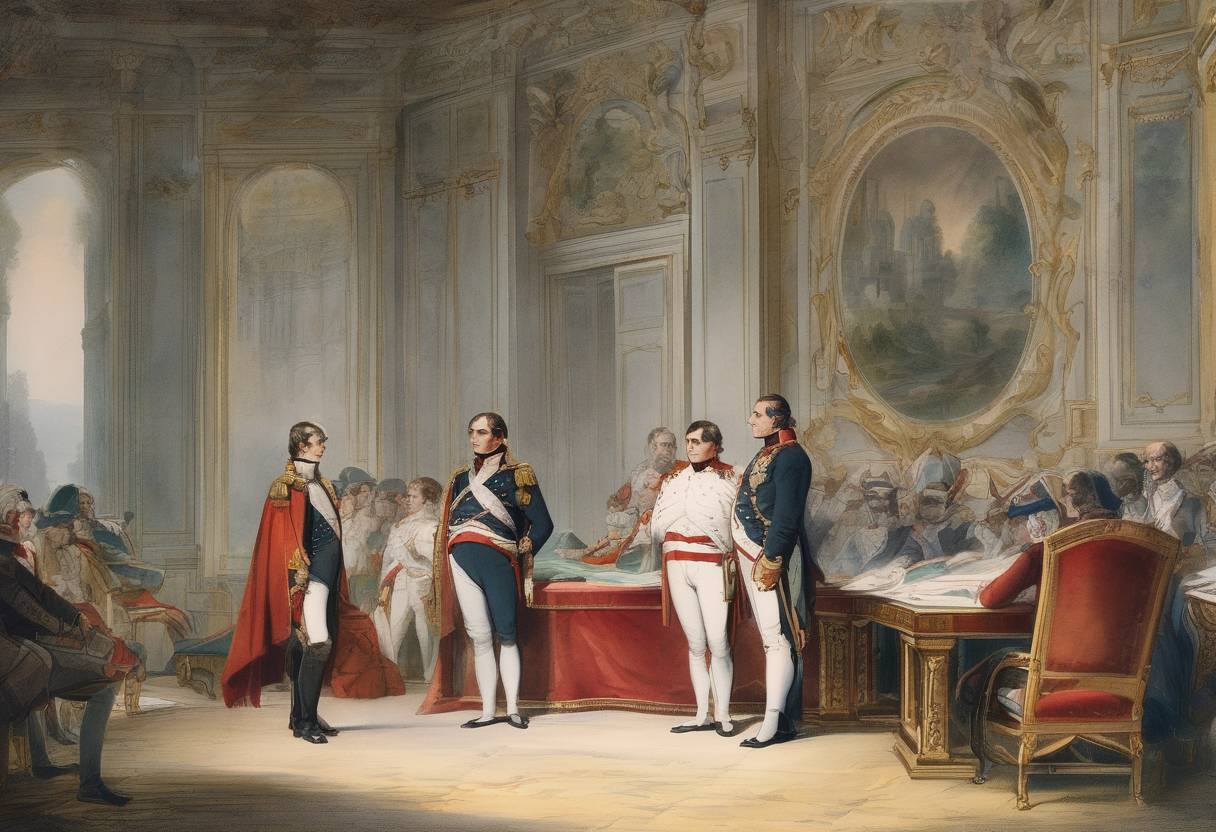
On April 4, 1814, a pivotal moment in European history unfolded as Napoleon Bonaparte, the Emperor of the French, was compelled to abdicate his throne. This event marked the end of his reign and led to his first exile on the island of Elba.
Napoleon’s abdication was the culmination of a series of military defeats and political pressures. The Peninsular War in Spain and the disastrous Russian campaign of 1812 had severely weakened his forces. By 1814, the Sixth Coalition, comprising major European powers including Austria, Prussia, Russia, and the United Kingdom, had united against him. The coalition forces invaded France, capturing Paris on March 31, 1814.
Faced with the occupation of Paris and the defection of his marshals, Napoleon realized that his position was untenable. On April 4, 1814, at the Palace of Fontainebleau, he signed an act of abdication in favor of his son, Napoleon II. However, the coalition refused to recognize his son as his successor, demanding a complete abdication.
Following his abdication, the Treaty of Fontainebleau was signed on April 11, 1814. This treaty allowed Napoleon to retain the title of Emperor but confined his sovereignty to the small Mediterranean island of Elba. He was granted a personal guard and a stipend, and he departed for Elba on April 20, 1814.
Napoleon’s exile to Elba was intended to neutralize his influence in European affairs. However, his presence on the island was short-lived. In February 1815, he escaped Elba and returned to France, initiating the Hundred Days campaign, which culminated in his final defeat at the Battle of Waterloo on June 18, 1815.
The abdication of Napoleon marked a significant turning point in European history. It led to the restoration of the Bourbon monarchy in France under Louis XVIII and set the stage for the Congress of Vienna, which sought to restore stability and balance of power in Europe after the Napoleonic Wars.
Napoleon’s legacy remains complex, as he is remembered both for his military genius and for the wars that reshaped Europe. His abdication and subsequent exile underscore the volatility of power and the shifting alliances that characterized the early 19th century.
Source: www.britannica.com