Establishment of New Sweden on March 29, 1638
1638 · Wilmington, United States
Swedish settlers established the first European settlement in Delaware, New Sweden, marking the start of Swedish influence in the New World.
April 15, 1638
The Swedish colonists established the first European settlement in Delaware, known as New Sweden.
Wilmington, United States | Swedish South Company
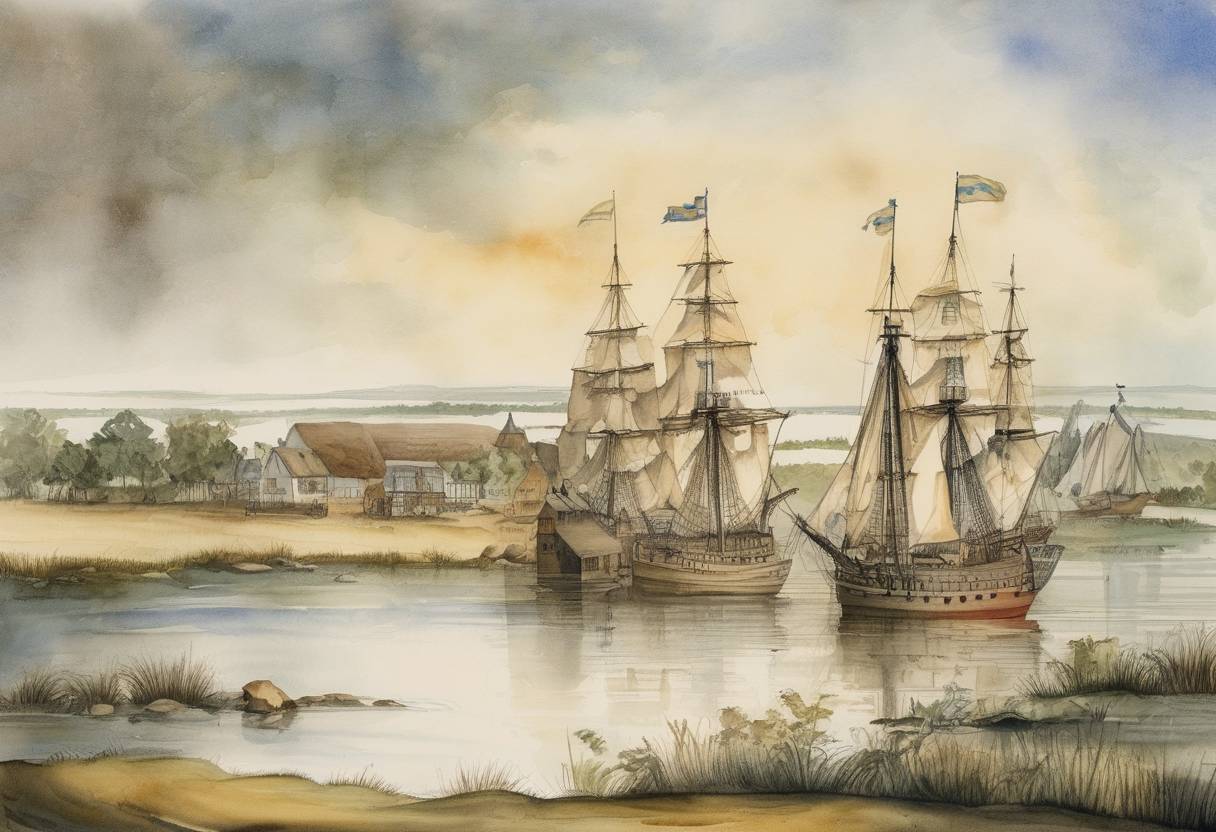
On April 15, 1638, Swedish colonists established the first European settlement in what is now Delaware, marking the founding of New Sweden. This event was a significant moment in the colonial history of North America, as it represented Sweden’s efforts to expand its influence and establish a foothold in the New World.
In the early 17th century, European powers were actively exploring and colonizing the Americas. Sweden, under the rule of King Gustavus Adolphus and later Queen Christina, sought to join this colonial race. The Swedish government aimed to expand its trade networks and acquire valuable resources, such as furs and tobacco, from the New World.
The Swedish South Company, a joint-stock company, was established to facilitate this venture. The company was led by Peter Minuit, a former director of the Dutch colony of New Netherland, who had significant experience in colonial administration.
In late 1637, two ships, the Kalmar Nyckel and the Fogel Grip, set sail from Gothenburg, Sweden, carrying Swedish and Finnish settlers. After a challenging transatlantic journey, they arrived at the Delaware River in March 1638.
On April 15, 1638, the settlers landed at a site near present-day Wilmington, Delaware, and established Fort Christina, named in honor of the young Queen Christina of Sweden. This fort served as the center of the New Sweden colony and was strategically located to facilitate trade with Native American tribes and other European settlers.
The establishment of New Sweden marked Sweden’s only major colonial endeavor in North America. The colony, although small, played a crucial role in the region’s development:
Cultural Influence: The Swedish and Finnish settlers introduced log cabin construction to North America, a building style that became widespread among frontier settlers.
Relations with Native Americans: The Swedes maintained generally peaceful relations with the local Lenape and Susquehannock tribes, engaging in trade and diplomacy.
Territorial Disputes: New Sweden’s presence in the Delaware Valley led to tensions with the Dutch, who claimed the area as part of New Netherland. In 1655, the Dutch, under the leadership of Peter Stuyvesant, captured Fort Christina, effectively ending Swedish control.
Despite its brief existence, New Sweden left a lasting impact on the region’s cultural and historical landscape. The legacy of the Swedish settlers is still evident today in place names and cultural traditions in Delaware and surrounding areas.
Source: en.wikipedia.org