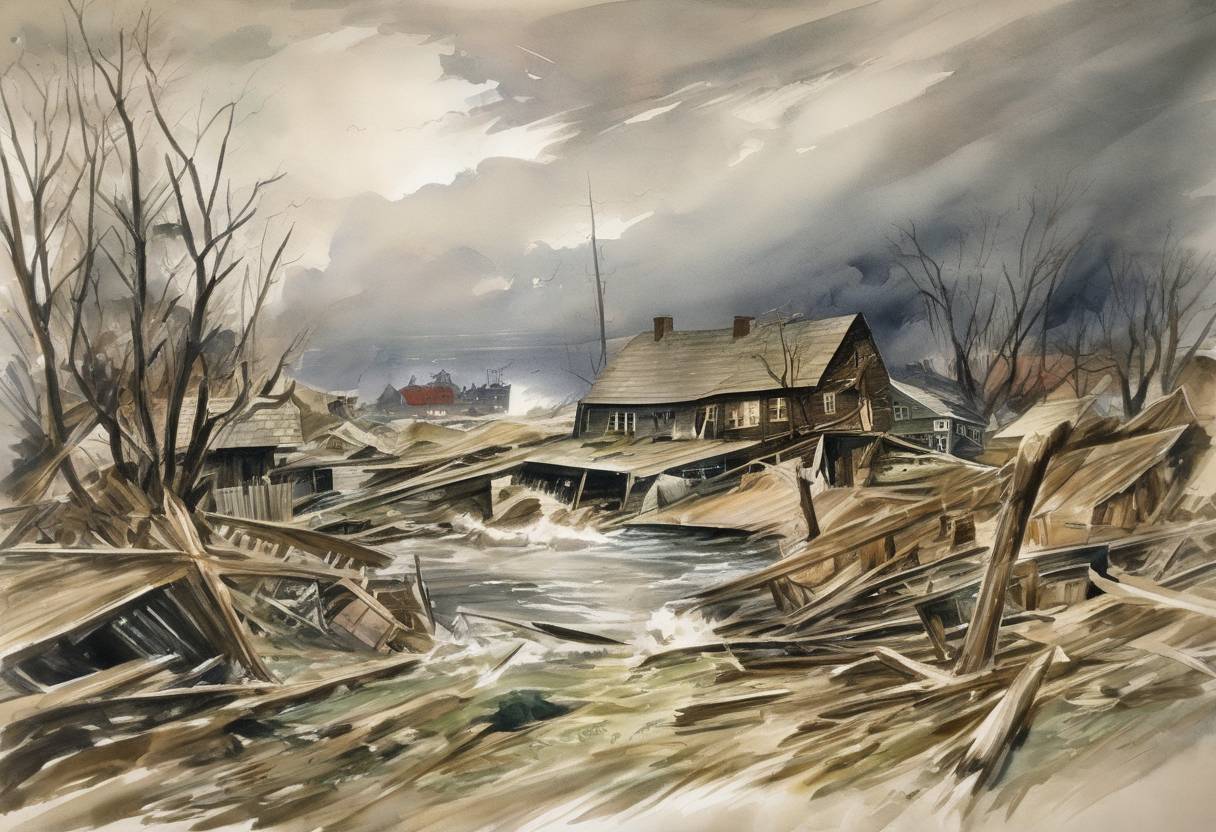
The Great Hurricane of 1938
Overview
On September 21, 1938, a devastating hurricane, often referred to as the “Long Island Express,” made landfall on Long Island, New York, and subsequently swept through southern New England. This catastrophic event is remembered as one of the most powerful and destructive hurricanes to strike the northeastern United States in the 20th century.
Meteorological Background
The hurricane originated near the Cape Verde Islands in early September 1938. Initially, it was a tropical storm, but it rapidly intensified as it moved across the Atlantic Ocean. By the time it reached the U.S. East Coast, it had developed into a Category 3 hurricane, with sustained winds exceeding 120 mph (193 km/h).
Path and Impact
Long Island Landfall: The hurricane made its first landfall on Long Island in the early afternoon of September 21. The storm surge, combined with high tides, resulted in significant coastal flooding. The powerful winds and waves caused extensive damage to infrastructure, homes, and businesses.
New England Devastation: After striking Long Island, the hurricane continued its path northward into New England, affecting Connecticut, Rhode Island, Massachusetts, New Hampshire, and Vermont. The storm’s rapid movement, at speeds of up to 60 mph (97 km/h), contributed to the widespread destruction.
Casualties and Damage: The hurricane claimed the lives of approximately 682 people and injured thousands more. It destroyed or severely damaged over 57,000 homes and caused an estimated \(306 million in damages (equivalent to over \)5 billion today).
Aftermath and Historical Significance
Economic Impact: The hurricane severely impacted the economy of the affected regions, particularly the fishing and agriculture industries. The destruction of infrastructure and homes led to a long and costly recovery process.
Meteorological Advancements: The Great Hurricane of 1938 highlighted the need for improved weather forecasting and communication systems. At the time, meteorological technology was limited, and the storm’s rapid approach caught many residents off guard. This event spurred advancements in hurricane tracking and forecasting techniques.
Cultural Memory: The hurricane left a lasting mark on the collective memory of the northeastern United States. It is often referenced in discussions about natural disasters in the region and serves as a reminder of the potential power and unpredictability of hurricanes.
Conclusion
The Great Hurricane of 1938 remains a significant event in U.S. history due to its unprecedented impact on Long Island and New England. It serves as a poignant reminder of the importance of preparedness and the ongoing need for advancements in meteorological science to mitigate the effects of such natural disasters.