New Jersey Ratifies the Bill of Rights: November 20, 1789
1789 · Trenton, United States
New Jersey becomes the first U.S. state to ratify the Bill of Rights.
December 15, 1791
The United States Bill of Rights becomes law when ratified by the Virginia General Assembly.
Richmond, United States | United States Congress
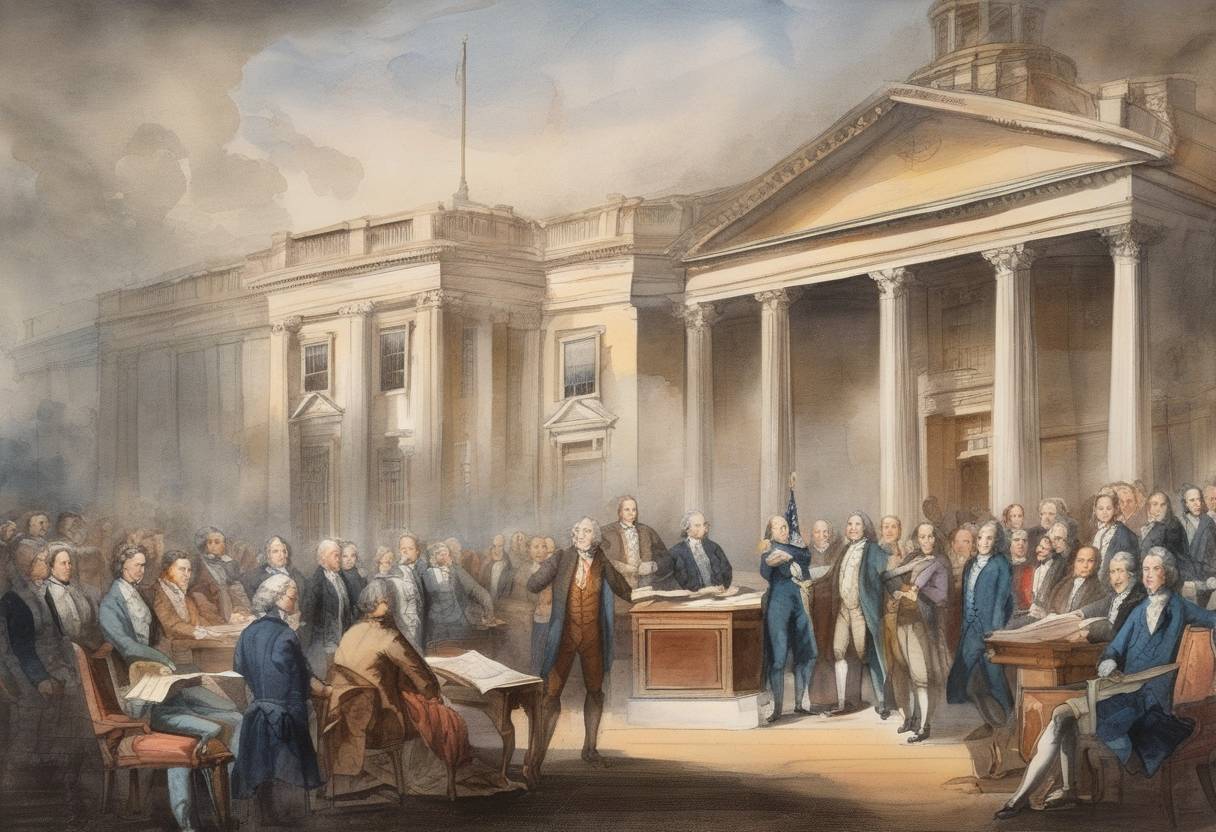
On December 15, 1791, the United States Bill of Rights was ratified by the Virginia General Assembly, marking its official incorporation into the U.S. Constitution. This event was a pivotal moment in American history, as it established fundamental rights and liberties that continue to shape the nation’s legal and cultural landscape.
Following the American Revolutionary War, the newly independent states faced the challenge of creating a unified national government. The initial attempt, the Articles of Confederation, proved inadequate, leading to the Constitutional Convention of 1787. The resulting U.S. Constitution, however, did not initially include specific protections for individual liberties, which sparked considerable debate.
Many Anti-Federalists, who were wary of a strong central government, demanded a Bill of Rights as a condition for ratifying the Constitution. They feared that without explicit protections, citizens’ freedoms could be easily infringed upon. In response, Federalists, led by figures like James Madison, promised to add such amendments once the new government was in place.
James Madison, often called the “Father of the Bill of Rights,” introduced a series of amendments to the First Congress in 1789. Originally, 12 amendments were proposed, but only 10 were ratified by the necessary three-fourths of the states.
The Bill of Rights comprises the first ten amendments to the Constitution, including:
Virginia’s ratification was crucial as it provided the necessary approval from three-fourths of the states, thus enacting the Bill of Rights into law. This ratification underscored the importance of these amendments in addressing the concerns of Anti-Federalists and ensuring the protection of individual liberties.
The ratification of the Bill of Rights was a landmark achievement in American constitutional history. It laid the foundation for the protection of civil liberties and has served as a model for other democracies worldwide. The Bill of Rights continues to be a vital part of American identity, influencing legal interpretations and civil rights movements throughout the nation’s history.
In conclusion, the ratification of the Bill of Rights on December 15, 1791, was a defining moment that helped secure the fundamental freedoms and rights that are central to American democracy today.
Source: en.wikipedia.org