Recognition of Portuguese Independence by Spain - February 13, 1668
1668 · Lisbon, Portugal
Spain recognized Portugal as an independent nation, ending the Portuguese Restoration War.
December 1, 1640
Portugal regained its independence from Spain after 60 years of Iberian Union, with the accession of King John IV.
Lisbon, Portugal | Portuguese Restoration War
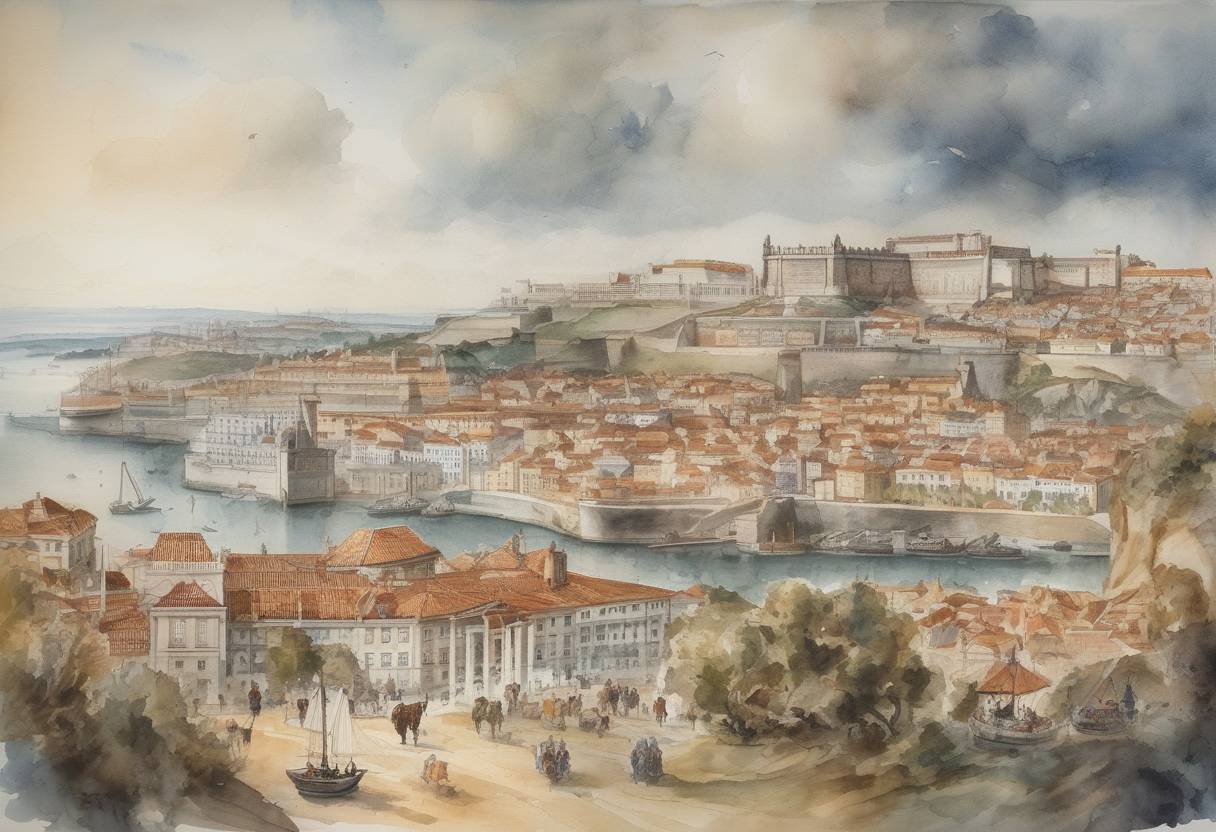
On December 1, 1640, Portugal successfully regained its independence from Spanish rule, marking the end of the Iberian Union, a period during which the crowns of Portugal and Spain were united under a single monarch. This significant event in Portuguese history was marked by the accession of King John IV, who became the first monarch of the House of Braganza.
The Iberian Union began in 1580 when King Philip II of Spain also became King Philip I of Portugal following a dynastic crisis. The death of King Sebastian of Portugal in 1578, who left no heir, and the subsequent death of his successor, Cardinal Henry, led to a succession crisis. Philip II, as a grandson of King Manuel I of Portugal, claimed the Portuguese throne and was able to assert his rule, uniting the two crowns.
During the 60 years of the Iberian Union, Portugal maintained its own laws and administrative systems, but the kingdom’s interests were often subordinated to those of Spain. This period saw increasing dissatisfaction among the Portuguese nobility and merchant classes, who resented Spanish dominance and the negative impact of Spain’s wars on Portuguese trade.
The discontent culminated in the Portuguese Restoration War, which began with a well-coordinated coup on December 1, 1640. A group of Portuguese nobles, known as the “Forty Conspirators,” orchestrated a revolt in Lisbon. They successfully captured the Spanish governor, the Duchess of Mantua, and killed her secretary, Miguel de Vasconcelos, who was deeply unpopular.
The coup was swift and largely bloodless, and it quickly gained widespread support across Portugal. The Duke of Braganza, a prominent noble with a legitimate claim to the throne, was declared King John IV of Portugal. His accession marked the beginning of the Braganza dynasty, which would rule Portugal for centuries.
The restoration of Portuguese independence was not immediately recognized by Spain, leading to a protracted conflict known as the Portuguese Restoration War, which lasted until 1668. The Treaty of Lisbon, signed in 1668, finally recognized Portugal’s sovereignty, ending the war.
The restoration of independence had significant implications for Portugal. It allowed the country to reassert control over its overseas empire, which had suffered under Spanish rule. It also marked the beginning of a new era of Portuguese history, characterized by a renewed focus on maritime trade and exploration.
The successful revolt and subsequent independence are celebrated annually in Portugal as Restoration of Independence Day, a national holiday commemorating the country’s liberation from Spanish rule and the establishment of the Braganza dynasty.
Source: en.wikipedia.org