Richard Nixon Elected as the 37th President of the United States
1968 · Washington, D.C., United States
Richard Nixon was elected as the 37th President of the United States, defeating incumbent Vice President Hubert Humphrey.
November 5, 1996
Bill Clinton was re-elected as President of the United States, defeating Republican challenger Bob Dole.
Washington, D.C., United States | Democratic Party
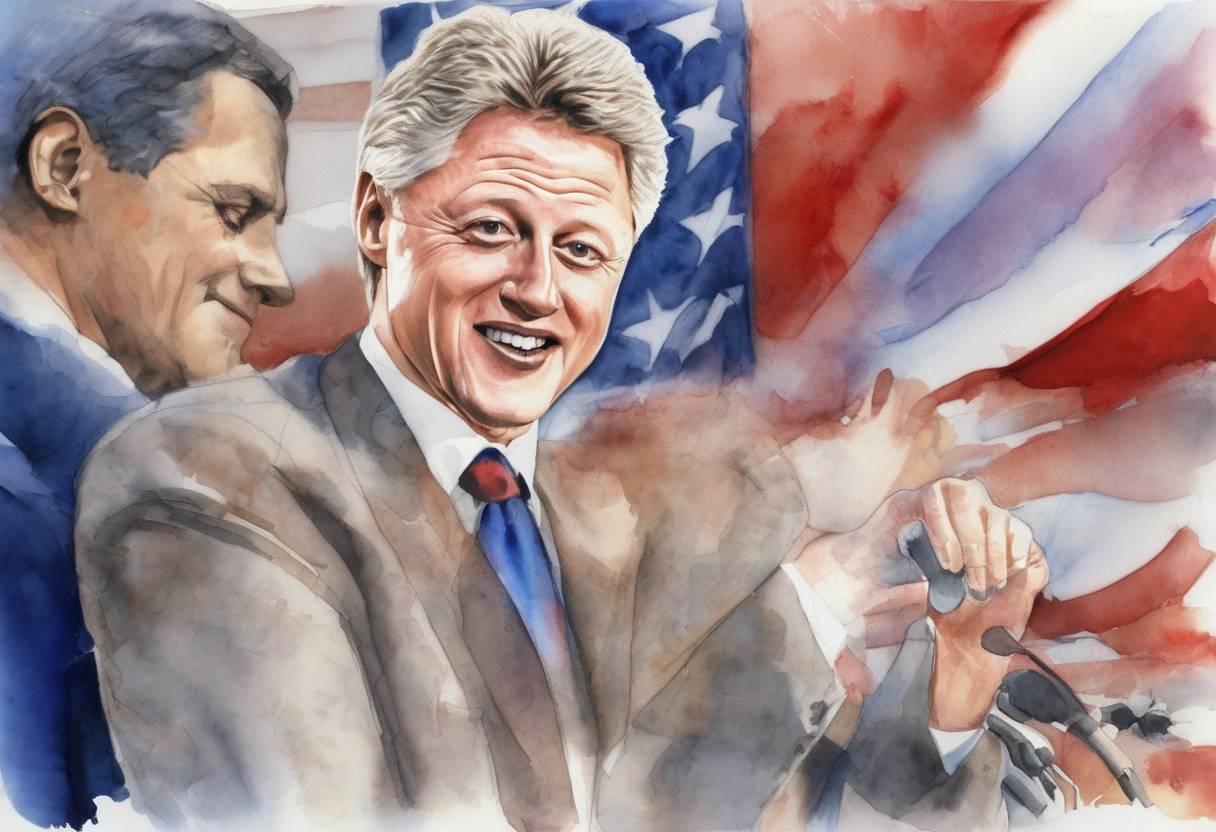
On November 5, 1996, William Jefferson Clinton was re-elected as the 42nd President of the United States, defeating his Republican challenger, Senator Bob Dole of Kansas. This election marked a significant moment in American political history, as Clinton became the first Democratic president since Franklin D. Roosevelt to be re-elected to a second term.
Economic Conditions: The United States was experiencing a period of economic prosperity during Clinton’s first term. The economy was characterized by low unemployment, a declining deficit, and a booming stock market, which bolstered Clinton’s popularity.
Policy Achievements: Clinton’s administration had several notable achievements, including the implementation of the North American Free Trade Agreement (NAFTA) and the Family and Medical Leave Act. His centrist approach, often referred to as “Third Way” politics, aimed to balance progressive social policies with fiscal conservatism.
Republican Revolution: The 1994 midterm elections had resulted in a Republican majority in both houses of Congress, led by Newt Gingrich’s “Contract with America.” This shift posed challenges for Clinton but also allowed him to position himself as a moderate counterbalance to the more conservative Congress.
Candidates: Bill Clinton ran for re-election with Vice President Al Gore. The Republican ticket was led by Bob Dole, a World War II veteran and long-serving senator, with Jack Kemp as his running mate. Ross Perot also ran as a third-party candidate under the Reform Party, though with less impact than in the 1992 election.
Key Issues: The campaign focused on economic issues, healthcare, welfare reform, and crime. Clinton emphasized his administration’s achievements and a vision for continued prosperity. Dole criticized Clinton’s ethics and promised a 15% across-the-board tax cut.
Debates and Strategy: Clinton’s campaign effectively utilized a strategy of portraying Dole as out of touch with the needs of modern America, while Dole struggled to gain traction against the incumbent’s strong economic record.
Outcome: Clinton won a decisive victory, securing 379 electoral votes to Dole’s 159. He garnered 49.2% of the popular vote, compared to Dole’s 40.7%, with Perot capturing about 8.4%.
Voter Demographics: Clinton’s support was strong among women, minorities, and younger voters. His ability to appeal to a broad coalition of voters was crucial to his success.
Second Term Challenges: Clinton’s second term would be marked by significant events, including the Monica Lewinsky scandal and subsequent impeachment proceedings, though he was acquitted by the Senate.
Legacy: Clinton’s re-election solidified his role as a pivotal figure in the Democratic Party, influencing its direction towards centrist policies. His presidency is often credited with reshaping the political landscape of the 1990s.
Impact on Future Elections: The 1996 election highlighted the importance of economic performance in presidential elections and set the stage for future political strategies that emphasized centrist policies and broad voter appeal.
In summary, Bill Clinton’s re-election in 1996 was a testament to his administration’s economic successes and his ability to navigate the complex political environment of the time. His victory underscored the significance of economic issues in American politics and set the tone for the remainder of the decade.
Source: en.wikipedia.org