The Bombing of Dresden: February 13, 1945
1945 · Dresden, Germany
The bombing of Dresden by Allied forces began during World War II, resulting in a devastating firestorm.
February 14, 1945
The bombing of Dresden in World War II by the British Royal Air Force (RAF) and the United States Army Air Forces (USAAF) continued, resulting in a devastating firestorm and significant civilian casualties.
Dresden, Germany | Royal Air Force, United States Army Air Forces
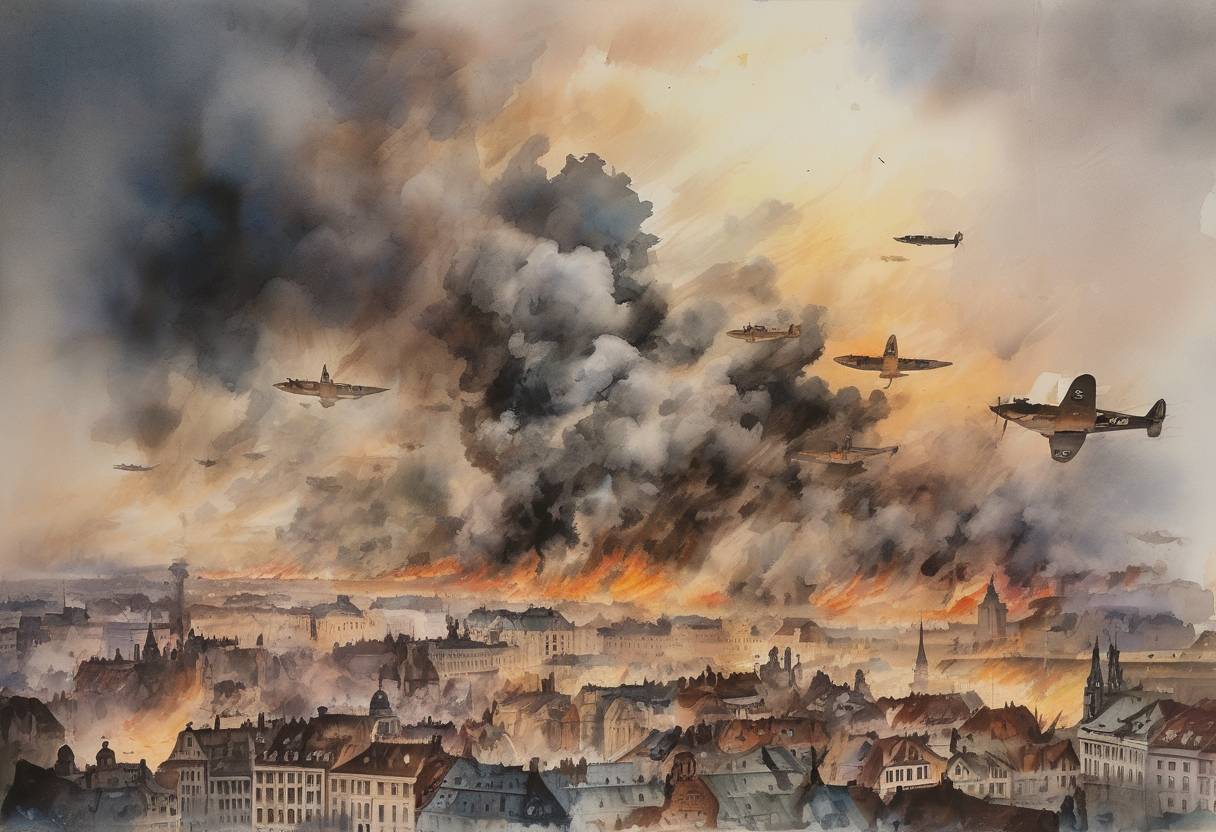
The bombing of Dresden during World War II was part of the Allied forces’ strategic bombing campaign against Nazi Germany. By early 1945, the Allies were advancing into Germany from both the west and the east, with the Soviet Red Army approaching from the east. The bombing of Dresden was intended to support Soviet forces by disrupting German troop movements and logistics, as well as to weaken German morale.
On February 13 and 14, 1945, the British Royal Air Force (RAF) and the United States Army Air Forces (USAAF) launched a series of air raids on Dresden, a city known for its cultural significance and architectural beauty. The city was also a transportation hub, which made it a strategic target.
February 13, 1945: The first wave of the bombing began in the evening with the RAF’s Bomber Command. Approximately 800 Lancaster bombers dropped incendiary bombs, creating a firestorm that engulfed large parts of the city.
February 14, 1945: The USAAF continued the assault with two daylight raids. Hundreds of B-17 Flying Fortress bombers targeted rail yards and industrial areas, further contributing to the destruction.
The combination of high-explosive and incendiary bombs led to a massive firestorm, a phenomenon where intense fires create their own wind systems, exacerbating the spread of flames. The firestorm consumed much of Dresden’s city center, resulting in widespread devastation.
The bombing resulted in significant civilian casualties, with estimates ranging from 22,000 to 25,000 deaths. The exact number remains uncertain due to the chaos and destruction. The raids destroyed vast areas of the city, including many historical buildings and cultural landmarks.
The bombing of Dresden has been a subject of controversy and debate. Critics argue that the city had limited military value and that the scale of destruction was disproportionate. Supporters contend that it was a necessary part of the Allied strategy to hasten the end of the war.
Moral and Ethical Debate: The bombing raised questions about the ethics of targeting civilian areas and the use of strategic bombing as a military tactic.
Post-War Reconstruction: Dresden’s reconstruction became a symbol of resilience and recovery in post-war Germany. The city has since been rebuilt, with efforts to restore its historic architecture.
Historical Reflection: The event is often cited in discussions about the conduct of war and the balance between military objectives and humanitarian considerations.
The bombing of Dresden remains a poignant reminder of the destructive power of war and the complex decisions faced by military strategists during times of conflict.
Source: en.wikipedia.org