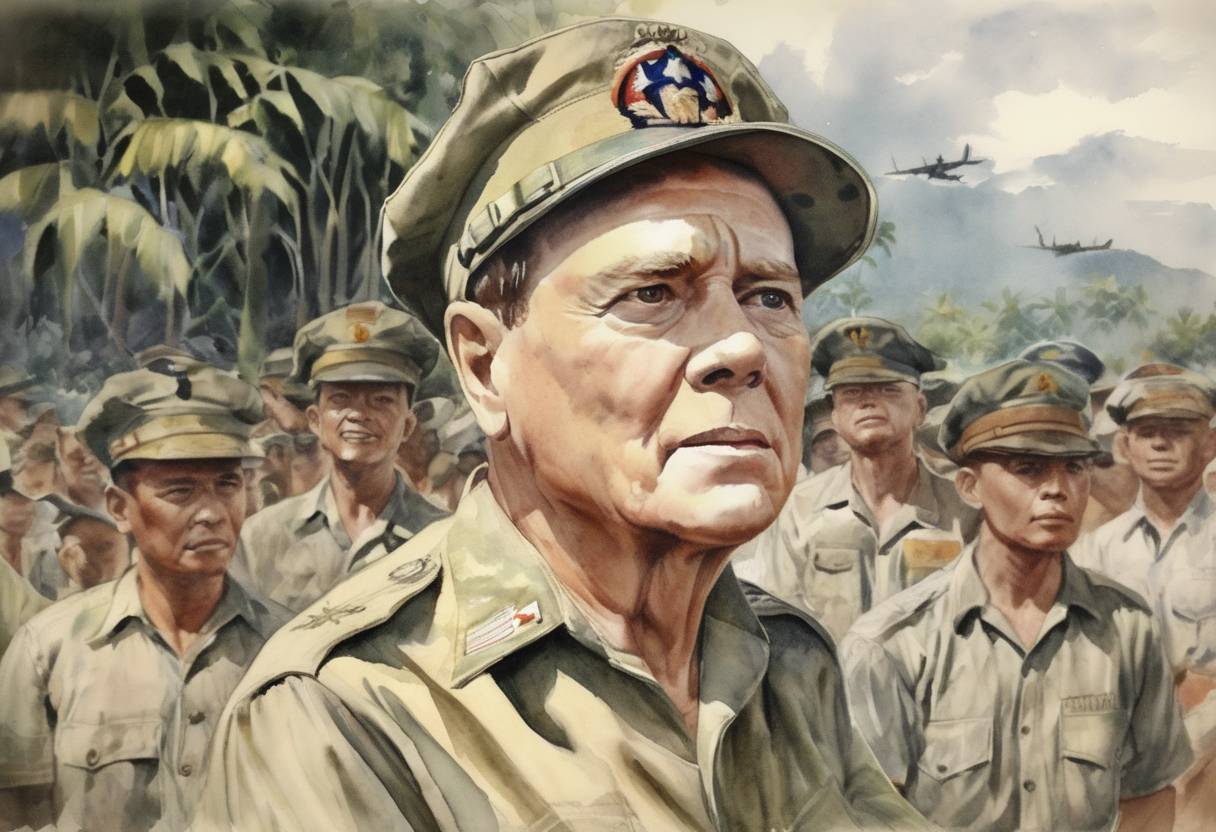
General Douglas MacArthur’s Return to the Philippines - October 20, 1944
On October 20, 1944, General Douglas MacArthur made a historic return to the Philippines, fulfilling his famous promise, “I shall return.” This event marked a pivotal moment in the Pacific Theater of World War II and was a significant step towards the liberation of the Philippines from Japanese occupation.
Background
- Japanese Occupation: The Philippines had been under Japanese control since early 1942, following the fall of Bataan and Corregidor. The occupation was marked by harsh military rule and significant suffering for the Filipino people.
- MacArthur’s Departure: In March 1942, under orders from President Franklin D. Roosevelt, MacArthur left the Philippines for Australia as Japanese forces advanced. Before leaving, he vowed to return, a promise that became a symbol of hope for the Filipino people.
The Return
- Leyte Landing: On October 20, 1944, MacArthur waded ashore on the island of Leyte, accompanied by Philippine President Sergio Osmeña and other Allied forces. This landing was part of the larger Allied campaign known as the Battle of Leyte, which aimed to recapture and liberate the Philippines.
- Significance of the Landing: The return was not just a symbolic gesture but a strategic military operation. The landing on Leyte was the beginning of a campaign that would eventually lead to the liberation of the entire Philippine archipelago.
Key Events Leading Up to the Return
- Allied Strategy: The return to the Philippines was part of the broader Allied strategy in the Pacific, which involved “island hopping” to recapture territory from Japanese control and move closer to Japan itself.
- Naval and Air Superiority: By 1944, the Allies had gained significant naval and air superiority in the Pacific, allowing them to launch large-scale operations such as the Leyte invasion.
Aftermath and Consequences
- Battle of Leyte Gulf: Following the landing, the Battle of Leyte Gulf took place from October 23 to 26, 1944. It was one of the largest naval battles in history and resulted in a decisive Allied victory, further weakening Japanese naval capabilities.
- Liberation of the Philippines: The successful landing and subsequent battles paved the way for the liberation of the Philippines, which was completed in 1945.
- MacArthur’s Legacy: MacArthur’s return solidified his reputation as a key military leader in the Pacific and fulfilled his promise to the Filipino people, reinforcing the strong ties between the United States and the Philippines.
Broader Historical Significance
- Turning Point in the Pacific War: The return to the Philippines was a turning point in the Pacific War, signaling the beginning of the end for Japanese occupation in Southeast Asia.
- Impact on Filipino-American Relations: The liberation efforts strengthened the historical and political relationship between the Philippines and the United States, influencing post-war reconstruction and independence.
General Douglas MacArthur’s return to the Philippines remains a significant event in World War II history, symbolizing resilience, strategic military planning, and the enduring bond between the United States and the Philippines.