The First Public Performance of 'The Stars and Stripes Forever'
1898 · Philadelphia, United States
John Philip Sousa's 'The Stars and Stripes Forever' is performed for the first time in public.
October 1, 1880
John Philip Sousa was appointed the leader of the United States Marine Band, which he led to national prominence.
Washington, D.C., United States | United States Marine Band
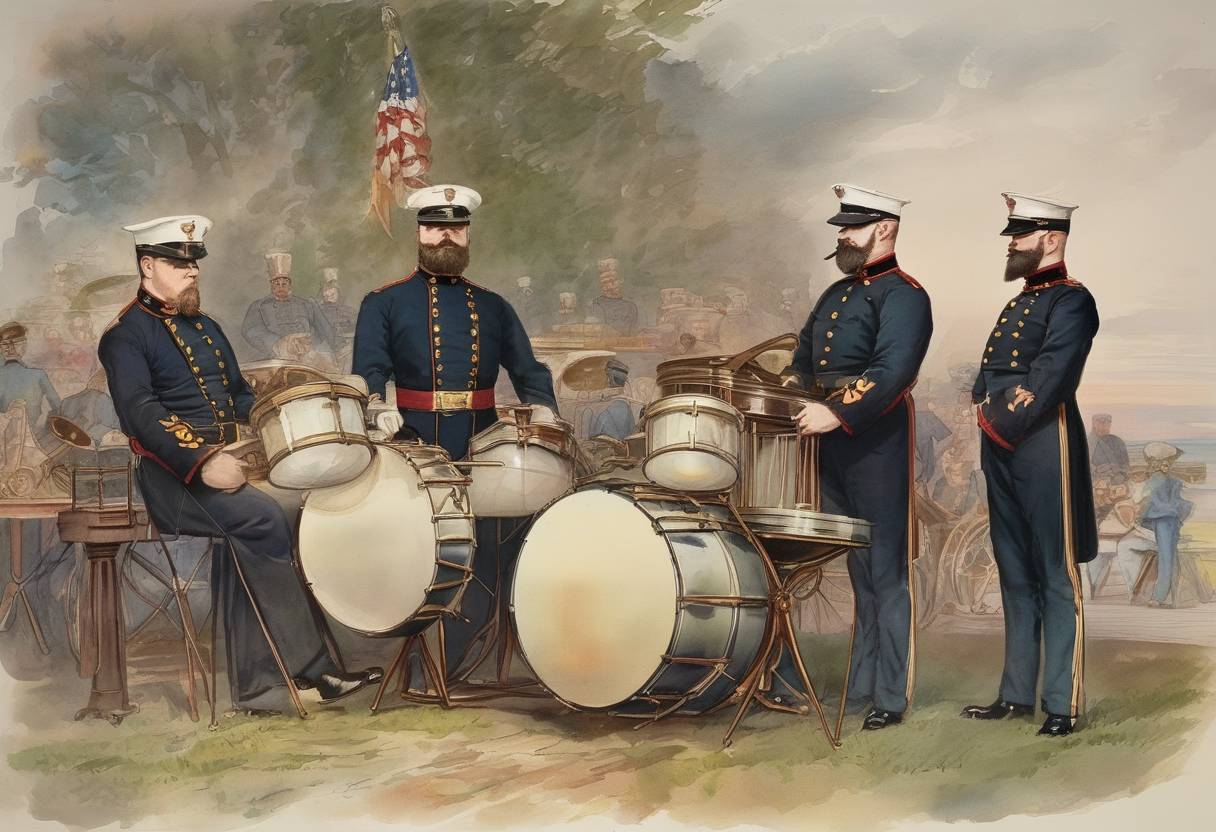
On October 1, 1880, John Philip Sousa was appointed as the leader of the United States Marine Band, marking the beginning of a transformative era for the ensemble. Sousa, who would later be known as “The March King,” was only 25 years old at the time of his appointment. His leadership and innovative approach to music would elevate the Marine Band to national prominence.
John Philip Sousa was born on November 6, 1854, in Washington, D.C. He grew up in a musical family, with his father serving as a trombonist in the Marine Band. Sousa’s early exposure to music and his formal training at the age of 13 with the Marine Band as an apprentice laid the foundation for his future career.
Upon his appointment, Sousa embarked on a mission to enhance the quality and reputation of the Marine Band. He introduced a repertoire that included not only military marches but also classical transcriptions and popular music of the time. Sousa’s leadership style emphasized precision, discipline, and musical excellence.
Sousa’s tenure with the Marine Band lasted until 1892, during which he composed numerous marches that have become staples of American patriotic music, including “The Washington Post,” “The Liberty Bell,” and “The Stars and Stripes Forever.” His work with the Marine Band set a standard for military bands worldwide and established a lasting legacy in American music.
After leaving the Marine Band, Sousa formed his own civilian band, continuing to compose and perform until his death in 1932. His influence on American music, particularly in the realm of military and patriotic compositions, remains significant to this day.
John Philip Sousa’s appointment as the leader of the United States Marine Band on October 1, 1880, was a pivotal moment in the history of American music. His innovative leadership and dedication to musical excellence transformed the Marine Band into a national institution and left an enduring legacy that continues to resonate in the world of music.
Source: en.wikipedia.org