The Partition of Bengal (1905)
1905 · Calcutta, British India
The Partition of Bengal takes effect, dividing the eastern part of the Bengal province in British India from the western part, on administrative grounds.
September 12, 1786
Lord Cornwallis is appointed as the Governor-General and Commander-in-Chief of British India, signaling a new era in British imperial administration in India.
Calcutta, India | British East India Company
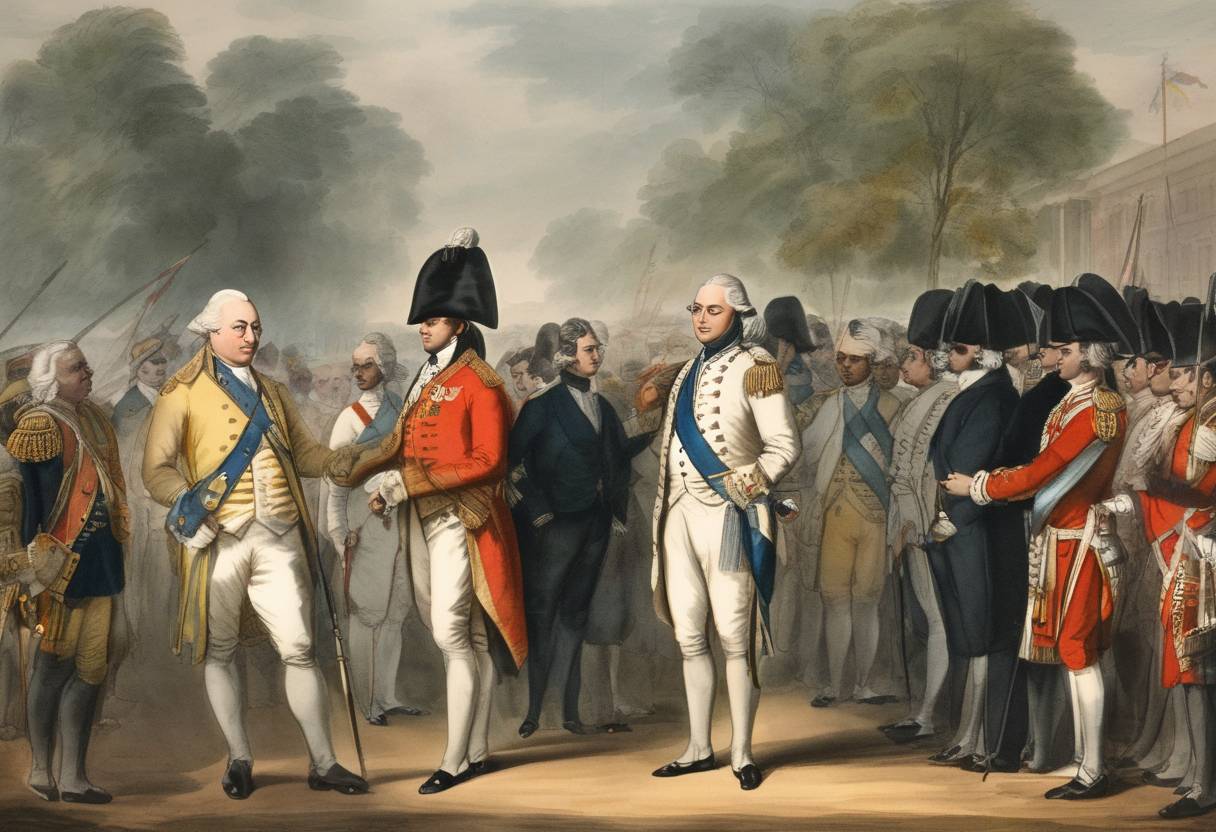
On September 12, 1786, Charles Cornwallis, 1st Marquess Cornwallis, was appointed as the Governor-General and Commander-in-Chief of the British administration in India. This appointment marked a significant turning point in British colonial governance, as Cornwallis initiated reforms that would reshape the administration’s approach to managing one of the British Empire’s most important territories.
Prior to Cornwallis’s appointment, the British East India Company was the dominant force in India, exercising both commercial and administrative control over large parts of the subcontinent. However, the company faced substantial challenges, including administrative inefficiency, corruption, and conflict with local rulers. The British government, recognizing the need for stronger oversight, sought a leader who could implement necessary reforms and maintain British power and profitability in the region.
Cornwallis arrived in India with a mandate to reform the colonial administration and military. His tenure, spanning from 1786 to 1793, laid the foundation for systematic changes in both governance and military organization:
As Commander-in-Chief, Cornwallis also focused on military reforms to strengthen the British military presence in India. His policies modernized the army and strategy to better address the challenges posed by regional powers and to fortify British interests against potential European adversaries.
Cornwallis’s time in India established practices that would influence British colonial governance for years to come. While his reforms had diverse outcomes, some of which sparked controversy and unintended consequences, his efforts to bring structure and order to British rule were pivotal in transitioning the administration from solely a commercial enterprise to a governmental entity with long-term interests in governing India.
Cornwallis’s appointment and his subsequent actions were instrumental in shaping the future trajectory of British India, setting precedents for governance that would last until Indian independence in 1947. His legacy is a complicated tapestry of administrative improvement and colonial hegemony, reflecting the duality of British interventions during the period.
Source: www.thehistoryreader.com