Eugene B. Ely's Historic Landing on the USS Pennsylvania
1911 · San Francisco, United States
Eugene B. Ely landed on the deck of the USS Pennsylvania stationed in San Francisco Bay, marking the first time an aircraft landed on a ship.
October 11, 1906
The San Francisco Board of Education orders the segregation of Japanese, Chinese, and Korean students, leading to international controversy.
San Francisco, United States | San Francisco Board of Education
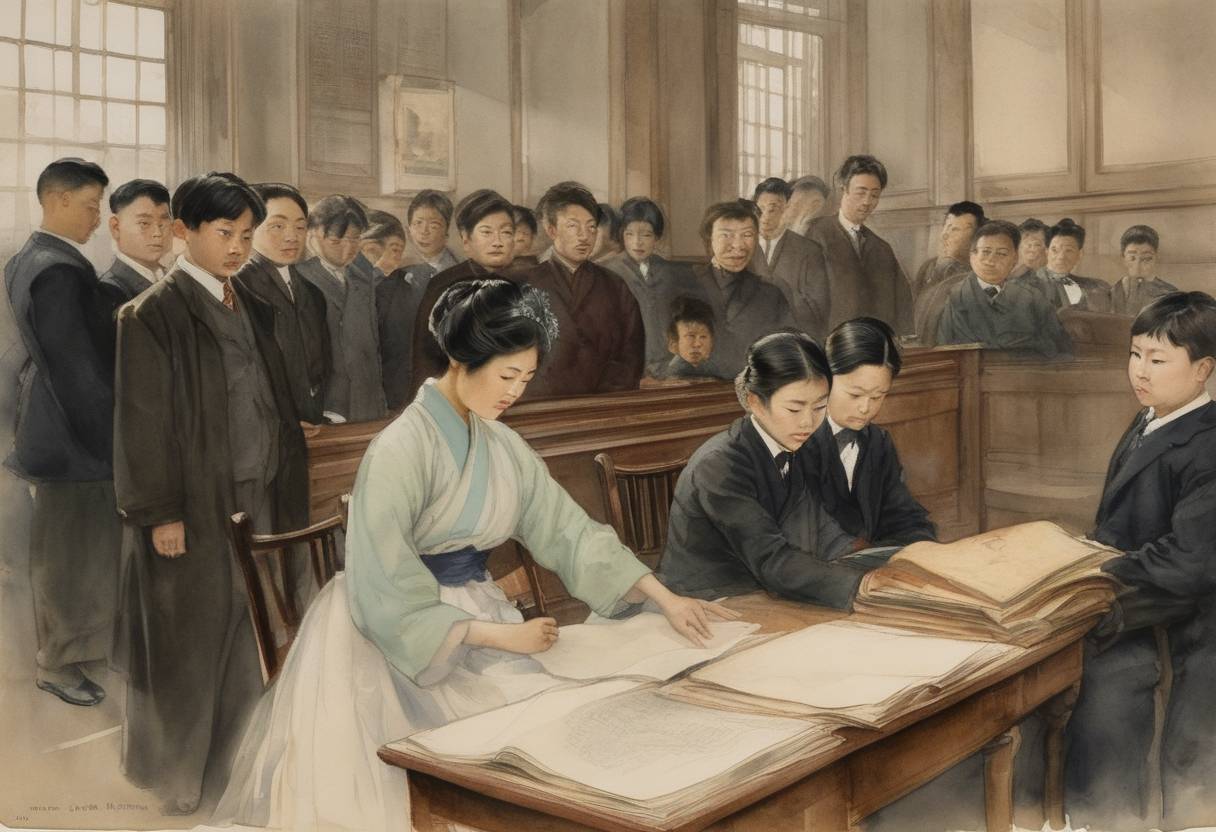
On October 11, 1906, the San Francisco Board of Education issued a controversial order mandating the segregation of Japanese, Chinese, and Korean students into a separate “Oriental” school. This decision came in the aftermath of a wave of anti-Asian sentiment that had been growing in California, fueled by racial prejudices and economic competition perceptions. During this period, fears were exacerbated by the belief that Asian immigrants were taking jobs from white Americans and lowering wages.
The decision to segregate Asian students must be understood within the broader context of racial discrimination policies prevalent in the United States at the time. The state’s prevailing attitudes were influenced by both social Darwinist ideas and a desire to maintain a homogeneous white population. The San Francisco earthquake of 1906, which forced many schools to close temporarily, further inflamed the situation. As the schools began to reopen, local authorities opted to impose segregation under the guise of managing overcrowded conditions.
The segregation order prompted significant international controversy, especially with Japan, as the Japanese government perceived it as a direct insult and violation of the rights of its citizens. Japan had been striving to establish itself as a modern power through diplomatic and economic means, and this act of discrimination threatened U.S.-Japan relations. The Japanese press widely criticized the decision, and diplomatic tension between the two nations escalated.
To resolve the crisis, negotiations took place between the U.S. and Japan, resulting eventually in the 1907–1908 Gentlemen’s Agreement. Under the terms of this diplomatic understanding, the United States agreed to end the segregation of Japanese students, while Japan agreed to limit Japanese emigration to the U.S. by not issuing passports to laborers. This agreement aimed to reduce tensions and mitigate public hostility without formalizing discriminatory policies through legislation.
The events surrounding the 1906 segregation order had lasting implications. It highlighted the racial prejudices faced by Asian immigrants in the United States and underscored the complexities of international diplomacy in the face of domestic racism. This incident foreshadowed further restrictive immigration policies, such as the Immigration Act of 1924, which imposed quotas limiting Asian immigration to the U.S.
In summary, the San Francisco Board of Education’s segregation order of 1906 not only exemplified the racial discrimination prevalent during this era but also demonstrated the interconnectedness of domestic policies and international relations.
Source: en.wikipedia.org