Death of Pope Gelasius II on February 5, 1119
1119 · Rome, Papal States
Pope Gelasius II dies. His papacy was marked by conflicts with the emperor, Henry V, concerning the investiture controversy.
December 6, 1117
Pascal II condemned King Henry V of Germany's assumption of the Protestant ecclesiastical governance without papal consent, accentuating the ongoing Investiture Controversy.
Rome, Papal States | Catholic Church
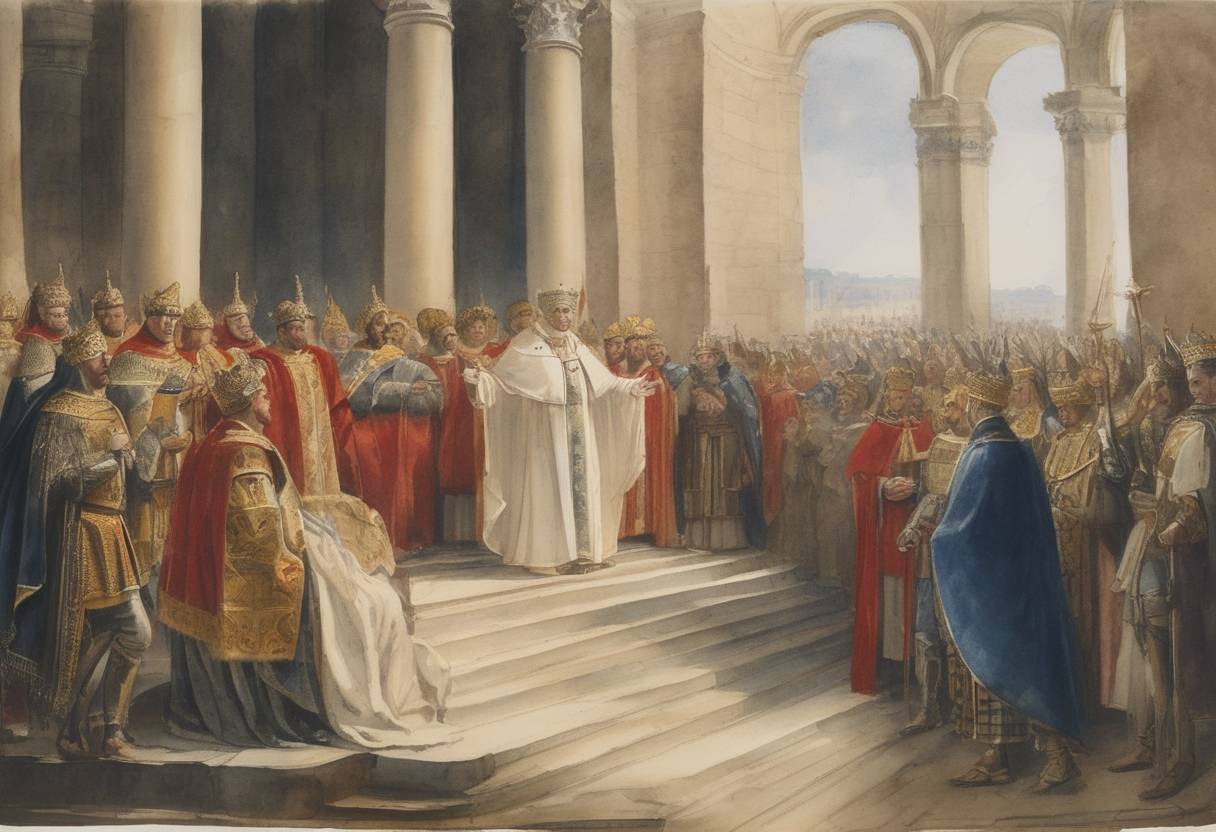
On December 6, 1117, a significant episode in the long-standing Investiture Controversy occurred, involving Pope Paschal II and King Henry V of Germany. This confrontation was part of the broader conflict between the Church and secular rulers over who held the authority to appoint church officials and invest them with spiritual authority.
The Investiture Controversy began in the late 11th century, primarily involving the Holy Roman Emperors and the Papacy. It centered on whether the monarch or the pope had the power to appoint (invest) bishops and abbots. The controversy was sparked by differing interpretations of ecclesiastical and temporal powers.
Pope Paschal II’s reign (1099–1118) was marked by tension with secular rulers, including Henry V. The conflict escalated after the succeession of Henry V as King of Germany and his insistence on maintaining royal prerogatives over ecclesiastical appointments. Despite attempts at compromise, including the Concordat of Worms in 1122 (a provisional settlement not concluded by Paschal), disagreements persisted regarding the scope and limits of secular influence on church appointments.
On this date, Pope Paschal II decisively condemned King Henry V’s actions in assuming control over ecclesiastical governance without papal consent. This condemnation was emblematic of the broader struggle and the pope’s assertion of the church’s autonomy. Paschal II’s censure reflected the papal resistance against secular encroachments on ecclesiastical authority.
Through the censure of King Henry V, Pope Paschal II underscored the church’s efforts to delineate and preserve ecclesiastical independence, contributing to a foundational moment in the development of medieval church-state relations.
Source: example.com