The Signing of the Tripartite Pact: September 27, 1940
1940 · Berlin, Germany
The Tripartite Pact is signed in Berlin by Germany, Italy, and Japan, establishing the Axis Powers during World War II.
December 12, 1941
Germany and Italy declared war on the United States during World War II, a few days after the attack on Pearl Harbor.
Berlin, Germany | Germany and Italy
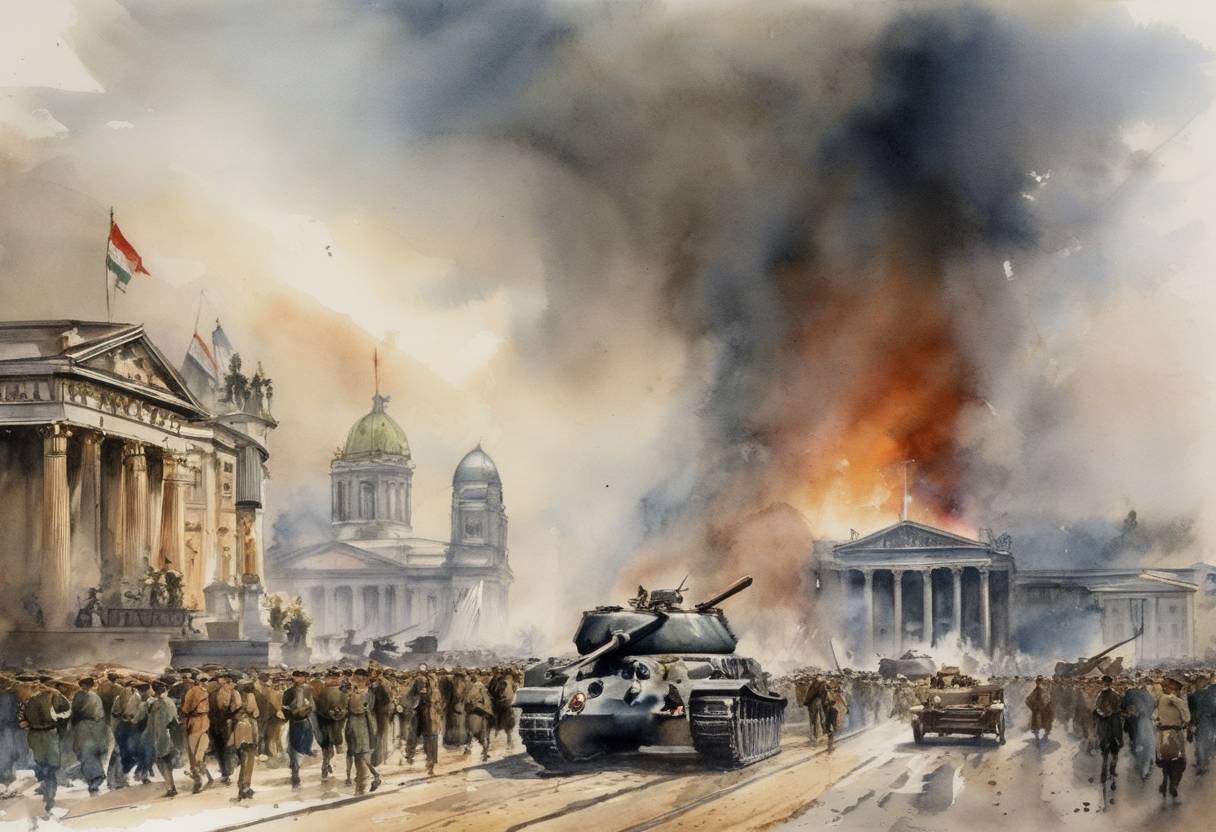
On December 11, 1941, a momentous turn of events occurred during World War II: Nazi Germany and Fascist Italy formally declared war on the United States. This significant escalation in the global conflict ensued just days after the Japanese attack on Pearl Harbor on December 7, 1941, which had prompted the United States to declare war on Japan on December 8, 1941.
Adolf Hitler’s decision to declare war on the United States was not mandated by the Tripartite Pact, the mutual defense treaty between Germany, Italy, and Japan, as it only required assistance if a member nation was attacked, not if it instigated an attack itself. Nonetheless, Hitler chose to stand by Japan, partly expecting reciprocal military support against the Soviet Union and partly due to Hitler’s underestimation of the United States’ military capabilities.
Benito Mussolini, leader of Italy, followed Germany’s lead in declaring war on the United States. Italy, already struggling on the battlefield in North Africa and against the British, aligned closely with Germany’s strategic decisions during this period.
Berlin Declaration: On the morning of December 11, Adolf Hitler addressed the Reichstag, delivering a lengthy speech in which he blamed President Franklin D. Roosevelt for allegedly trying to provoke Germany through blockades and other acts. Following this address, Germany officially declared war on the United States, marking the United States’ active military involvement on the European front.
Rome Declaration: On the same day, the Italian government, led by Benito Mussolini, echoed Germany’s action. Italy’s declaration was largely seen as a gesture of solidarity with Hitler’s regime.
US Response: The United States Congress quickly reciprocated by declaring war on Germany and Italy, solidifying the tripartite conflict of the Axis Powers against the Allies.
Strategic Shift: This development altered the strategic focus of the United States, leading to increased U.S. military engagement in both the European and Pacific theaters.
Allied Cooperation: The declarations facilitated closer coordination among the Allied Powers, bolstering resource sharing, strategic planning, and military operations against Axis Powers in multiple theaters globally.
Germany and Italy’s declaration of war on the United States marked an irrevocable escalation in World War II, uniting the Allied forces against a common Axis threat and drawing the United States into a pivotal global role that would shape the course of the conflict and the post-war world order.
Source: www.history.com