Capture of Breda - May 14, 1590
1590 · Breda, Netherlands
Maurice of Nassau captures the city of Breda from the Spanish in the Eighty Years' War.
October 3, 1574
The Spanish siege of Leiden was lifted during the Eighty Years' War, marking the event with the Relief of Leiden.
Leiden, Netherlands
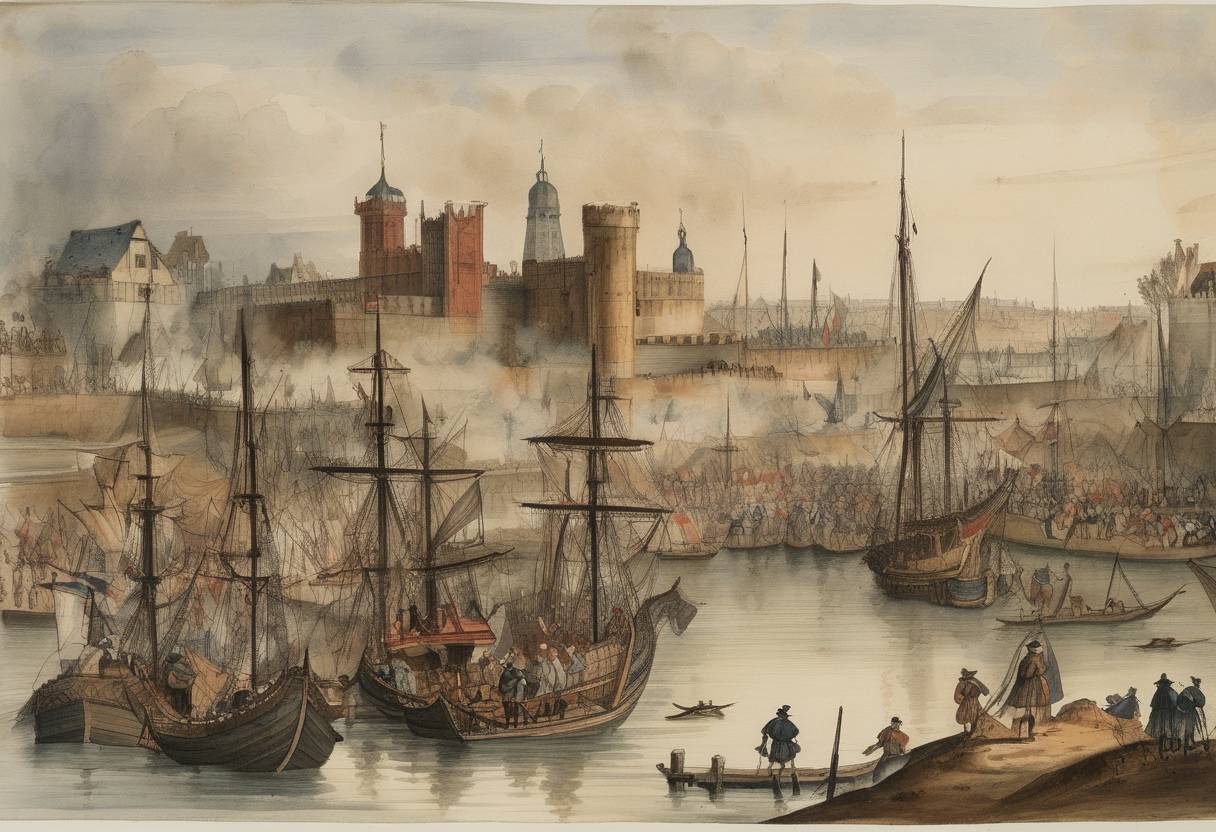
The Relief of Leiden was a pivotal event in the Eighty Years’ War, during which the besieged city of Leiden in the Spanish-controlled Netherlands was liberated from a prolonged siege by Spanish forces. The lifting of the siege on October 3, 1574, marked a significant triumph for the Dutch rebels and became a celebrated symbol of Dutch resistance.
The Eighty Years’ War (1568–1648) was a protracted conflict between the Spanish Empire and the Dutch provinces, stemming from religious tensions, restrictive policies imposed by the Spanish Habsburg ruler, King Philip II, and a burgeoning Dutch national identity. By 1574, the Spanish sought to consolidate their hold over the rebellious provinces by capturing key strategic locations. Leiden, due to its strategic location, became a target for the Spanish.
The city of Leiden was besieged in 1573 and again in 1574 following a temporary lifting of the siege. The Spanish forces, led by Francisco de Valdez, surrounded the city, cutting off supplies and enforcing starvation conditions in an attempt to compel surrender. The city’s defenders and inhabitants endured severe hardships, including famine and disease, while awaiting relief.
William of Orange, the leader of the Dutch revolt, orchestrated a relief effort. He devised a plan to break the siege by flooding the surrounding countryside through the deliberate breaching of dikes, a tactic aimed at allowing the Dutch navy to sail close to the city with supplies and reinforcements.
The plan was executed as relentless autumn storms swelled the waters, aiding the approach of the Dutch fleet. On October 3, 1574, a fleet led by Admiral Louis de Boisot reached the city, breaching the Spanish defenses. The Spanish, unable to cope with the rising waters and the ensuing relief assault, lifted the siege and withdrew.
The Relief of Leiden was a significant morale booster for the Dutch cause. The survival of the city under dire conditions became emblematic of Dutch resilience and tenacity. In gratitude, the University of Leiden was established in 1575 by William of Orange, a testament to the city’s enduring spirit and contribution to the resistance.
The event is commemorated annually on October 3rd by the citizens of Leiden, known as “Leidens Ontzet” or “Leiden’s Relief,” featuring celebrations, parades, and traditional meals, including “hutspot,” a dish associated with the historic relief efforts.
The relief was a decisive moment in the Eighty Years’ War, galvanizing further support for the rebellion and contributing to the eventual decline of Spanish control over the Low Countries. It stands as a poignant example of the interplay between military strategy, geography, and national determination in the broader context of the fight for independence.
Source: en.wikipedia.org