Election of Pope Stephen IV (V) - June 12, 816
816 · Rome, Italy
Pope Stephen IV (V) was elected as the 97th pope of the Roman Catholic Church.
March 23, 0752
Pope Stephen II is elected to succeed Pope Zachary as the 92nd pope of the Roman Catholic Church. However, he dies only three days later, before his consecration, leading to the election of Pope Stephen III.
Rome, Italy | Roman Catholic Church
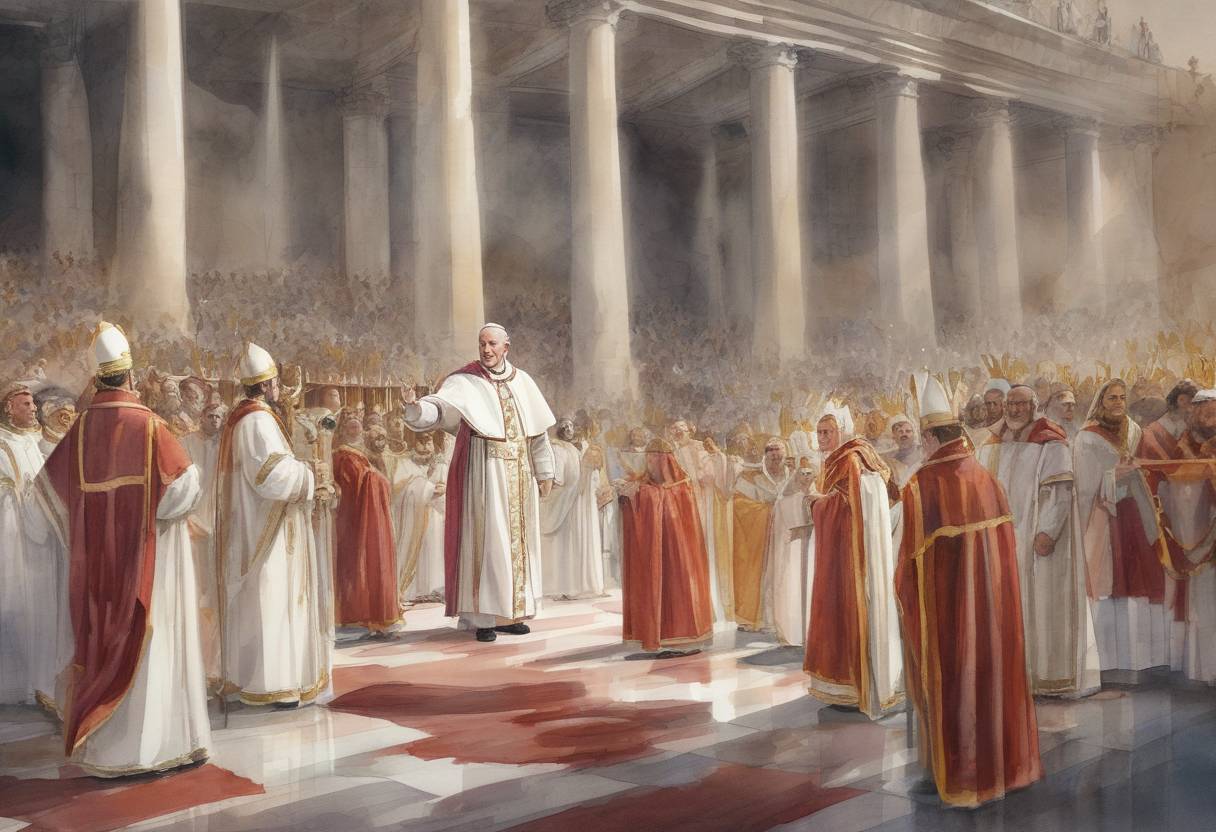
On March 23, 752, a significant event unfolded in the history of the Roman Catholic Church with the election of Pope Stephen II. He was chosen to succeed Pope Zachary, becoming the 92nd pope. However, his papacy is unique and somewhat anomalous in the annals of papal history due to its brevity and the circumstances surrounding it.
Pope Zachary, who served as pope from 741 to 752, was a respected leader known for his diplomatic skills and efforts to maintain peace in a time of political instability in Italy and the broader region. His death on March 15, 752, left the papal seat vacant, prompting the need for a swift election to ensure continuity in leadership.
Stephen II was elected as pope on March 23, 752. However, his papacy is often not listed in the official records of the popes because he died just three days later, on March 26, 752, before he could be consecrated. In the Roman Catholic Church, a pope’s reign is traditionally considered to begin with his consecration, not merely his election. Consequently, Stephen II is sometimes referred to as a “pope-elect” rather than a fully recognized pope.
Following the unexpected death of Stephen II, the Church faced the immediate task of electing another pope. This led to the election of Pope Stephen III (sometimes referred to as Stephen II due to the non-consecration of his predecessor), who assumed the papacy later in 752. His papacy marked the continuation of the Church’s efforts to navigate the complex political landscape of the time, particularly the growing threat of the Lombards in Italy.
The brief and unusual papacy of Stephen II highlights the procedural and doctrinal nuances within the Catholic Church regarding papal succession. It underscores the importance of consecration in legitimizing a pope’s authority and the challenges the Church faced in maintaining stability during periods of rapid leadership change.
In summary, the election and immediate death of Pope Stephen II is a rare instance in papal history, illustrating the complexities of ecclesiastical governance and the significance of consecration in the papal office.
Source: en.wikipedia.org