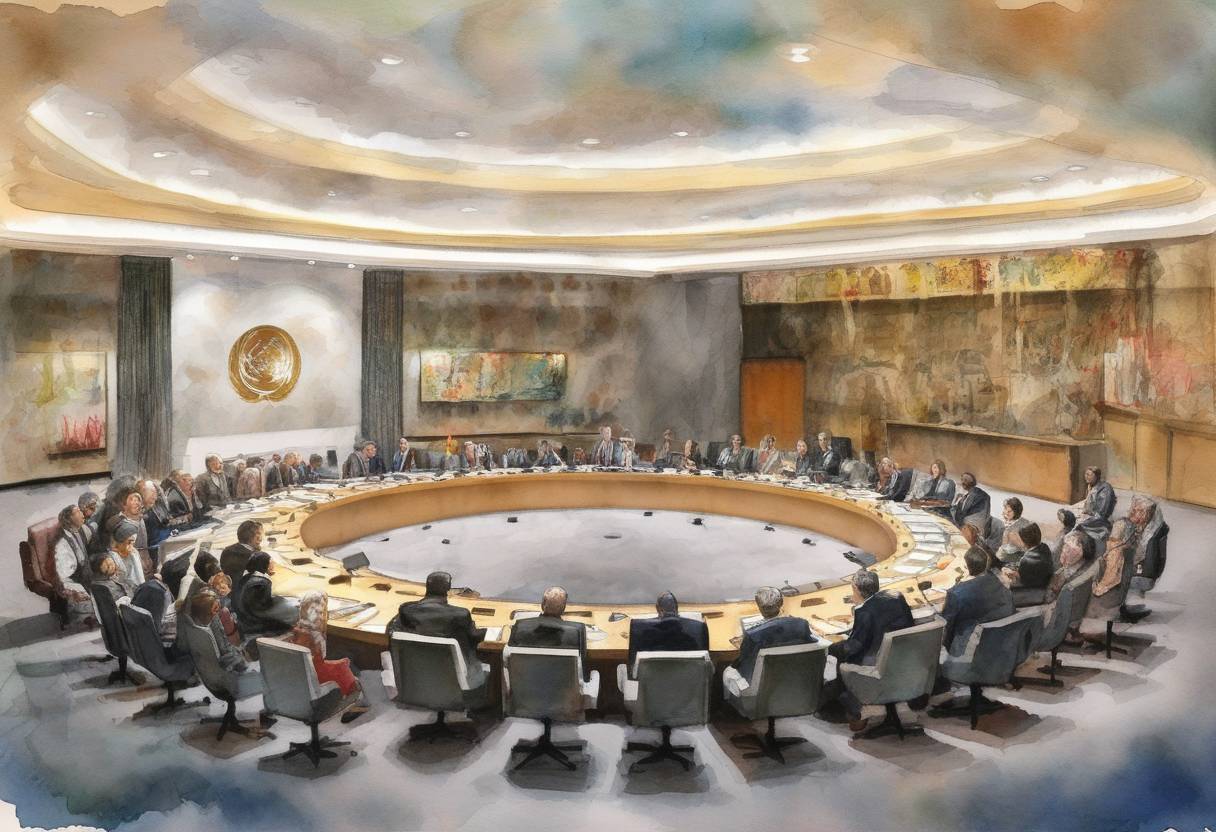
United Nations Security Council Emergency Meeting on Gaza - July 30, 2014
On July 30, 2014, the United Nations Security Council (UNSC) convened an emergency meeting to address the rapidly escalating conflict in the Gaza Strip. This meeting was a response to the intensifying violence between Israel and Hamas, which had resulted in significant civilian casualties and widespread destruction.
Context Leading Up to the Meeting
The conflict in Gaza in 2014, often referred to as the Gaza War or Operation Protective Edge, began on July 8, 2014. It was marked by a series of military confrontations between the Israel Defense Forces (IDF) and Hamas, the de facto governing authority in the Gaza Strip. The hostilities were triggered by the kidnapping and murder of three Israeli teenagers in the West Bank, followed by the murder of a Palestinian teenager in Jerusalem, which led to heightened tensions and violence.
The conflict saw extensive rocket fire from Gaza into Israel and a large-scale military operation by Israel, including airstrikes and a ground invasion aimed at dismantling Hamas’ military infrastructure, particularly its network of tunnels.
Key Points of the UNSC Meeting
Humanitarian Concerns: The UNSC expressed grave concern over the humanitarian impact of the conflict. By the time of the meeting, the death toll had risen significantly, with a large number of civilian casualties, including women and children. The destruction of homes and infrastructure in Gaza had led to a humanitarian crisis, with thousands displaced and in urgent need of aid.
Call for Ceasefire: The Council called for an immediate and unconditional humanitarian ceasefire. The aim was to halt the violence and allow for the delivery of humanitarian assistance to the affected populations. The ceasefire was also intended to provide a window for negotiations towards a more sustainable peace.
International Response: The meeting underscored the international community’s urgent call for restraint and the protection of civilians. The UNSC urged both parties to respect international humanitarian law and to engage in meaningful dialogue to resolve the conflict.
Diplomatic Efforts: Various international actors, including the United States, Egypt, and the United Nations, were actively involved in mediating a ceasefire. The UNSC meeting highlighted the need for continued diplomatic efforts to achieve a lasting resolution.
Aftermath and Consequences
Despite the UNSC’s call for a ceasefire, the conflict continued for several more weeks, eventually concluding on August 26, 2014, with an Egyptian-brokered ceasefire agreement. The war resulted in significant loss of life and extensive damage to Gaza’s infrastructure, exacerbating the humanitarian situation in the region.
The 2014 conflict highlighted the persistent challenges in achieving a lasting peace between Israel and the Palestinians, underscoring the need for renewed efforts towards a two-state solution and addressing the underlying issues fueling the conflict.
The UNSC’s emergency meeting on July 30, 2014, remains a critical moment in the international community’s response to the Gaza conflict, reflecting the ongoing complexities and humanitarian concerns associated with the Israeli-Palestinian conflict.