The First Warrants in the Salem Witch Trials: February 29, 1692
1692 · Salem, United States
The first warrants are issued in the Salem witch trials.
August 19, 1692
Five people, including a clergyman, are executed for witchcraft in Salem, Massachusetts, during the Salem witch trials.
Salem, United States
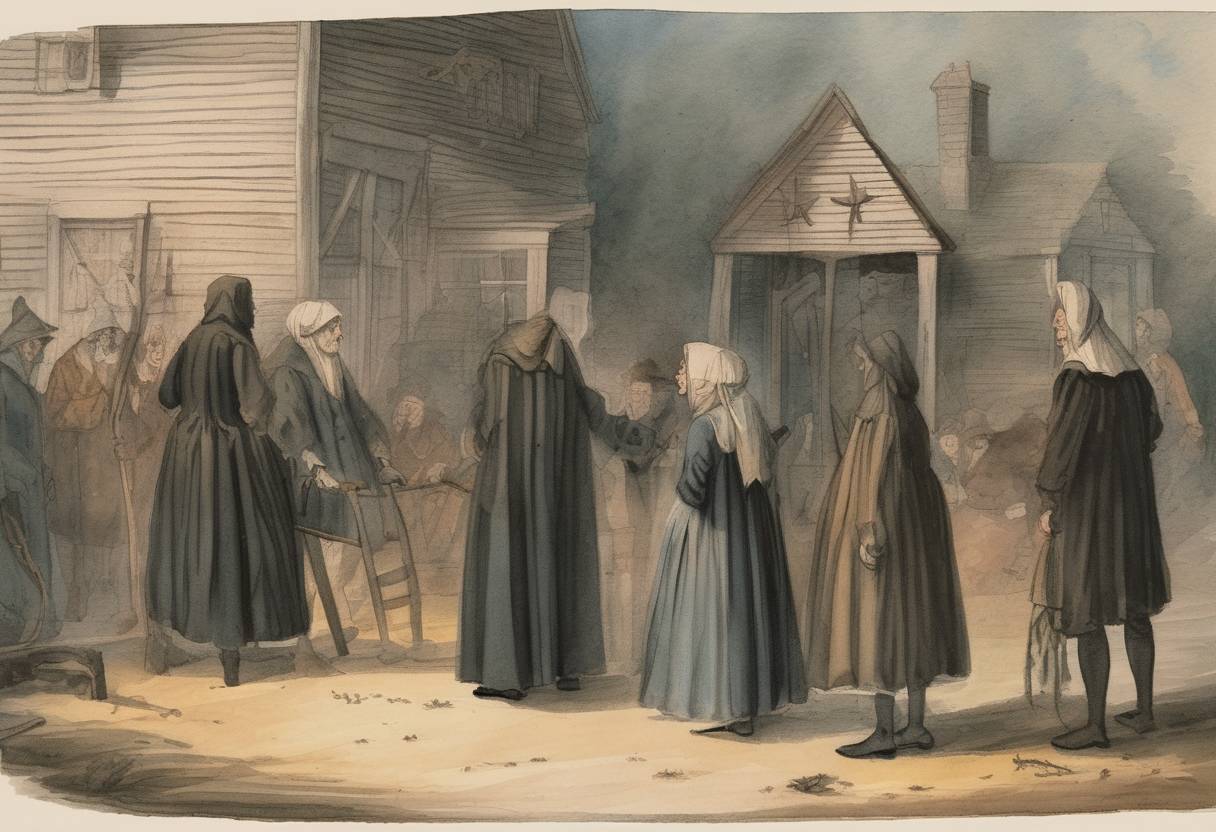
On August 19, 1692, a grim chapter in American colonial history unfolded as five individuals were executed for witchcraft in Salem, Massachusetts. This event was part of the infamous Salem witch trials, a series of hearings and prosecutions of people accused of witchcraft in colonial Massachusetts between February 1692 and May 1693. The trials resulted in the execution of 20 people, most of them women, and the imprisonment of many others.
The Salem witch trials were fueled by a combination of religious fervor, social tensions, and personal vendettas. The Puritan belief system, which dominated the Massachusetts Bay Colony, held a strict view of morality and the supernatural. The community was also experiencing political instability, economic hardship, and fear of Native American attacks, all of which contributed to a climate of fear and suspicion.
On August 19, 1692, five individuals were hanged on Gallows Hill in Salem. Among them was a clergyman, marking a particularly notable moment in the trials:
Reverend George Burroughs: A former minister of Salem Village, Burroughs was accused of being the “ringleader” of the witches. His execution was particularly controversial because he recited the Lord’s Prayer flawlessly on the gallows, something believed impossible for a witch. Despite this, he was hanged.
Martha Carrier: Known as the “Queen of Hell” by her accusers, Carrier was a mother of five. Her children were coerced into testifying against her, and she was accused of causing a smallpox epidemic.
John Willard: Initially a constable who helped arrest accused witches, Willard fell under suspicion himself. He was accused of turning against the witch hunt and was subsequently charged with witchcraft.
George Jacobs Sr.: An elderly man, Jacobs was accused by his granddaughter, who later recanted her testimony. Despite his age and frailty, he was convicted and executed.
John Proctor: A well-respected farmer, Proctor was a vocal critic of the trials. His outspoken opposition made him a target, and he was accused and convicted of witchcraft.
The executions on August 19, 1692, were part of a larger pattern of hysteria and injustice. The Salem witch trials eventually led to widespread criticism and reflection on the nature of justice and due process. By the end of 1692, public opinion began to turn against the trials, and the use of spectral evidence (testimony based on dreams and visions) was discredited.
In 1693, the remaining accused were released, and the trials were formally ended. In subsequent years, the colony admitted the trials were a mistake and compensated the families of those convicted. The Salem witch trials remain a powerful symbol of the dangers of mass hysteria and the importance of due process and rational legal standards.
The events of August 19, 1692, serve as a poignant reminder of the consequences of fear and the importance of safeguarding individual rights against unfounded accusations.
Source: www.britannica.com