Emperor Antoninus Pius: Birth and Reign
146 · Lanuvium, Roman Empire
Emperor Antoninus Pius, the Roman Emperor from 138 to 161, was born. His reign was marked by peace and stability within the Roman Empire.
January 24, 0076
The future Roman Emperor Hadrian was born. He would later become known for building Hadrian's Wall in Britain and for his extensive travels throughout the Roman Empire.
Italica, Roman Empire | Roman Empire
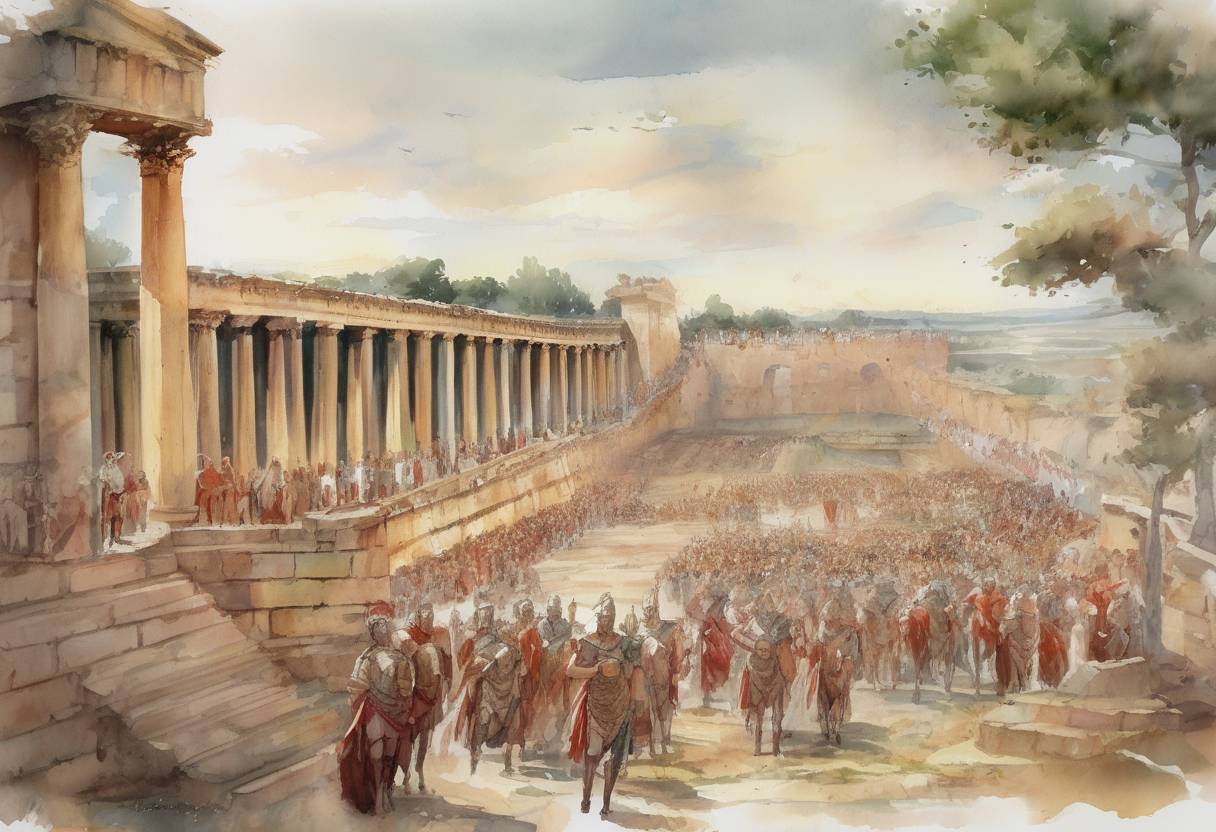
On January 24, 76 CE, Publius Aelius Hadrianus, known to history as Hadrian, was born in Italica, a Roman settlement in present-day Spain. Hadrian would go on to become one of the most notable emperors of the Roman Empire, reigning from 117 to 138 CE. His rule is often remembered for its consolidation of the empire’s borders and significant cultural and architectural contributions.
Hadrian was born into a well-established Roman family with connections to the imperial court. His father, Publius Aelius Hadrianus Afer, was a senator, and his mother, Domitia Paulina, came from a wealthy family. After his father’s death, Hadrian was placed under the guardianship of his cousin, Trajan, who would later become emperor.
Hadrian’s early career was marked by military service and administrative roles, which helped him gain valuable experience and favor within the Roman elite. His marriage to Vibia Sabina, Trajan’s grand-niece, further solidified his position within the imperial family.
Hadrian ascended to the throne following Trajan’s death in 117 CE. His reign is characterized by a shift from expansionist policies to consolidation and stabilization of the empire’s vast territories. He is best known for:
Hadrian’s Wall: Constructed in the north of Britain, this fortification marked the northern limit of Roman Britain and was intended to keep out the Picts and other tribes. It stands as a testament to Roman engineering and Hadrian’s focus on securing the empire’s borders.
Extensive Travels: Unlike many of his predecessors, Hadrian traveled extensively throughout the Roman Empire. His journeys took him to nearly every province, where he engaged with local cultures and oversaw administrative and military matters firsthand.
Cultural Patronage: Hadrian was a great admirer of Greek culture and invested in the arts and architecture. He commissioned numerous building projects, including the Pantheon in Rome and the Temple of Venus and Roma.
Hadrian’s reign is often seen as a period of relative peace and prosperity for the Roman Empire. His efforts to consolidate and secure the empire’s borders, along with his patronage of the arts, left a lasting impact on Roman culture and infrastructure. Hadrian died on July 10, 138 CE, and was succeeded by his adopted son, Antoninus Pius, ensuring a smooth transition and continued stability for the empire.
Hadrian’s legacy endures through his architectural projects and his approach to governance, which emphasized cultural integration and the maintenance of the empire’s existing territories rather than expansion.
Source: www.britannica.com