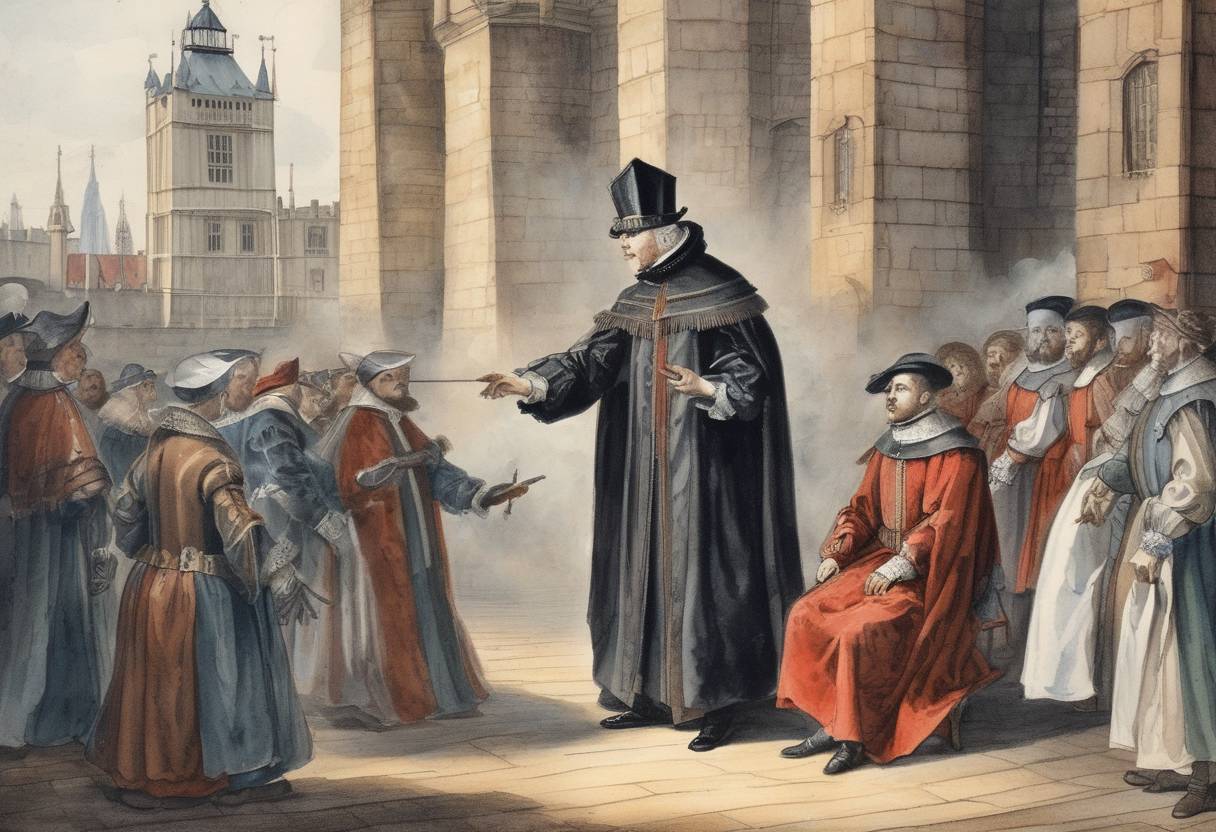
The Execution of Archbishop William Laud
On January 10, 1645, William Laud, the Archbishop of Canterbury, was executed at the Tower of London. This event marked a significant moment in the tumultuous period of the English Civil War, reflecting the intense religious and political conflicts of the time.
Background
William Laud was born in 1573 and rose to prominence within the Church of England, becoming Archbishop of Canterbury in 1633. A staunch supporter of King Charles I, Laud was a key figure in the implementation of the king’s religious policies, which aimed to enforce uniformity in worship and strengthen the power of the monarchy over the church.
Laud’s policies were controversial, particularly his attempts to impose Anglican practices on the more Puritan regions of England and Scotland. His actions, such as the introduction of the Book of Common Prayer in Scotland, led to widespread unrest and contributed to the outbreak of the Bishops’ Wars (1639-1640), which were precursors to the English Civil War.
Key Events Leading to His Execution
Religious Reforms: Laud’s reforms were seen as an attempt to reintroduce Catholic practices into the Church of England, which alarmed many Puritans and other Protestant groups.
Political Tensions: His close association with King Charles I made him a target for those opposed to the king’s policies. As tensions between the monarchy and Parliament grew, Laud’s influence waned.
Impeachment and Arrest: In 1640, as the Long Parliament convened, Laud was impeached on charges of treason. He was arrested and held in the Tower of London for several years.
Trial and Execution: After a prolonged imprisonment, Laud was brought to trial. Despite a lack of concrete evidence, he was found guilty of attempting to subvert the laws of England and was sentenced to death. His execution was carried out by beheading on January 10, 1645.
Aftermath and Historical Significance
Impact on the Church: Laud’s execution was a significant blow to the royalist cause and marked a turning point in the struggle between the monarchy and Parliament. It also signaled a shift in religious power, as Puritan influence grew stronger in the absence of Laud’s high church policies.
Legacy: Laud’s death is often seen as a symbol of the broader conflict between royal authority and parliamentary power, as well as the deep religious divisions within England. His execution underscored the volatility of the period and the drastic measures taken by Parliament to assert its authority.
Historical Perspective: Over time, historians have debated Laud’s legacy, with some viewing him as a martyr for the Anglican cause and others as a symbol of the oppressive policies of Charles I’s reign.
In summary, the execution of Archbishop William Laud was a pivotal event in the English Civil War, reflecting the complex interplay of religious and political forces that shaped 17th-century England.