Mars Express Mission: Europe's First Mission to Another Planet
2003 · Baikonur, Kazakhstan
Europe launched its first mission to another planet, Mars Express, which was sent to study the Martian atmosphere and surface.
May 30, 2003
The European Space Agency launched the Mars Express mission, which included the Beagle 2 lander, from Baikonur Cosmodrome in Kazakhstan. This mission aimed to explore the Martian atmosphere and surface.
Baikonur, Kazakhstan | European Space Agency
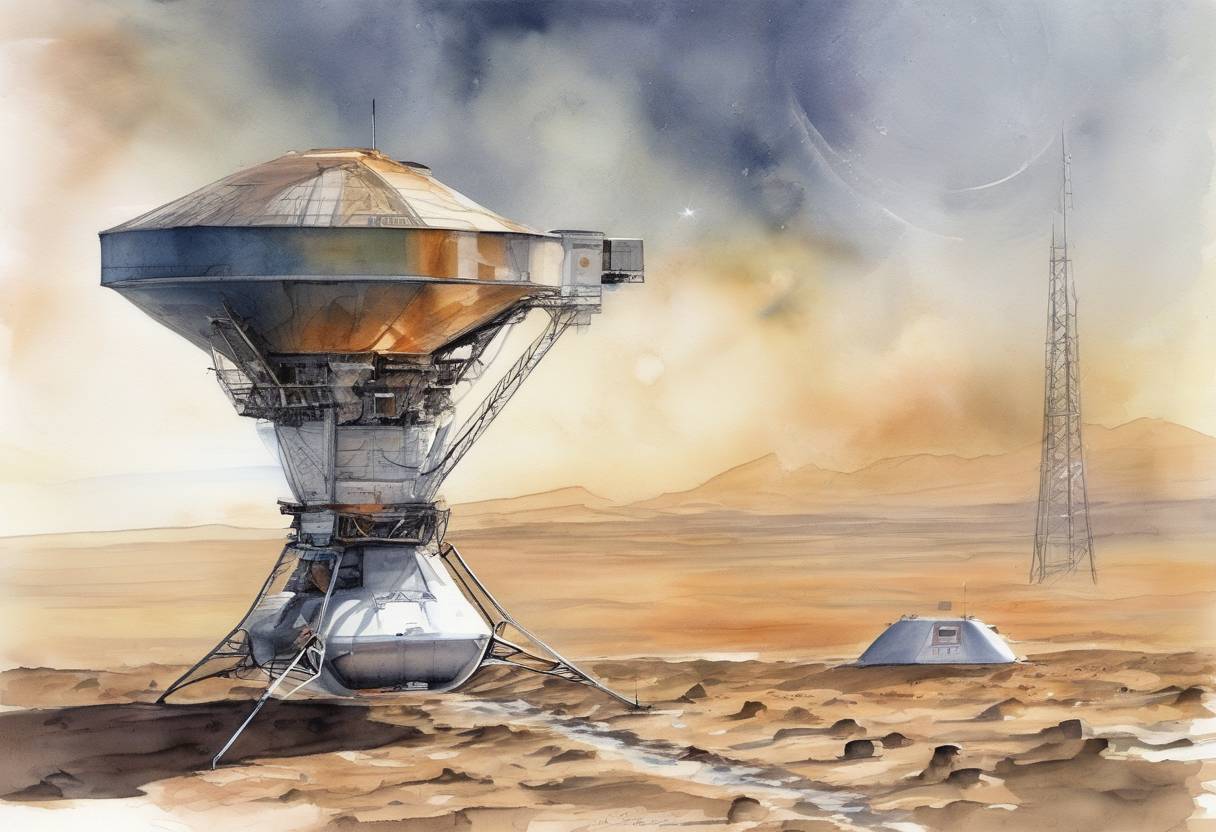
On May 30, 2003, the European Space Agency (ESA) launched the Mars Express mission from the Baikonur Cosmodrome in Kazakhstan. This mission marked a significant milestone for ESA as it was their first mission to another planet, aiming to explore the Martian atmosphere and surface.
The Mars Express mission had several key objectives:
Study the Martian Atmosphere and Climate: The orbiter was equipped to analyze the composition and dynamics of the Martian atmosphere, including its interaction with the solar wind.
Surface and Subsurface Exploration: The mission aimed to map the Martian surface at high resolution and search for signs of water, both on the surface and underground.
Geological and Mineralogical Analysis: By studying the planet’s geology and mineralogy, scientists hoped to gain insights into Mars’ history and evolution.
Deployment of Beagle 2 Lander: The mission included the Beagle 2 lander, designed to perform on-site analysis of the Martian surface.
Mars Express Orbiter: Equipped with seven scientific instruments, the orbiter was designed to conduct a comprehensive study of Mars from orbit.
Beagle 2 Lander: A small, autonomous lander developed by a consortium led by the United Kingdom, intended to perform surface analysis and search for signs of life.
Launch Vehicle: The mission was launched aboard a Soyuz-FG/Fregat rocket, a reliable choice for interplanetary missions.
Journey to Mars: After launch, Mars Express embarked on a six-month journey to Mars, entering orbit around the planet on December 25, 2003.
Orbital Success: The Mars Express orbiter successfully entered Martian orbit and began its scientific mission, providing valuable data about the planet’s atmosphere, surface, and subsurface.
Beagle 2 Lander: Unfortunately, contact with Beagle 2 was lost shortly after its deployment. It was later discovered in 2015, partially deployed on the Martian surface, indicating a partial success in its landing attempt.
Scientific Contributions: Mars Express has contributed significantly to our understanding of Mars, including the discovery of water ice and evidence of past water activity.
The Mars Express mission has been instrumental in advancing planetary science and has paved the way for future Mars exploration missions. It demonstrated ESA’s capability to conduct complex interplanetary missions and fostered international collaboration in space exploration.
Overall, the Mars Express mission remains a cornerstone of ESA’s planetary exploration efforts, continuing to provide valuable insights into the Red Planet.
Source: www.esa.int